"Sie werden ohnehin nicht lange leben" — you will not live long anyway.
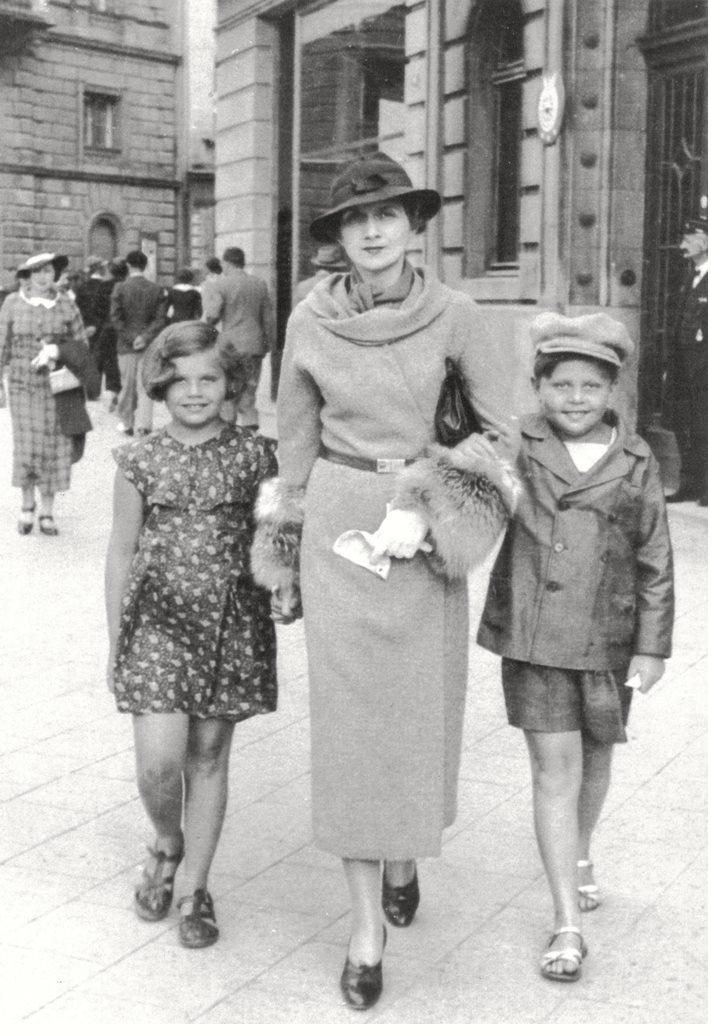
A mother and two children. She — the daughter of one of the most eminent jurists of the Republic, called Maryla in the family; she lived with her two children in the modern building at 7 Złota Street. In the summer of 1939 Józek went on holiday to his grandparents in Lwów — and the war never let him return. It cut this family in two, and the Holocaust took it whole — in Warsaw and in Lwów, behind the walls of two ghettos four hundred kilometres apart. No grave has survived. What survived are documents — among them the diary the children's grandfather kept to the last weeks of his life — and one photograph of the three of them.
This account gathers everything that is known about them. Every fact comes from a source: from the birth register, from the telephone directory, from the grandfather's manuscripts, from the family's post-war testimonies. Where the sources are silent or speak with different voices — we say so plainly.
I. Lwów — Roots
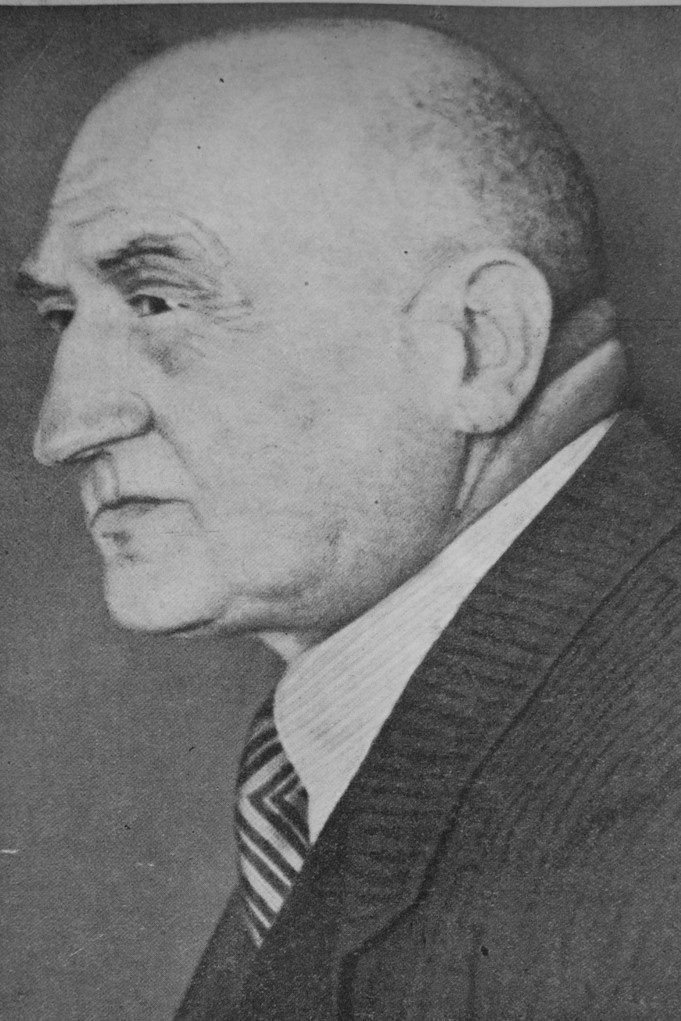
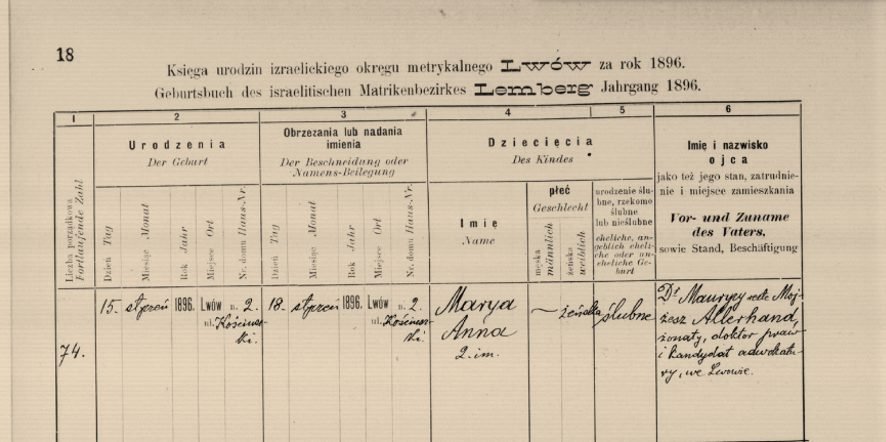
The story begins in Lwów, in the house of Maurycy Allerhand. Born on 28 June 1868 in Rzeszów, into the assimilated Jewish family of Herman and Rebeka née Wohlfeld, after his studies and doctorate in Vienna he settled in Lwów, where on 17 March 1895 he married Sara (Salomea) Weintraub. Two children were born of this marriage: in 1896 a daughter, Maria Anna — the heroine of this story — and in 1897 a son, Joachim Herman, later a barrister and an officer of the Polish Army.
The father of the family became one of the pillars of Polish law: professor of the Jan Kazimierz University, advocate from 1900, member of the Codification Commission of the Republic and of the Tribunal of State, author of more than a thousand works, including the commentaries to the Commercial Code and the Bankruptcy Law that lawyers were still reissuing half a century after his death. In 1924–1929 he stood at the head of the Lwów Jewish Religious Community — first as government commissioner, then as elected president. From 1911 the Allerhands lived in a seven-room apartment at 20/22 Jagiellońska Street, with a study in which the Professor held his seminars and a library of several thousand volumes. It was a house of two traditions: as his grandson recalled years later, both Jewish and Christian holidays were kept in it.
II. Maryla
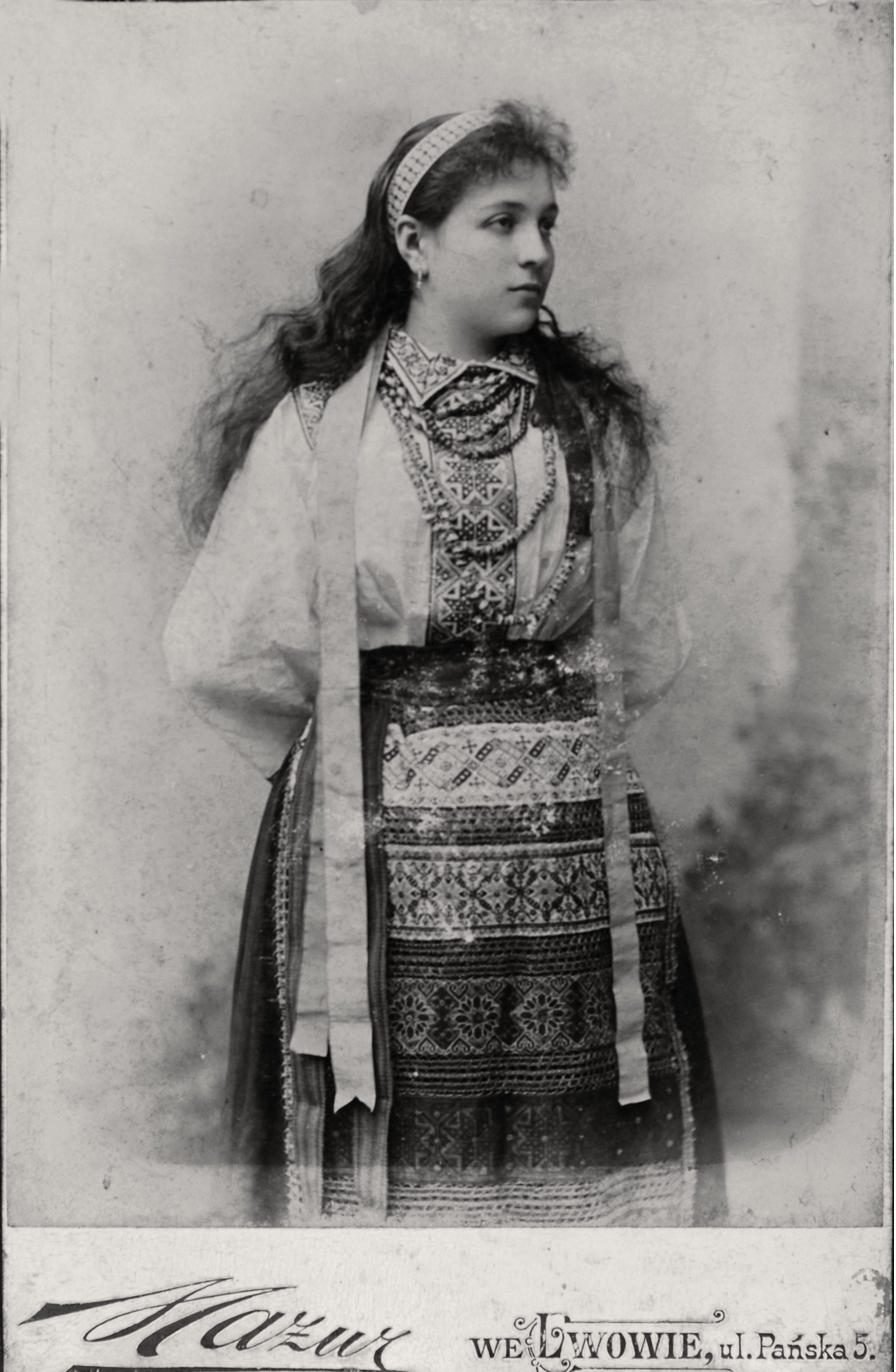
Maria Anna was born in Lwów in 1896. In the family she was called Maryla — and it was under this pet name that she entered the Yad Vashem Pages of Testimony after the war; only the register of births, rediscovered in 2024, restored the names given to her at birth. She married a man named Feller.
Of the husband himself we know nothing certain today — no document with his first name, profession or fate has yet been found; the searches continue. According to the account of Maria Anna's nephew, Dr Leszek Allerhand, the marriage ended in divorce.
Two children were born of this union: a son, Józef Arno, called Józek, born in 1924, and a daughter, Alicja, called Ala, born in 1925 in Lwów. After the divorce, in the second half of the 1930s, Maria Anna moved with both children to Warsaw — to the new building at 7 Złota Street.
III. The House at 7 Złota Street
The building at 7/9 Złota Street was among the most modern in pre-war Warsaw. Erected in 1935–1937 to a design by Edward Eber for the Italian insurance company Assicurazioni Generali, it had lifts, central heating and the Palladium cinema on the ground floor — and, on the upper storeys, luxurious apartments.
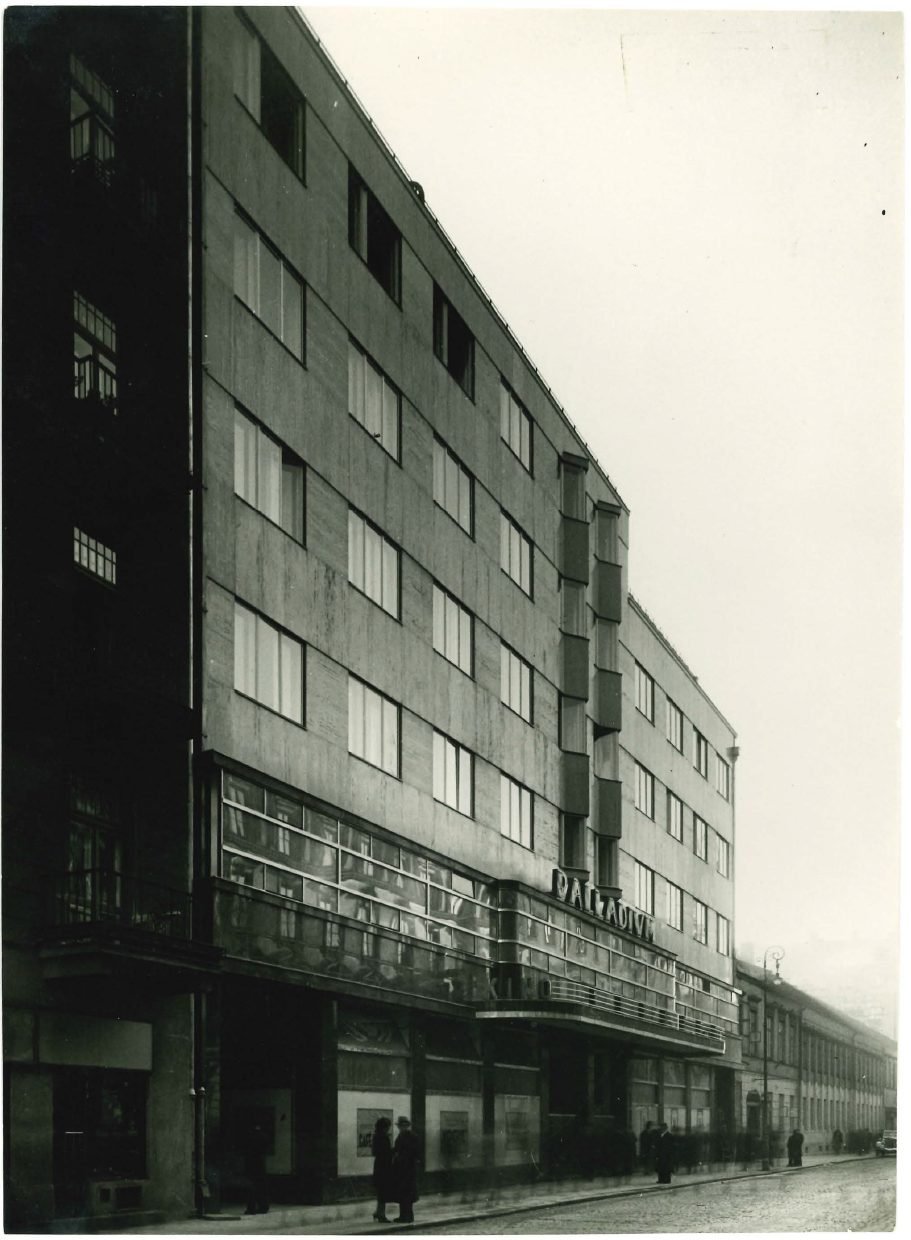
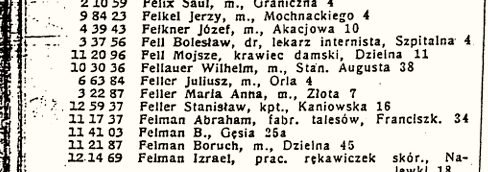
The trace of Maria Anna's residence: one line of print in the subscriber directory of the Warsaw telephone network for 1939/40
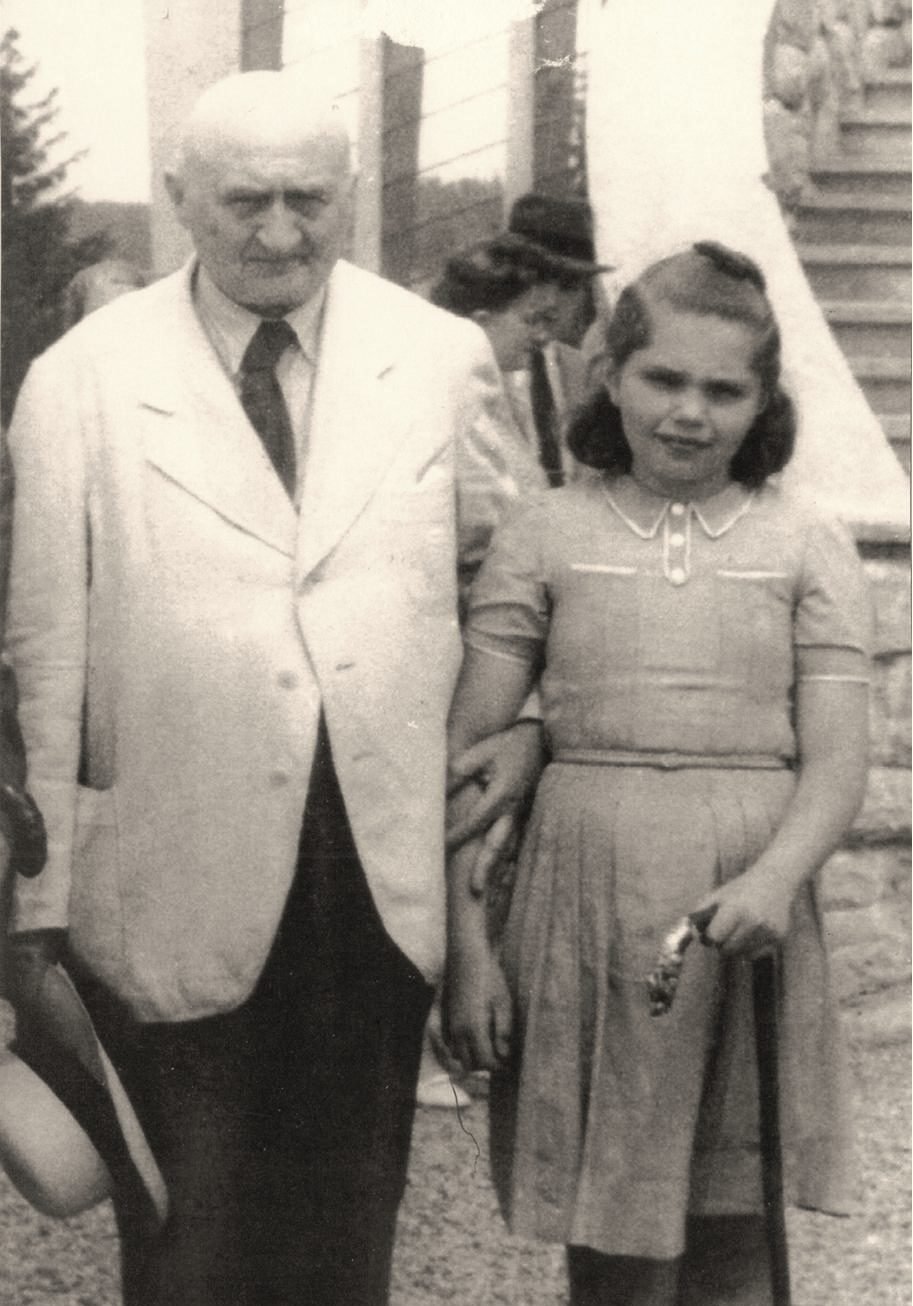
The bond with Lwów did not weaken: a photograph survives from around 1939 in which the aged Professor stands beside his teenage granddaughter, and she holds his arm. It is the last known photograph from that world — a world that had only months left.
IV. June 1938 — the Jubilee
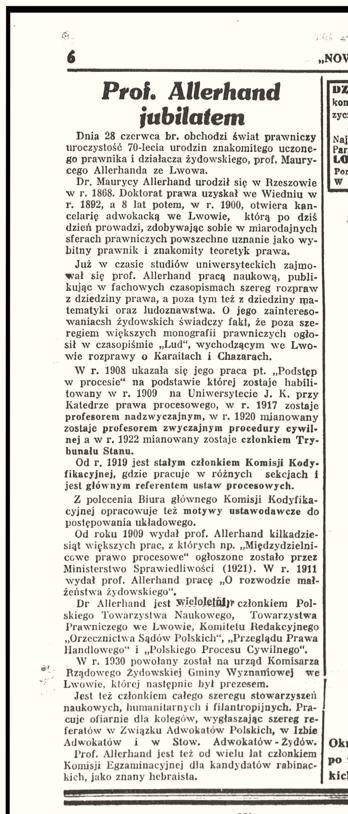
On 28 June 1938 legal Poland celebrated the Professor's seventieth birthday. „Głos Prawa" published a jubilee issue with a laudation, and the daily press — from the „Gazeta Sądowa Warszawska" to the Kraków „Nowy Dziennik" — printed commemorative articles, recounting the scholar's achievements and his services to the codification of Polish law. No one suspected that the family had less than four years of life together left.
V. September 1939 and the Ghetto Walls
On 1 September 1939 Germany attacked Poland; on 17 September the Red Army entered from the east. Józek, who was spending the summer with his grandparents, was cut off in Lwów. The family found itself under two occupations at once: Maria Anna and Ala in German Warsaw, the grandparents and Józek — in Soviet Lwów.
On 2 October 1940 the governor of the Warsaw district, Ludwig Fischer, signed the order creating the "Jewish quarter". By 15 November all the Jews of Warsaw had to move behind the walls; on 16 November 1940 the ghetto was sealed — on an area of just over three hundred hectares some four hundred and fifty thousand people were ultimately crammed. It was the largest ghetto in occupied Europe. The building at 7 Złota Street stood just outside the walls: Maria Anna and Alicja, like all the Jewish tenants of the house, had to leave their apartment and move behind the wall.
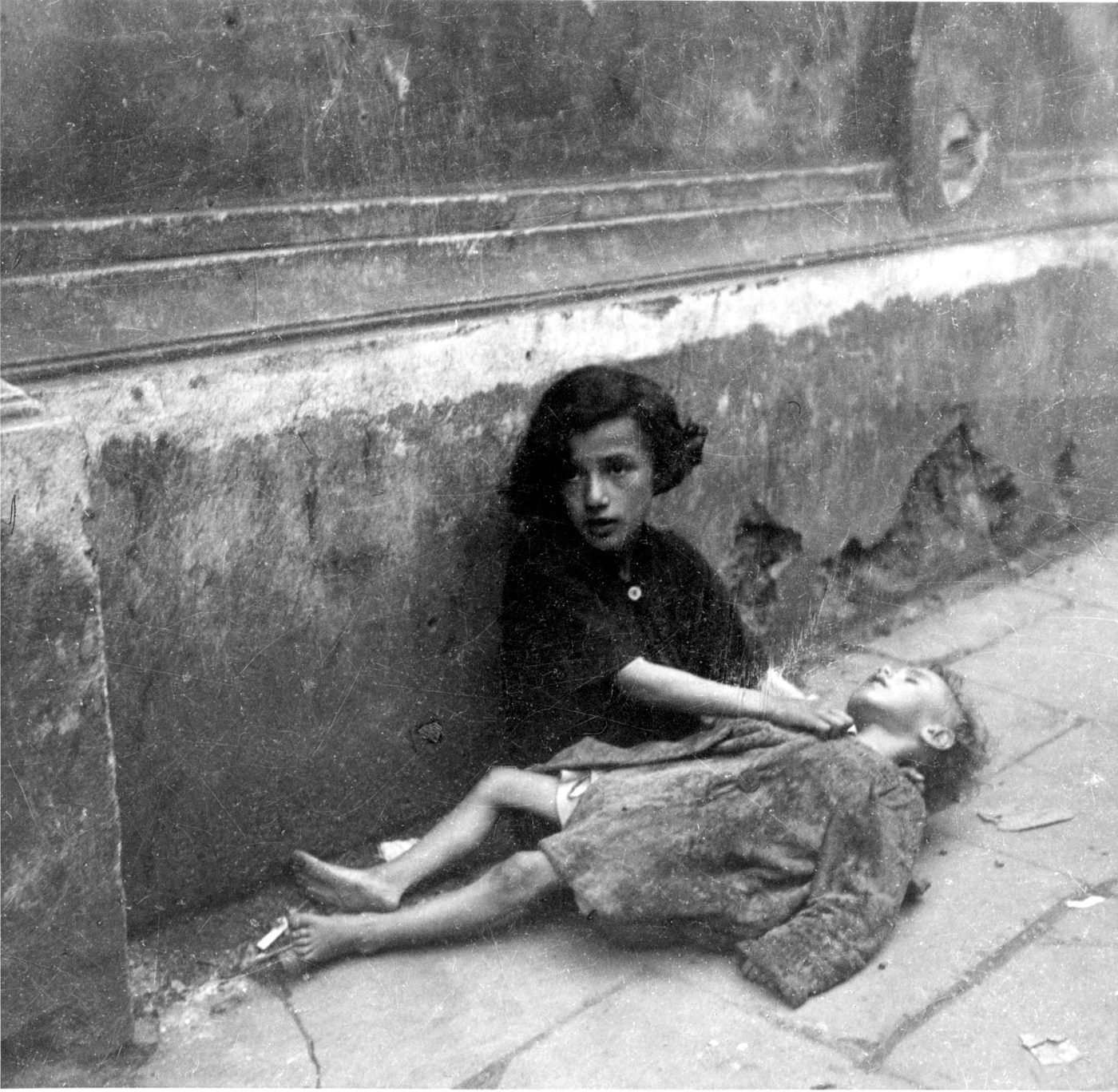
The conditions behind the wall killed even before the deportations began. On less than three per cent of the city's area nearly a third of its inhabitants were crowded together — on average seven people to a room; the three-metre wall, topped with wire and broken glass, ran for eighteen kilometres. The official food ration fell in 1941 to less than two hundred calories a day — ten times below human need; bread, life, was smuggled over the wall by hungry children. Hunger and typhus killed more than eighty thousand people in the ghetto even before the transports to Treblinka began. Somewhere in that dying district, for more than a year and a half, lived Maria Anna and her teenage Ala — their ghetto address remains unknown to this day.
The Warsaw ghetto, 1941/42
VI. Lwów: the Professor's Diary
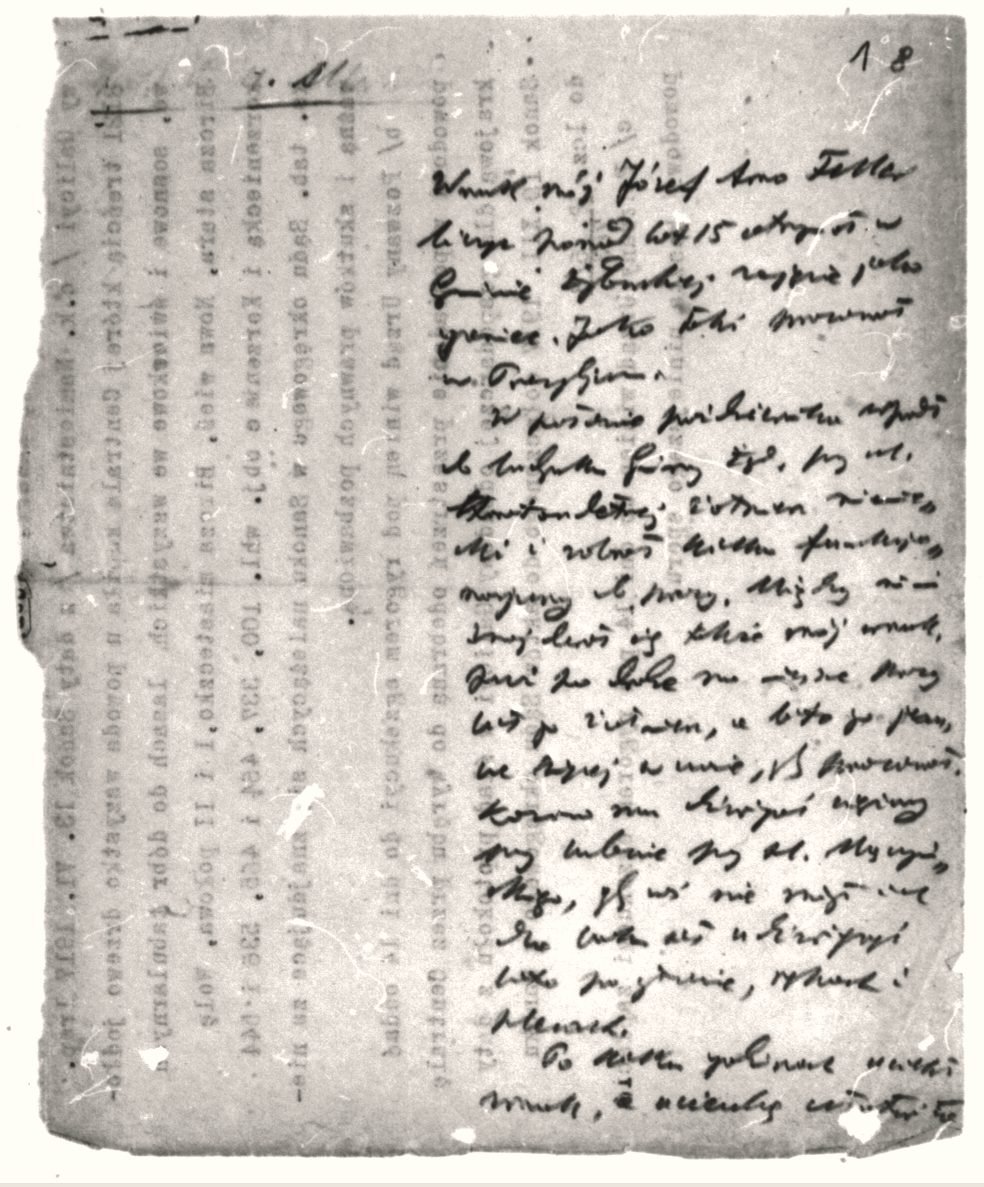
On 30 June 1941, after Germany's attack on the Soviet Union, the Wehrmacht entered Lwów; pogroms broke out in the city at once. That same day the seventy-three-year-old Prof. Allerhand began to keep a diary — in pencil, on the reverse sides of office sheets. The manuscripts survived (today in the Jewish Historical Institute Archive, in the so-called Lwów Portfolio) and were published by his grandson as „Notes from That World"; they belong to the most precious testimonies of the Holocaust of Lwów. It is from them that we know the continuation of this history.
The family had occupied the apartment on Jagiellońska for thirty years. When in July 1941 his wife and son wanted to hide the paintings and books with a friendly Pole, the Professor refused: since the Bolsheviks had respected the property of a university professor, he reasoned, the Germans would respect it all the more. The lawyer who had believed in law all his life could not yet grasp that the time of lawlessness had come. On 6 August 1941 into the room where he lay ill walked — without removing his hat — the director of the Viennese company „Kompos", and read from a sheet that the apartment was confiscated; only clothing, linen, gold and silver could be taken. To his wife's question where old people were to go, came the answer: „das geht uns nichts an" — that is no concern of ours. To the question about the library: „Nein, Sie werden die Bibliothek nicht mehr brauchen" — no, you will not be needing the library any more.
The next day, 7 August 1941, handing over the apartment — as the first Jew in Lwów deprived of his home — the Professor said in Polish to the building's manager: here is my library, which I collected for sixty years. The police officer present replied that it was no longer his library, and added the sentence that opens this account. In the apartment remained thousands of volumes — first editions of Mickiewicz and Słowacki, Linde's dictionaries, complete runs of the legal journals — and a collection of paintings: three portraits by Simmler, Chełmoński's „Wianki", Malczewski's „Boy on the Road", canvases by both Kossaks and the copy of Matejko's „Rejtan" kept in the family for seventy years. All of it was taken over by a private Viennese company. „None of my acquaintances can understand it" — the Professor noted.
For the next seven weeks he hid with a stranger — rightly, for the very next day the police came to arrest him. At the end of September he moved in with his son Joachim at 32 Sobieskiego Street, and from 23 November 1941 — with his wife and grandson Józek in the ghetto at 58 Zamarstynowska Street. Polish friends prepared a new identity for him and an escape to the Aryan side. He refused.
The Lwów ghetto, for which Zamarstynów was designated — the poorest district beyond the railway tracks — was the third largest in occupied Poland, after Warsaw and Łódź: more than a hundred thousand people were crammed into it. The resettlement itself turned into a selection: under the viaduct on Pełtewna Street, which the Jews of Lwów named the „bridge of death", the German police picked out the old and the sick — during the move alone more than a thousand people were murdered. In March 1942 the first great action took some fifteen thousand people to the gas chambers of Bełżec; next door operated the infamous camp on Janowska Street — slave labour and a place of execution at once. Before the war about a hundred and ten thousand Jews lived in Lwów — the third largest Jewish community of the Republic; with the refugees from beyond the German demarcation line there were about a hundred and fifty thousand of them in September 1941. Liberation was lived to see, according to various estimates, by from a few hundred to a few thousand. In this world the Professor, Salomea and Józek survived eight and a half months.
VII. Józek
In the same notes the Professor recorded the fate of his grandson. Józef Arno Feller got a post as a messenger in the Lwów Jewish community office on Starotandetna Street and worked in its Presidium. In mid-October 1941 a German soldier burst into the community building and took several workers off to labour — Józek among them. The boy was beaten already on the way, and then while hauling loads on Mączyńskiego Street: when for lack of strength he could not lift them, he was beaten about the head, arms and back. After several hours he escaped — helped by a person from outside the Jewish community employed at the same work. The grandfather noted everything down with a lawyer's precision: the welts on the body, the blisters on the hands, several days of treatment. And the pay for a whole day of slave labour: a quarter of a loaf of bread.
„For a whole day's work, then, the labourer received a piece of bread and nothing more. Not even warm water was given."
VIII. The Year 1942: Treblinka and Bełżec
On 22 July 1942 the Germans began the Great Deportation in Warsaw — the mass deportations from the ghetto to the extermination camp at Treblinka, put into operation a day later. Every day transports of several thousand people left the Umschlagplatz; by 21 September about three hundred thousand Warsaw Jews had been deported. At Treblinka death in the gas chambers came within an hour or two of the train's arrival; in the course of a dozen or so months nearly nine hundred thousand people were murdered there, and in the autumn of 1943 the camp was razed to the ground and sown with lupin — of the victims almost no trace remained.
In one of those transports, in 1942, was forty-six-year-old Maria Anna Feller. According to the family's testimony and the findings of her biographer, Prof. Adam Redzik, seventeen-year-old Alicja perished then together with her mother. The post-war testimonies, given from memory, are not fully consistent: one version of the family account indicates Majdanek as the place of Maria Anna's death. This discrepancy has not so far been resolved; one thing is certain — according to none of the testimonies did the mother and daughter from Złota 7 survive the year 1942.
Three weeks later the fate of the Lwów part of the family was fulfilled. On 10 August 1942, during the so-called great August action, Maurycy, Salomea and Józek were taken from the ghetto to the Janowska Camp in Lwów. According to the account of Prof. Karol Koranyi, citing an eyewitness, the Professor was killed on the camp grounds by a Ukrainian policeman — shot after he, seeing the man torturing a woman, appealed in Ukrainian to his conscience. Salomea and Józek were most probably murdered in the extermination camp at Bełżec — the place where, from March to December 1942, the Germans put to death about four hundred and fifty thousand Jews, and from which only single individuals survived.
IX. The Survivors
Only the family of Maria Anna's brother survived the Holocaust. Joachim Allerhand — who in September 1939, as an officer in Soviet captivity, escaped the fate of the Katyń victims almost by a miracle — fled the Lwów ghetto in August 1942, on the eve of the action, with his wife Zinajda and ten-year-old son Leszek. He hid under the name Paweł Jan Mrozowski, working in a sawmill in Jaworów; Zinajda and Leszek, on Aryan papers, survived until July 1944 in more than thirty hiding places. After the war Joachim was an advocate in Kraków and a defence counsel in the political trials of the Stalinist years; he firmly advised his son against studying law — „it is not good to study law in times when it is lawlessness". Leszek Allerhand (1931–2018) became a physician in Zakopane, the publisher of his grandfather's diaries and co-founder of the Allerhand Institute established in 2009. It is to him that we owe the family accounts and photographs on which this story rests.
X. Remembrance
The names of Maria Anna, Alicja and Józef returned to Złota thanks to research in the partially preserved residence register of the house, the pre-war telephone directories and the Yad Vashem databases, and above all thanks to the kindness of Prof. Adam Redzik, the biographer of the Allerhand family, and the consent of the Foundation — the Allerhand Institute. On 21 August 2026 twelve Stones of Remembrance (Stolpersteine) will be laid before the houses at Złota 7 and Złota 9. Among them will be the stones of Maria Anna Feller née Allerhand and her children. They have no graves — their ashes were scattered by the wind over Treblinka and Bełżec. What remains of them is memory — and this house.
Timeline
| Date | Event |
|---|---|
| 17 Mar 1895 | Marriage of Maurycy Allerhand and Sara (Salomea) Weintraub in Lwów. |
| 1896 | Maria Anna Allerhand is born in Lwów (birth register of the Lwów district). A year later — her brother Joachim Herman. |
| 1911 | The Allerhands settle at 20/22 Jagiellońska Street in Lwów. |
| c. 1925–1926 | Maria Anna's children are born: Józef Arno „Józek" and Alicja „Ala" (1925, Lwów). |
| 1935–1937 | Assicurazioni Generali builds the Złota 7/9 building (des. Edward Eber, Palladium cinema). |
| 2nd half of the 1930s | After the divorce Maria Anna settles with both children in Warsaw at Złota 7 (telephone directory 1939/40). |
| 28 Jun 1938 | Prof. Allerhand's 70th birthday; jubilee issue of „Głos Prawa", articles in the press. |
| Sep 1939 | The outbreak of war finds Józek on holiday with his grandparents in Lwów. The family under two occupations: Warsaw — German, Lwów — Soviet. |
| 16 Nov 1940 | Closure of the Warsaw ghetto. Maria Anna and Alicja must leave Złota 7 and move behind the walls. |
| 30 Jun 1941 | The Germans take Lwów. Prof. Allerhand begins his diary. |
| 4–7 Aug 1941 | Confiscation of the apartment on Jagiellońska; the Professor the first Jew in Lwów deprived of his home; 7 weeks in hiding, then with his son at 32 Sobieskiego Street. |
| mid-Oct 1941 | Józek, a messenger of the Jewish community, beaten at forced labour on Mączyńskiego Street; escapes with the help of a non-Jewish co-worker. |
| 23 Nov 1941 | Maurycy, Salomea and Józek in the Lwów ghetto, 58 Zamarstynowska Street. |
| 22 Jul – 21 Sep 1942 | The Great Deportation in the Warsaw ghetto: c. 300,000 people deported to Treblinka. Among the victims — Maria Anna, according to the family's testimony together with Alicja (variant account: Majdanek). |
| 10 Aug 1942 | The great August action in Lwów. Maurycy, Salomea and Józek in the Janowska camp; the Professor's death; Salomea and Józek murdered most probably at Bełżec. A day earlier Joachim's family escapes the ghetto. |
| 1945 | Joachim, Zinajda and Leszek Allerhand settle in Kraków. |
| 2003 | First edition of the Professor's diaries — „Notes from That World" (Kraków, Wydawnictwo Edukacyjne); the second edition, supplemented with the grandson's memoirs, appears in 2011 (Allerhand Institute / Wysoki Zamek). Fragments of the Lwów Portfolio had already been published in 1979 in the „Bulletin of the Jewish Historical Institute". |
| 2009 | Proclamation of the Allerhand Institute; among the founders — Dr Leszek Allerhand. |
| 2024 | Discovery of Maria Anna's birth record; family photographs passed on by Prof. A. Redzik of the Allerhand Foundation. |
A Note on Sources
This account rests exclusively on sources: the birth register of the Israelite registration district of Lwów for 1896 (jewishgen.org search, 2024); the pre-war Warsaw telephone subscriber directories (1938/39, 1939/40) and the partially preserved residence register of the house at Złota 7 (State Archives); the manuscripts of Prof. Maurycy Allerhand from 1941–1942 — Jewish Historical Institute Archive, Lwów Portfolio, ref. 229 (among them account no. 4 on the confiscation of the apartment, ref. 229-10, and account no. 8 on Józef Arno Feller, ref. 229-6; scans in collection RG-89 of the Holocaust Museum LA), published as M. Allerhand, L. Allerhand, „Zapiski z tamtego świata", 2nd ed., Kraków 2011 (first printing: Kraków 2003; fragments of the Lwów Portfolio — „Biuletyn ŻIH" 1979); the studies of Prof. Adam Redzik — „Maurycy Allerhand (1868–1942) — on the 150th anniversary of his birth" („Palestra" 2018, nos. 7–8; „Głos Prawa" 2018), the biographical entry of Joachim Allerhand (Biographical Dictionary of Polish Advocates, vol. III, 2018) and „On the circumstances of the death of Professor Maurycy Allerhand" („Kwartalnik Historii Żydów" 2005, no. 2); the memoir of Prof. Karol Koranyi („Państwo i Prawo" 1947, no. 1); the Yad Vashem Pages of Testimony submitted by Dr Leszek Allerhand; the photographs and family accounts from the collection after Dr Leszek Allerhand, passed on by Prof. Adam Redzik (2024–2026), and the consent of the Foundation — the Allerhand Institute (2024). The historical context of the Warsaw ghetto, Treblinka, Lwów, the Janowska camp and Bełżec — after the studies of the United States Holocaust Memorial Museum and the scholarly literature.
Opracowanie w ramach projektu upamiętnienia mieszkańców kamienicy przy ul. Złotej 7 i 9 w Warszawie · www.zlota7-9.com