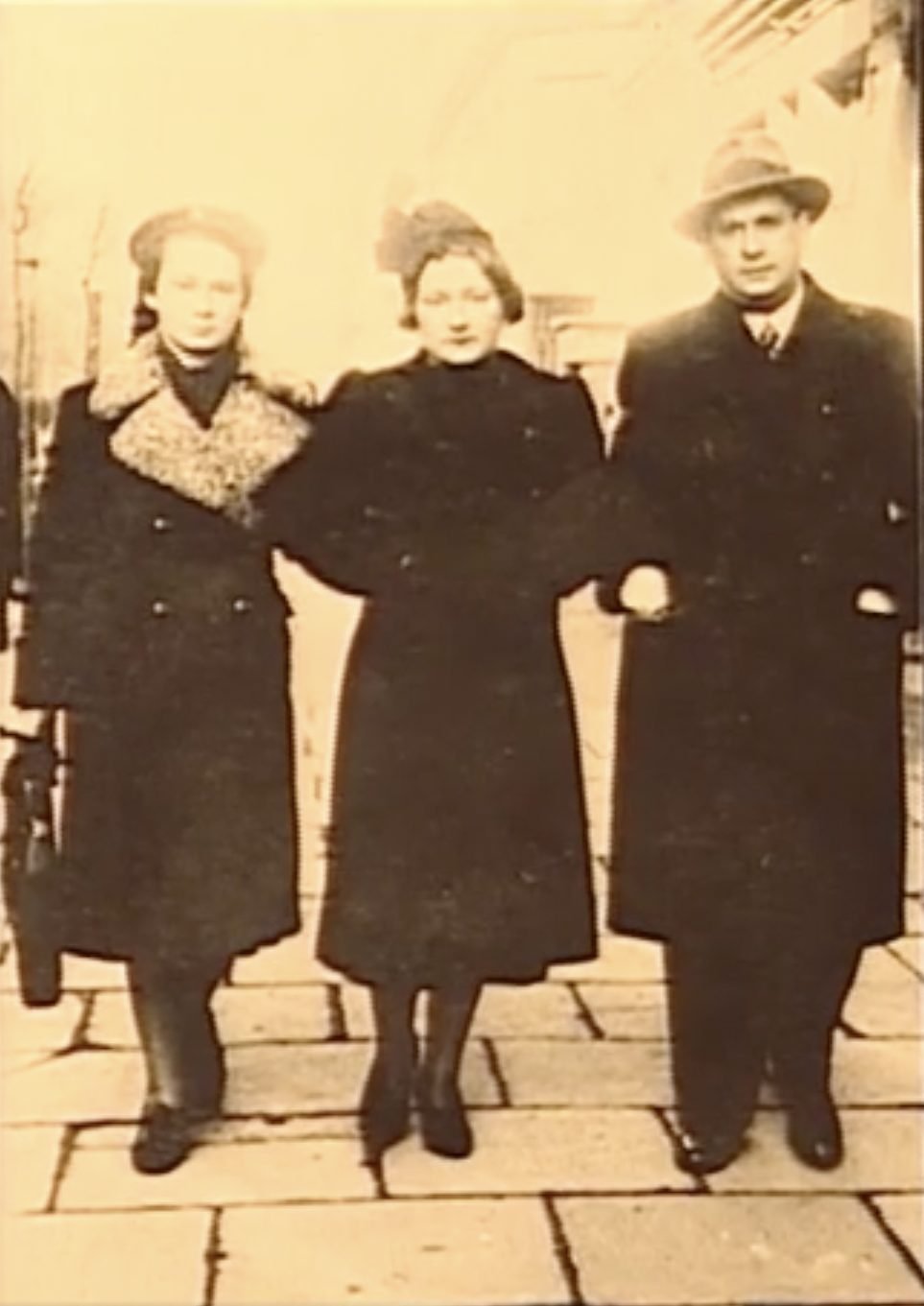
„The only way to fight Hitler was to survive."
They were a family of three, and they came through the war complete — which in the Warsaw histories of the Holocaust happens rarely enough that it demands telling in itself. He — a director in the Polish company of an American oil concern, a man who in 1936 tried to take his family across the ocean and lost to the quota system. She — Elfryda née Posner, who in occupied Warsaw fitted out one apartment after another with a hiding place under the bed for her husband and a masked exit to the attic, and forty years later, shortly before her death, wrote it all down in German. And she — Edyta, an only child, who at eighteen left the ghetto hidden in a German lorry, worked as a translator for the German railway in Otwock, and stole ration cards and blank forms for the underground.
This account gathers everything that is known about them and points to the source of every fact: the card of apartment no. 21 from the residence register of the house at 9 Złota Street, the post-war registration cards of survivors, Edyta's accounts recorded years later in the United States, Elfriede's memoirs translated from German by her daughter, the card indexes of the getto.pl database, the Jerusalem register of survivors of 1945, American obituaries, family photographs and the gravestone inscriptions of a cemetery near Philadelphia. Where the sources speak with different voices — and they do so surprisingly often, even on dates of birth — we record both versions instead of choosing the more convenient one.
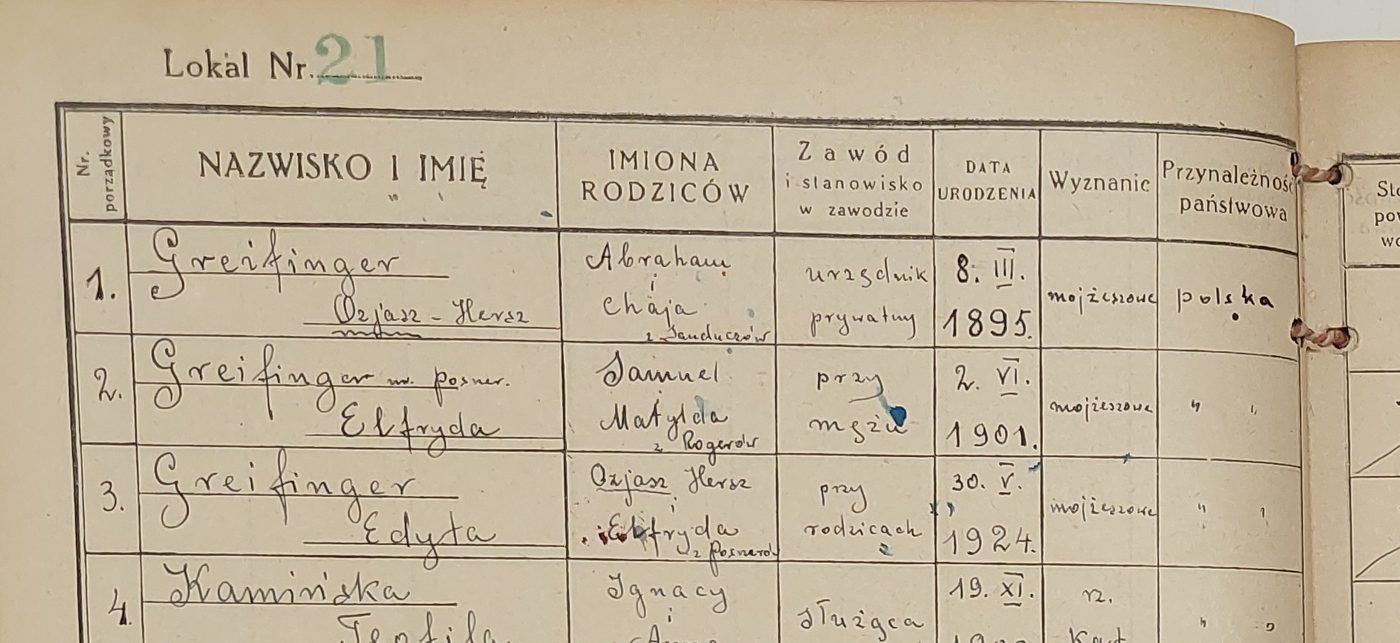
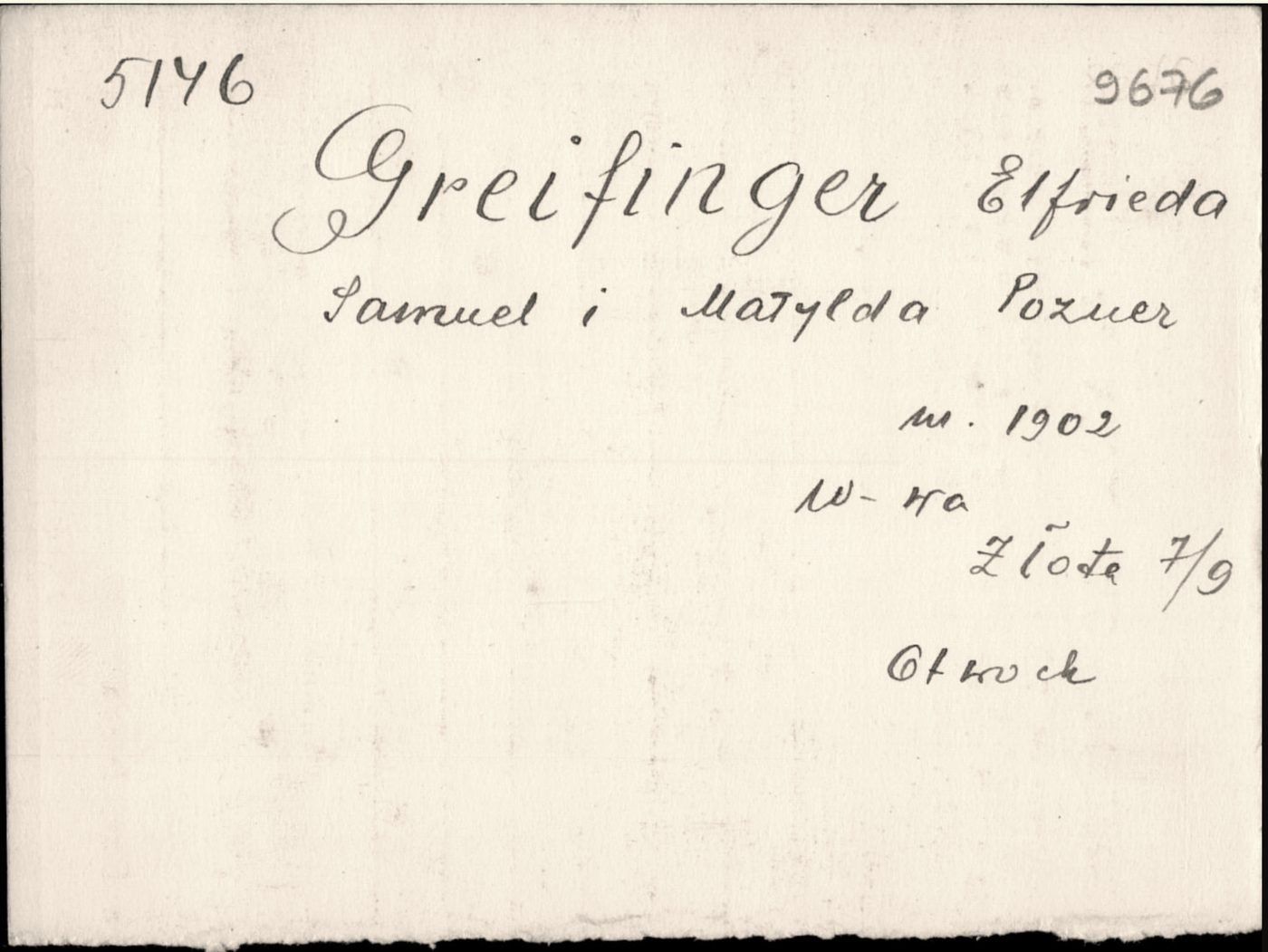
Until recently their Warsaw address was given wrongly in the literature. Two independent documents settled it: the card of apartment no. 21 from the residence register, preserved in the State Archive in Warsaw, and Elfrieda's post-war registration card, on which someone wrote three words in pencil — „W-wa, Złota 7/9, Otwock". It is these that allow us to say today exactly when they arrived, from where, who lived with them, on what day they left this house — and where they lived to see the end of the war.
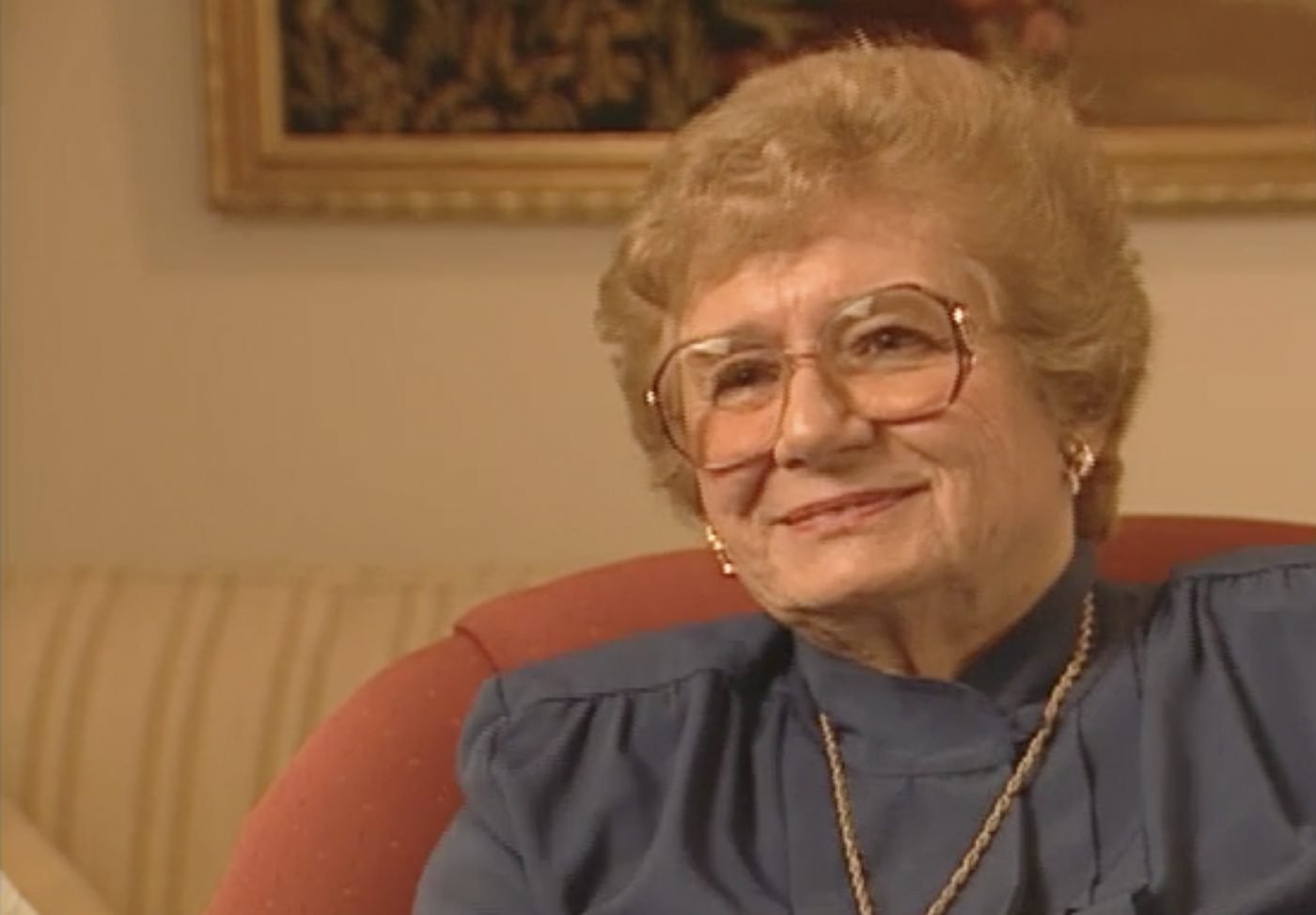
Edith Millman is the only one of the people in these accounts whose voice can still be heard today. In 1996 she gave her full testimony before the cameras of USC Shoah Foundation — seven tapes of video. You can watch it below:
I. Czechowice near Bielsko — the director's house
Ozjasz (in America: Osias) Hersz Greifinger was born on 8 March 1895, the son of Abraham and Chaja. His wife, Elfryda née Posner — in the family and in the American documents Elfriede — was born on 2 June 1901; her parents were Samuel Posner and Matylda née Roger. Their only child, Edyta, came into the world on 30 May 1924 in Bielsko. Both generations of grandparents are known to us precisely from the Warsaw residence register, which required the parents' names to be given for every person — and it is the only document known to us in which those names appear at all.
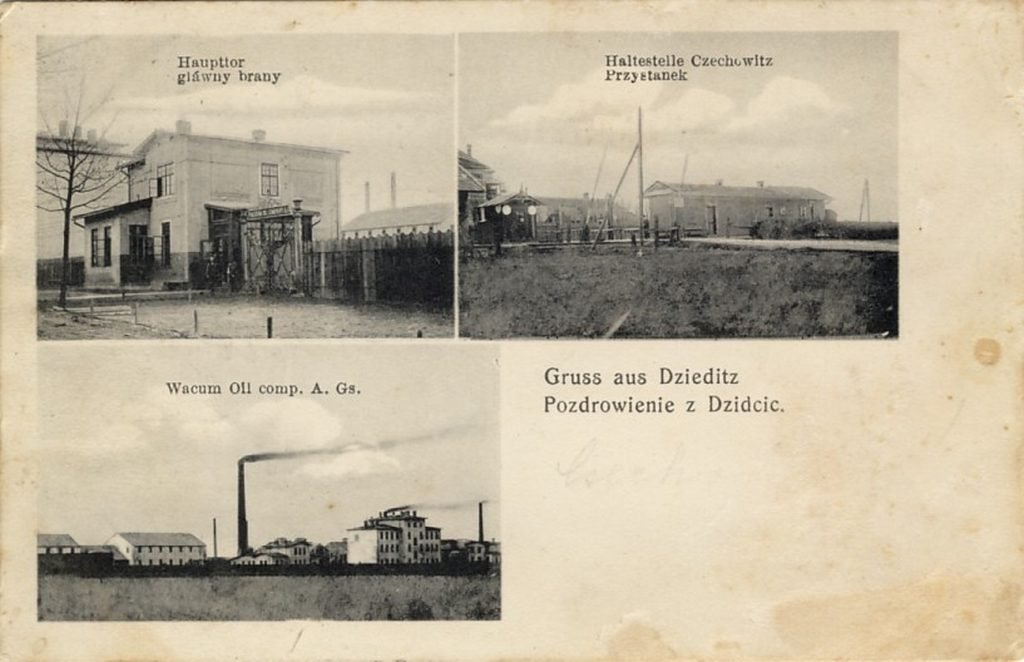
Before the move to Warsaw the family lived not in Bielsko itself, as was thought until now, but in Czechowice in the Bielsko district, at number 611 — in today's Czechowice-Dziedzice. This observation tidies up an old puzzle: the getto.pl database gives Dziedzice as Elfriede's birthplace, and everything indicates that the same neighbouring pair of localities is meant. It also points to one specific workplace: in Czechowice stood the refinery of the Vacuum Oil Company, one of the largest oil plants of interwar Poland.
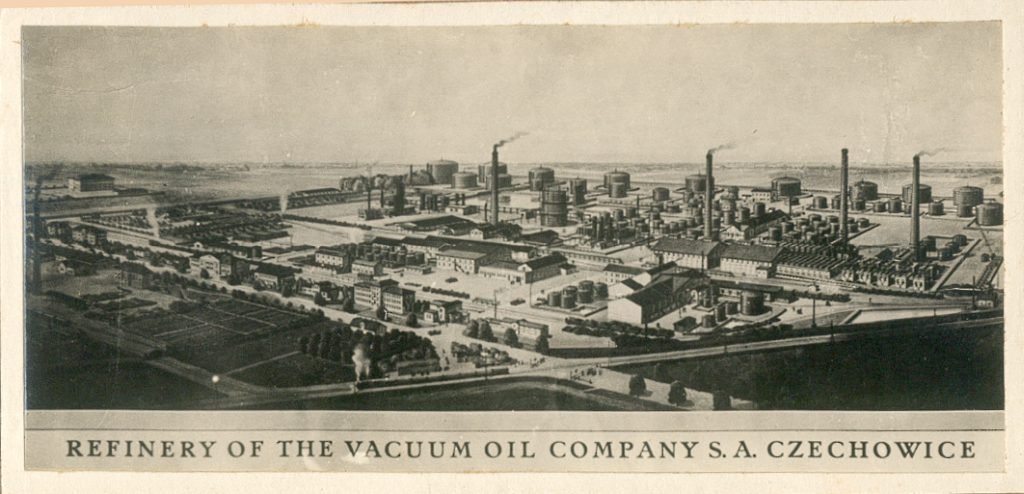
Ozjasz was a director in the Polish company of the Standard Oil concern — operating as Standard-Nobel w Polsce S.A. and taken over in 1937, exactly the year of the Greifingers' move, by Vacuum Oil Company S.A. The move to Warsaw thus coincided with the firm's reorganisation; the family followed the post to the head office. In the column „occupation and position" the Warsaw clerk recorded him briefly and impersonally: „private clerk".
The family prospered. Edyta remembered a childhood she herself compared to the life of a child of the American suburbs: skiing in the mountains, holidays at the seaside, private schools, excursions. She attended a Polish school, however, and grew up without religious formation, but — as she stressed — with a very clear sense of Jewish belonging. She had many non-Jewish friends, until the moment Hitler came to power on the other side of the nearby border and something in those friendships began to sour.
She experienced antisemitism long before the war: she remembered insults in the street and the occasional thrown stone. At the same time she thought it was milder around Bielsko than in Warsaw, where Jewish students were regularly assaulted at the universities. She was an only child — in the hunger years of the ghetto this would prove one of the things that saved this family's life: fewer mouths to feed, fewer bodies to hide.
II. 1936 — the queue for a visa
Her father understood early where this was heading. In 1936 the Greifingers filed emigration papers for the United States — the American quota system assigned them a place in the queue only for the year 1941. Ozjasz did not want the illegal road: he intended neither to bribe officials nor to buy black-market tickets, though — as his daughter said years later — it was possible then. The queue never reached its date. The family would get to America, but only after thirteen years and on the far side of the Holocaust.
The father did, however, manage to do something else that proved just as important: before the war broke out he withdrew most of the savings from the bank and changed them into dollars. That money — and later gold coins sewn into belts — bought food on the black market, the silence of blackmailers and successive months of life for three years.
III. 8 October 1937 — Złota 9, apartment no. 21
The registration of residence was accepted on 8 October 1937.
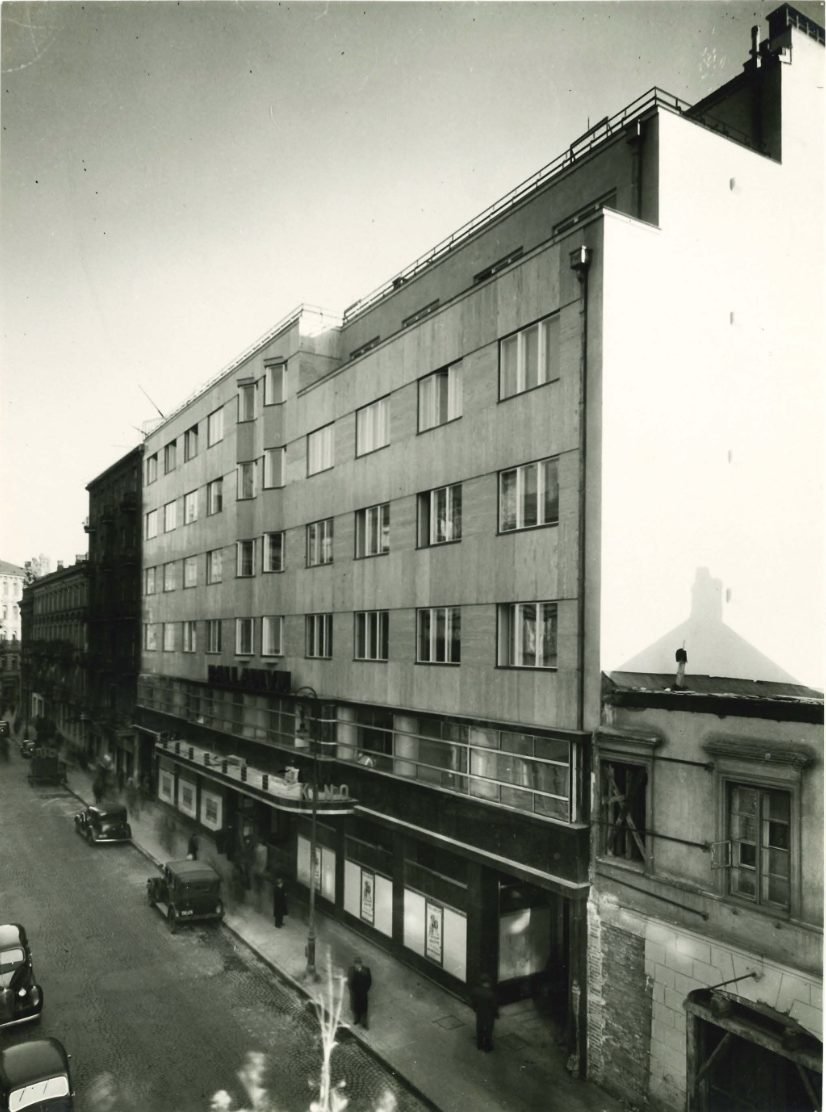
On the card of apartment no. 21 three names were entered one below another: Greifinger Ozjasz-Hersz, private clerk; Greifinger née Posner Elfryda, „with her husband"; Greifinger Edyta, „with her parents". Against each of them, in the column for religion, the clerk set the same word — „Mosaic"; in the column for citizenship — „Polish". In the column „arrived from" the same entry was repeated three times: „Czechowice, Bielsko district, No. 611".
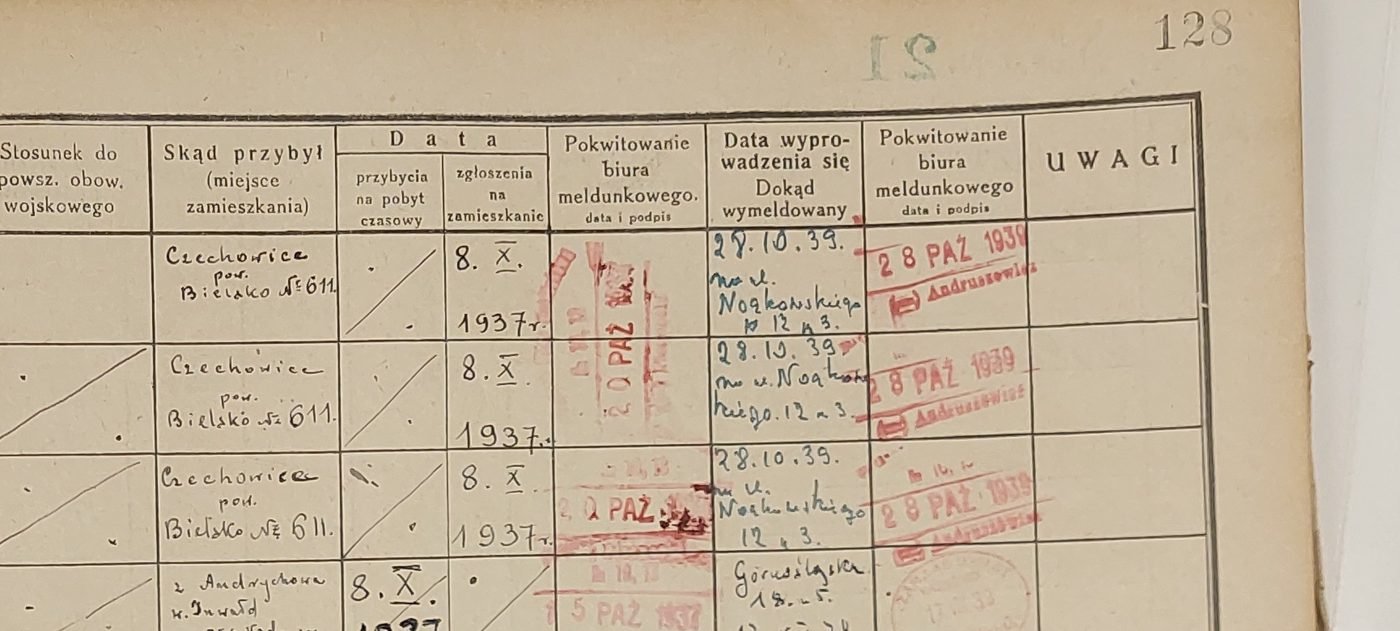
The right-hand side of the spread says even more: it is there that the clerk noted the dates of arrival and deregistration. Against all three Greifingers stands the same date of registration — 8 October 1937 — and the same date of moving out, bearing the stamp „28 OCT 1939" and the administrator's signature.
The Warsaw they came to was for Edyta a strange city and — as she recalled — the city where she first felt the workings of German propaganda upon her: it was here that her relations with non-Jewish peers began to sour in earnest. They lived in a good, mostly non-Jewish neighbourhood, in a new house with a cinema on the ground floor. They had two years and twenty days.
IV. Who lived with them — Teofila and Genowefa
Apartment no. 21 was not a household of three. Under entry 4 of the card stands Teofila Kamińska, daughter of Ignacy and Anna, born 19 November 1908, Roman Catholic, in the occupation column: „maid". She was registered the same day as her employers — 8 October 1937 — and the place she arrived from was entered as Andrychów, Inwałd in the Wadowice district. She had therefore come with the Greifingers from the same parts: from the Beskid foothills, to which the family was never to return. She worked for them for ten months; on 17 August 1938 she was deregistered to 18 Górnośląska St., apt. 5.
Ten days later, on 27 August 1938, Genowefa Rowicka registered in her place — daughter of Ignacy and Zuzanna, married to Kazimierz, born 28 October 1913, likewise a Roman Catholic and likewise a „maid". She came from 118 Marszałkowska St., apt. 7 — that is, from Warsaw already. Her entry ends with the same date as the Greifingers' entries: 28 October 1939. On that day apartment no. 21 emptied — the employers moved out to Noakowski Street, the maid to 89 Podchorążych St., apt. 12.

Of both women we know today nothing beyond what those two lines contain: their parents' names, dates of birth, religion, and the addresses they came from and left for. In the family's accounts they do not appear even once. They deserve, however, to be named — because they belonged to the house on Złota just as the family did, and because in that same year 1939 their fates parted irrevocably from their employers' solely on account of the column headed „religion".
V. September 1939 — the fifth floor
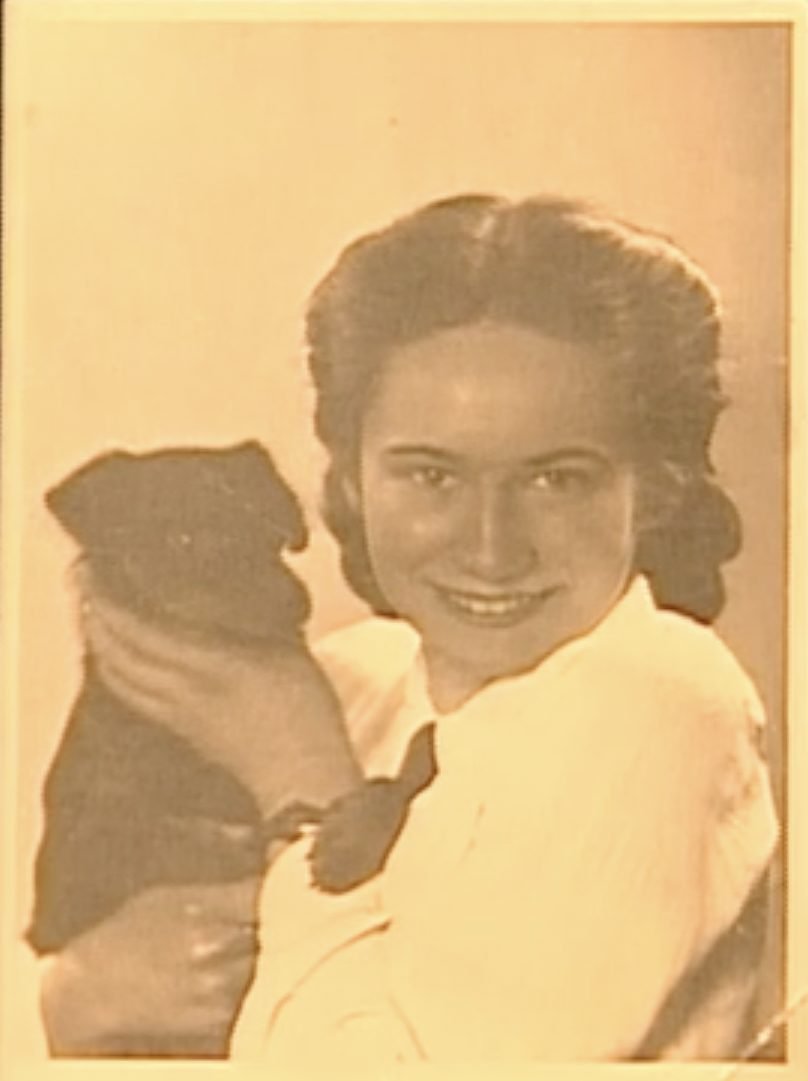
The bombs began falling almost at once. After the first days of air raids an appeal was announced calling on men fit to bear arms to leave Warsaw and go east — Ozjasz set out with a rucksack. Elfriede and her daughter came down from the fifth floor to the ground floor, to a friend's empty apartment; people from the surrounding, already-destroyed houses gathered in the building, and mother and daughter shared food with them. During one of the bombardments Edyta was wounded. Then they moved to the father's office in Aleje Ujazdowskie, where several employees' families were living — they slept on desks and ate in a communal kitchen. Among the things that survived the bombing were the mother's preserving jars; they went into barter afterwards and built around themselves something like a neighbourly alliance.
From those weeks comes one of Edyta's most brutal memories: the keeper of a basement in which they sought shelter refused them water — he gave it to his dog. They slept on heaps of coal. It was her first such direct encounter with the antisemitism of neighbours rather than of the occupier.
The father, meanwhile, was walking east. On the way he joined a group of men like himself, men from the city; they clubbed together for a horse and cart so as not to carry their rucksacks. None of them knew anything about horses, so they bought an old and slightly lame one — and then, instead of abandoning it, they kept paying for its fodder and pulled it along from town to town, until finally they paid a peasant to take it and promise not to kill it. That story — told by Edyta years later — says more about that autumn than many a communiqué.
VI. 28 October 1939 — 12 Noakowski St., apt. 3
Ozjasz returned to Warsaw in the autumn of 1939. The date of deregistration from Złota — 28 October — is most likely the date on which the family reassembled itself as a whole and took its first decision of the occupation: not to return to the damaged apartment. They moved to 12 Noakowski Street, apartment no. 3 — belonging to an acquaintance, a journalist and lawyer who had left for America. The apartment number, which no family account knows, was noted down by a Warsaw registration clerk.
The father went to work at his firm, which as an American enterprise still operated for a time — and for a time still paid him a salary. The decrees began: the duty to doff one's cap before a German and step off the pavement, armbands with the Star of David, Jews pushed out of the queues for bread and water, harassment in the street. Edyta, who „did not look it", often went out without the armband — despite the consequences it threatened — and this let her obtain food.
The father insisted on one thing: that his daughter not waste time, though there were no schools. So Edyta learned shorthand and typing. Three years later that decision would save her life — because the German railway administration would take on a girl who knew German and could type.
VII. November 1940 — Sienna Street
In November 1940 the Greifingers had to move behind the wall. The orders concerning the ghetto were issued and withdrawn several times, until at last the final decision fell. They were given one room on Sienna Street — the dining room of a multi-room apartment in which every room was occupied by a different family and through which one passed to the kitchen. Elfriede divided it with curtains to have at least the semblance of privacy. The parents stubbornly kept to the edge of the district: whenever the Germans tightened the ghetto boundaries, they moved one street inward, never into the depths. In the building a house committee ran the „one spoon campaign" — sharing even a spoonful of food with the poorer — as well as a library and a book exchange.
At first they managed financially. All three — Osi, Dita and Elfriede — wore belts with gold coins sewn in; with those coins they paid for lard, a larger piece of bread, at dawn sometimes for meat at a secret butcher's. Edyta remembered her first plate of horsemeat soup — a friend warned her what it was made of, and she did not care; her mother, learning what she had eaten, vomited in the street, and a year later was preparing horsemeat so that the father could not tell the difference. The family dog had to be put down; Elfriede wept on the way back from the vet so hard that passers-by thought she had lost her husband or her daughter.
Secondary schools were closed, and teaching carried the death penalty — even so, Edyta studied in clandestine classes, in groups of four or five pupils, run by teachers and professors thrown out of their posts. Physics, mathematics, Latin, French, English, literature. She was taught by people whose names one knew before the war from textbooks; she also went to lectures — among others by Professor Ludwik Hirszfeld — and to concerts at which Mozart and Beethoven were played. She said years later that those lessons did two things at once: they gave her an education she would not have had in a normal school, and they kept her off the street.
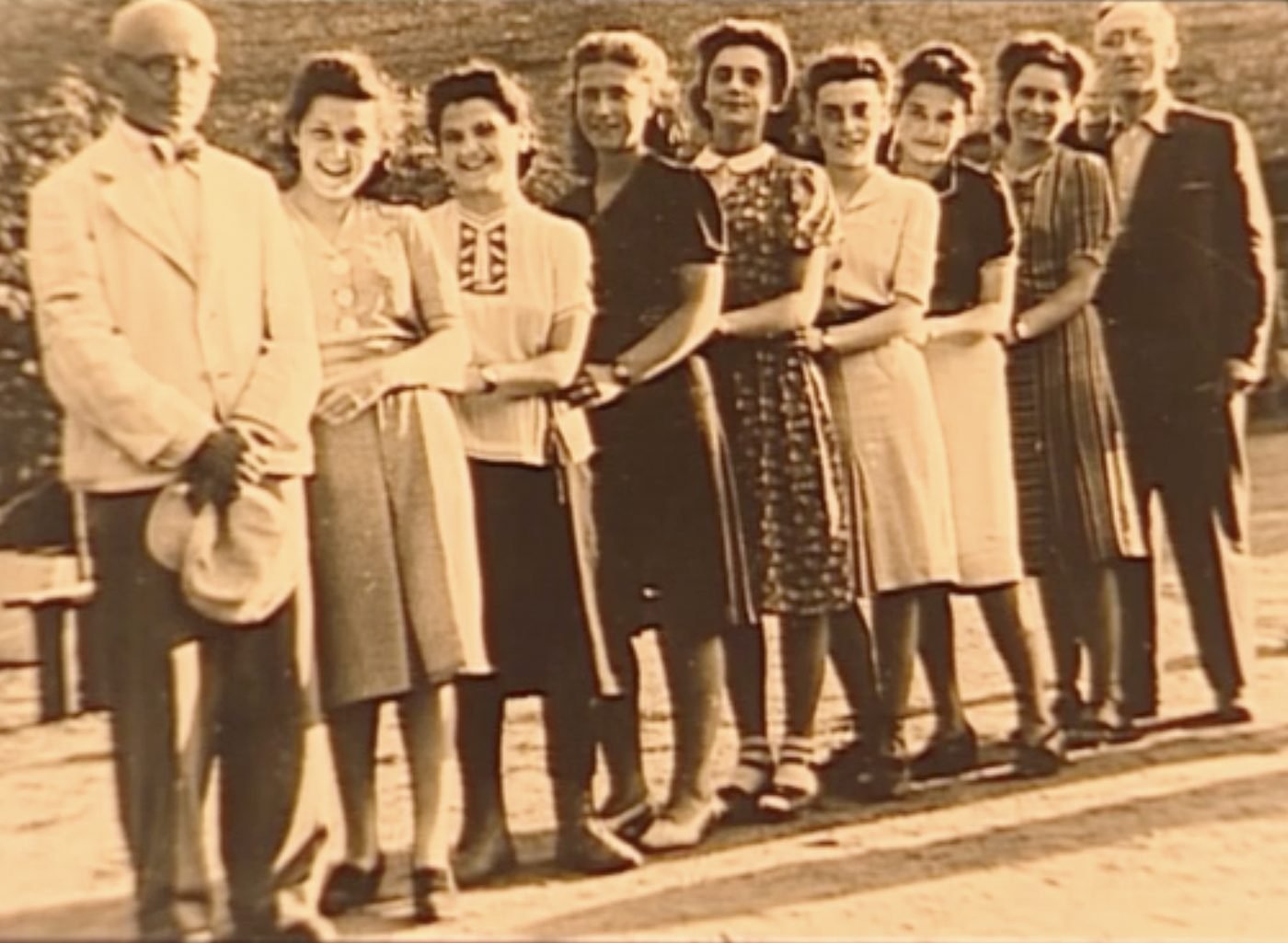
The rest was as it was for everyone. Typhus and typhoid took above all the young; in 1941–1942 there were so many lice that a rule of undressing completely before entering was in force in the apartment. Even so a neighbour in the same apartment died of typhus, and soon after her, her eight-year-old daughter. It was the first death Edyta saw at close quarters — and, as she herself observed, the fact that at seventeen it was only her first says everything about how privileged her situation was amid people dying of hunger.
VIII. Summer 1942 — Schultz's shop
On 22 July 1942 the Great Deportation began. Within a few weeks most of the ghetto's inhabitants were deported to Treblinka; a work card in a German „shop" became a pass to life. All three worked in the works of Karl Georg Schultz. One day Elfriede did not go to work; on precisely that day a deportation was ordered in her building. She went down to the courtyard and handed the policeman her work card — and he did not give it back and told her to go to the Umschlagplatz; he probably stole it for someone else. Elfriede began shouting at him in German and the card was found. Knowledge of the occupier's language saved this family many times — and always in the same way: through someone's brief hesitation.
Ozjasz was needed by his pre-war boss. He promised to drive him in his own car to the Aryan side, but set a condition: after a few days Ozjasz must return, otherwise the whole family would be denounced. The Greifingers met then in Otwock; Edyta came to them every day. After three weeks Ozjasz returned behind the wall when summoned — but he already had Aryan papers prepared in the name of Henryk Nowakowski.
IX. Late 1942 — out through the wall
At the end of 1942 Edyta left the ghetto. Her father bribed a German lorry driver, who drove her out. On the other side waited Czesław „Czesiek", a friend from before the war who had visited her in the ghetto and was active in the underground; it was he who arranged her false documents, and with him she stayed at first. Family tradition links him with Czesław Chruszczewski, the later science-fiction writer, who during the occupation ran a secret legalisation bureau on behalf of the Socialist Combat Organisation — the identification is probable but not confirmed by any document.
Soon after her, Edyta's friend Anka left the ghetto. She came to her; they dyed her hair — and it was not enough. Anka was so afraid that she went back behind the wall. She perished during the ghetto uprising, in May 1943. Edyta remained on the Aryan side with a face no one took for Jewish, with fair hair and with German that bore no trace of a foreign accent.
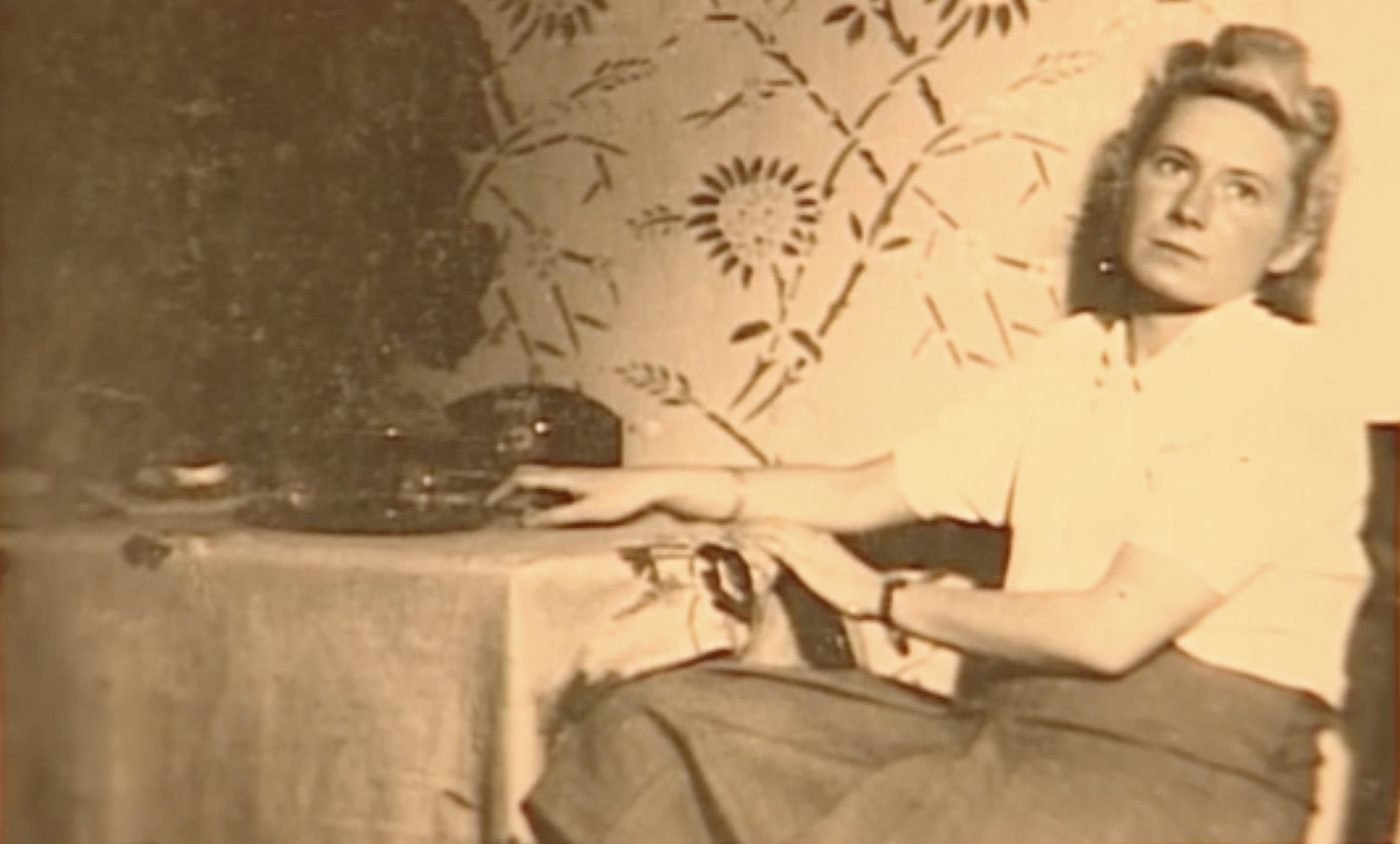
X. Nowakowski and the Zoszaks
On the Aryan side the family split into three false identities. Ozjasz was Henryk Nowakowski. Elfriede — Antonina Zoszak. Edyta appeared as Edyta Zoszak, and also as Jadwiga Olszewska.
The name Zoszak leads further than one might think. In 1987, already in the United States, Edith Millman recorded in Israel the account of a woman named Jadwiga „Giza" Zoszak née Greifinger, born in 1906 in Sambor. Giza survived the war in Katowice and around Borysław thanks to her husband, the non-Jewish lawyer and judge Adam Zoszak, who from May 1943 to August 1944 fed and hid nine Jews in a cellar and was honoured after the war by Yad Vashem with the title of Righteous Among the Nations. The coincidence of the maiden name, of the mother's and daughter's underground surname, and the fact that it was Edith who conducted that interview and translated it into English, all suggest that the „Zoszak" papers came to the Warsaw Greifingers from family — from a kinswoman and her Polish husband. No document known to us states this outright, however, and Giza's kinship with Ozjasz remains a hypothesis worth checking in the records.
XI. The station in Otwock
Edyta found work in the German railway administration — as a translator, at the station in Otwock. She spoke German without an accent, Polish without an accent, had fair hair and light eyes; day by day she played a German woman, and it was she, not the adults, who was in this family the most exposed and the most useful. For the underground she stole ration cards, blank forms and railway identity documents; she also carried out coal. She passed it all on — to her parents and to strangers.
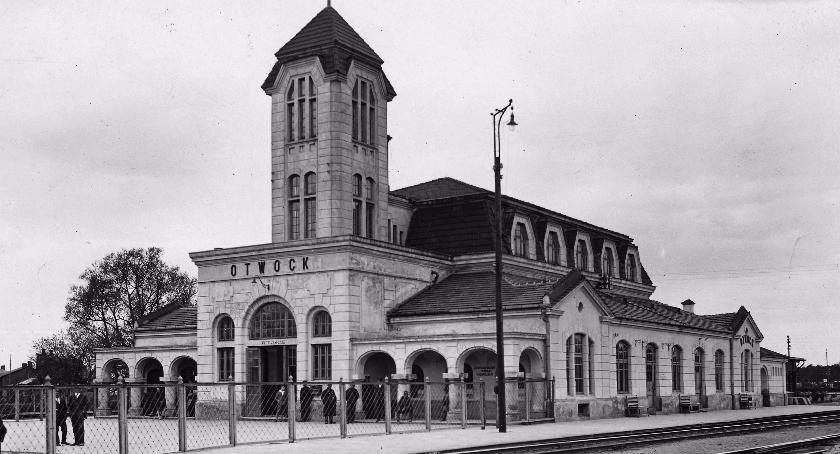
From this period come three episodes which together form a portrait of everyday life on the Aryan side. A Polish policeman stopped her in the street for a check; her documents seemed suspicious to him and he wanted to march her to the station — Edyta asked a German policeman standing nearby for help, and he ruled that the papers were in order and shouted at the Pole to go looking for Jews and hooligans and leave a decent girl in peace. A German colonel named Ostrus, met at the station, invited her into the carriage for Germans and gave her his telephone number in case of trouble. Trouble came when a Volksdeutsche woman from the building where Elfriede lived began putting it about that her neighbour was a Jewess — Edyta telephoned Ostrus, the two of them went to the woman together, and Edyta interpreted the conversation, because the Volksdeutsche knew no German. The officer threatened her with the Gestapo. The neighbours were grateful: she had been informing on everyone.
XII. The hiding place under the bed
The apartment for the Greifingers was found by Stefan Koska: fifth floor, access to the attic, in need of quick repair. Elfriede fitted it out anew, retrieving part of the furniture from Poles to whom she had given it for safekeeping at the start of the war. She did two things that proved crucial: a hiding place under the bed, into which Ozjasz crawled at every visitor's knock, and a masked passage to the attic — an escape route. The father, a man of „Semitic" looks and circumcised, in practice never left the house; his war was a war within four walls, broken by listening for footsteps on the staircase.
They hid in several places. Mentions survive of two women to whom the family owed a roof over their heads: a Warsaw prostitute with whom Ozjasz lived for about a week and who took no money from him, and a Polish woman from a partly destroyed house, living by distilling moonshine, who took in Elfriede and Ozjasz for a few days when they had to flee Otwock.
XIII. Summer 1944 — the blackmailers
An acquaintance from the ghetto undid them. In the summer of 1944 Elfriede met an old acquaintance in the street, was glad, and invited her to tea. A few days later blackmailers entered the apartment; from the conversation it emerged that one of them was the lover of that acquaintance or of her sister.
Two accounts describe what followed slightly differently — Edyta was then visiting her parents. The blackmailers stayed in the apartment all night. In the morning they took everything of any value, locked the apartment from outside and announced they were going for the Gestapo. The Greifingers escaped by the very route Elfriede had prepared years earlier: through the hidden passage to the attic. They fled to Otwock — and there, at the turn of July and August 1944, they lived to see the entry of the Red Army. Warsaw on the other side of the Vistula was only beginning its uprising; the house on Złota still had half a year before it.
XIV. Lublin, Bychawska Street
In the autumn of 1944 the family found itself in Lublin — the first large city of liberated Poland, to which the survivors were drawn. There Edyta began medical studies; the university in Lublin was founded in October 1944 and from its first year had a medical faculty, at which people like her studied: without a school-leaving examination passed in the normal way, but with five years of clandestine classes behind them.
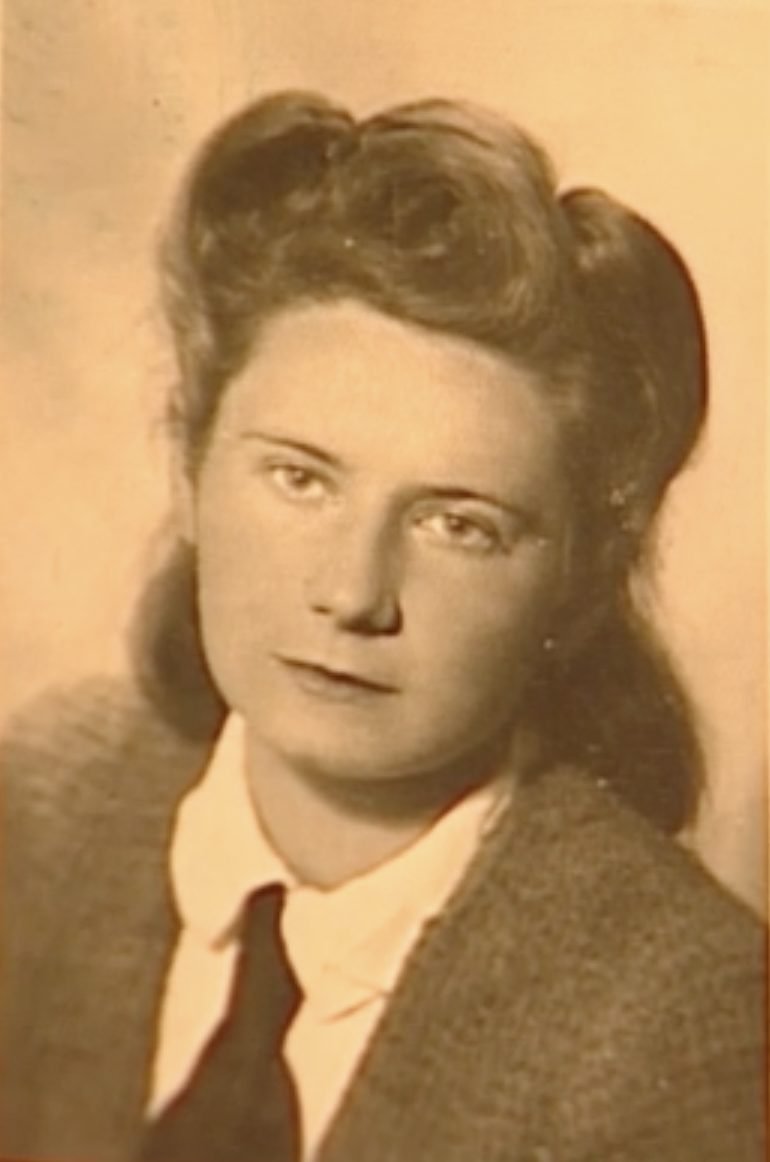
Their presence is confirmed by registration documents: the list of survivors notes Ozjasz Greifinger, son of Abraham and Chaja, and Edyta, daughter of Ozjasz and Elfryda, born in 1924, at a shared address on Bychawska Street.
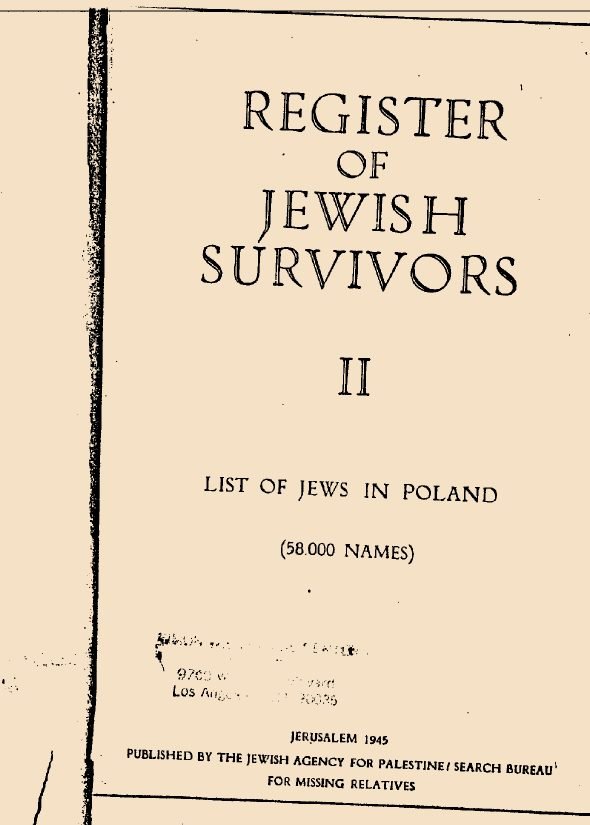
The names of all three also appeared in the register printed in Jerusalem in 1945 — in the second volume of the „Register of Jewish Survivors", covering 58 thousand names of Jews found in Poland after the liberation. On the page of names beginning with „Gr" they stand one below another: Edyta, Elfryda and Ozjasz, all three with the annotation „Lublin". The father's name the typesetter set with an error — „Grefinger".
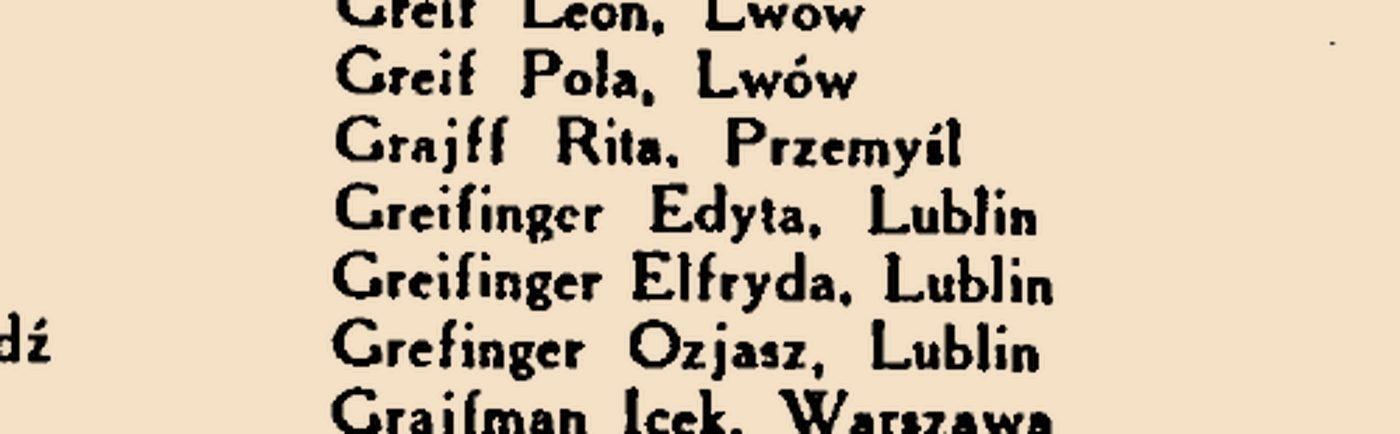
For families searching for their kin all over the world in 1945, such a line in a printed register was often the first and only news that someone was alive. The Greifingers had three lines in that column.
Separately, Elfrieda's registration card survives. On it was written what matters most in such cards: the surname, the parents' names — Samuel and Matylda Pozner — the year of birth, and below, three words that are her entire wartime geography: „W-wa", „Złota 7/9", „Otwock". It is the second document, wholly independent of the residence register, that ties this family to our address — and at the same time the only known record in which Elfriede herself names Złota as her home. The year of birth is given here as 1902 — a year later than in the residence register and on the gravestone.
XV. 1946–1949 — Marburg, Lexington, America
In 1946 Edyta left for Germany and continued her studies in Marburg an der Lahn — in a city where people like her were studying then: survivors for whom return to their own country had ceased to be obvious. In December 1947, on a B'nai B'rith Hillel scholarship, she came to the University of Kentucky in Lexington. She was twenty-three, had two stages of a degree behind her, and behind her also everything described above. Her parents reached the United States in 1949 — thirteen years after the father filed his first emigration papers, and along exactly the road the 1936 quota had assigned them.
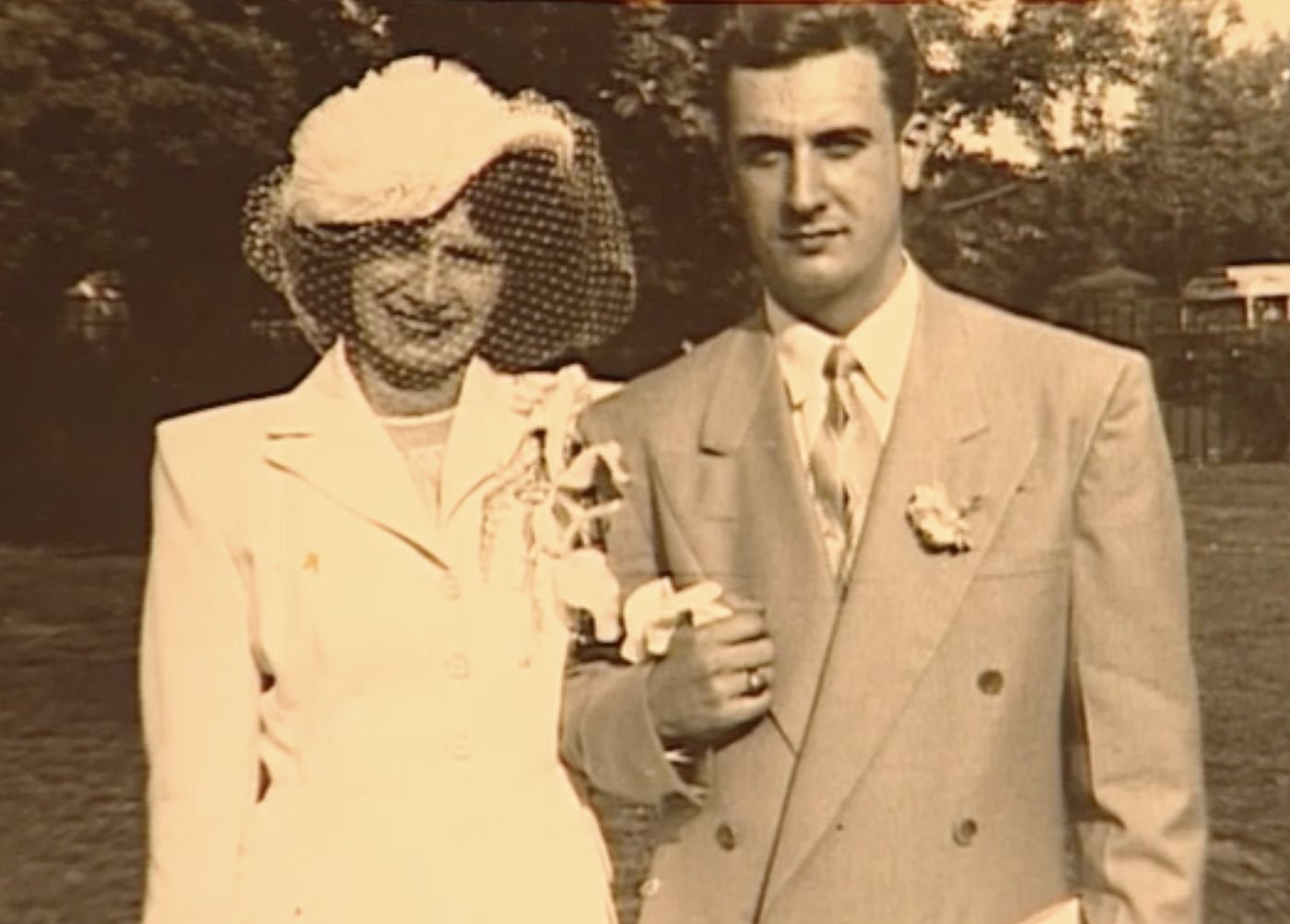
In Lexington Edyta met Irving Millman, a microbiologist, and married him.
XVI. The vaccine that saved millions
Irving Millman — son of a Jewish immigrant from Russia working in New York's garment district, in the war a soldier of the American army decorated with the Bronze Star for taking a German soldier prisoner — began with research on a tuberculosis vaccine, worked at Merck on vaccines against whooping cough and rubella, and in June 1967 joined the team of Baruch Blumberg at the Fox Chase Cancer Center in Philadelphia. Blumberg, the future Nobel laureate, had just identified the hepatitis B virus; what was missing was someone who could turn that knowledge into a medicine. Millman was the only trained immunologist on the team. Blumberg himself later wrote that his arrival was „probably the most important factor" in the breakthrough, and in conversation with the press put it more simply: without Millman there would have been no vaccine.
Millman worked out the way to separate the virus from human blood, to purify it and render it harmless — by heat or chemically. That procedure became the method of producing the vaccine. The work was dangerous: for years the researchers were in constant contact with infected blood. Earlier, still in the 1960s, Millman had co-created the test detecting the virus in donated blood; after its introduction in blood banks in 1971, transfusion-borne infections fell by a quarter. The vaccine entered the market in 1982.
The scale of what followed is hard to imagine. Hepatitis B leads to cirrhosis and to liver cancer; more than a billion people have since received the vaccine, and it is sometimes called the first anti-cancer vaccine. It is given to newborns in the first hours of life. In 1993 Millman and Blumberg were inducted into the American National Inventors Hall of Fame. It is said that the spread of this vaccine raised the average human lifespan by several months — „not many people can say they had such an impact", wrote the scientific director of Fox Chase after his death.
It is worth pausing over that sentence precisely here, in an account about Złota Street. The girl driven out of the ghetto in 1942 by a bribed lorry driver married, a few years later, a man whose work saved millions of people on every continent. There is no justice in this and no recompense — there is, however, the fact that the war which was meant to erase this family without trace could not even hold it in place. Edith and Irving had two children — Diane of Washington and Steven of Boston — and five grandchildren. Irving Millman died on 17 April 2012, three years after his wife.
XVII. Witnesses
This family did something many surviving families could not: it wrote itself down. Elfriede set down her memoirs in German shortly before her death; Edith translated them into English. The typescript entered the collections of the United States Holocaust Memorial Museum as the Elfriede Posner Greifinger collection. Edith herself recorded at least two extensive accounts — one for the USHMM, the other for the archive of USC Shoah Foundation — and it is from these that most of the details quoted above come: the horsemeat, the one spoon campaign, Colonel Ostrus, the horse bought by the fugitives outside Warsaw, the keeper who gave water to his dog.
Edith, however, was not only a witness but also one who gathers the testimony of others. It was she who on 2 May 1987 conducted in Israel, and translated from German and Polish, the account of Jadwiga „Giza" Zoszak née Greifinger — a woman who of eight siblings lost five, slept with an axe by her bed and survived as a Pole. That conversation is today part of the USHMM collections, prepared in cooperation with Gratz College. The name Greifinger thus appears in the archive twice: as the name of the interviewee and as the maiden name of the person asking the questions.
XVIII. Those who did not get out
The three from Złota 9 survived complete — but that sentence applies only to apartment no. 21. The wider Greifinger family was murdered. Edyta spoke in her accounts of many relatives she had lost and described the deaths of several of them; of the Sambor–Borysław branch, if the hypothesis of kinship with Giza Zoszak is correct, three of eight siblings survived the war. The rest perished in the camps or at the hands of the Gestapo.
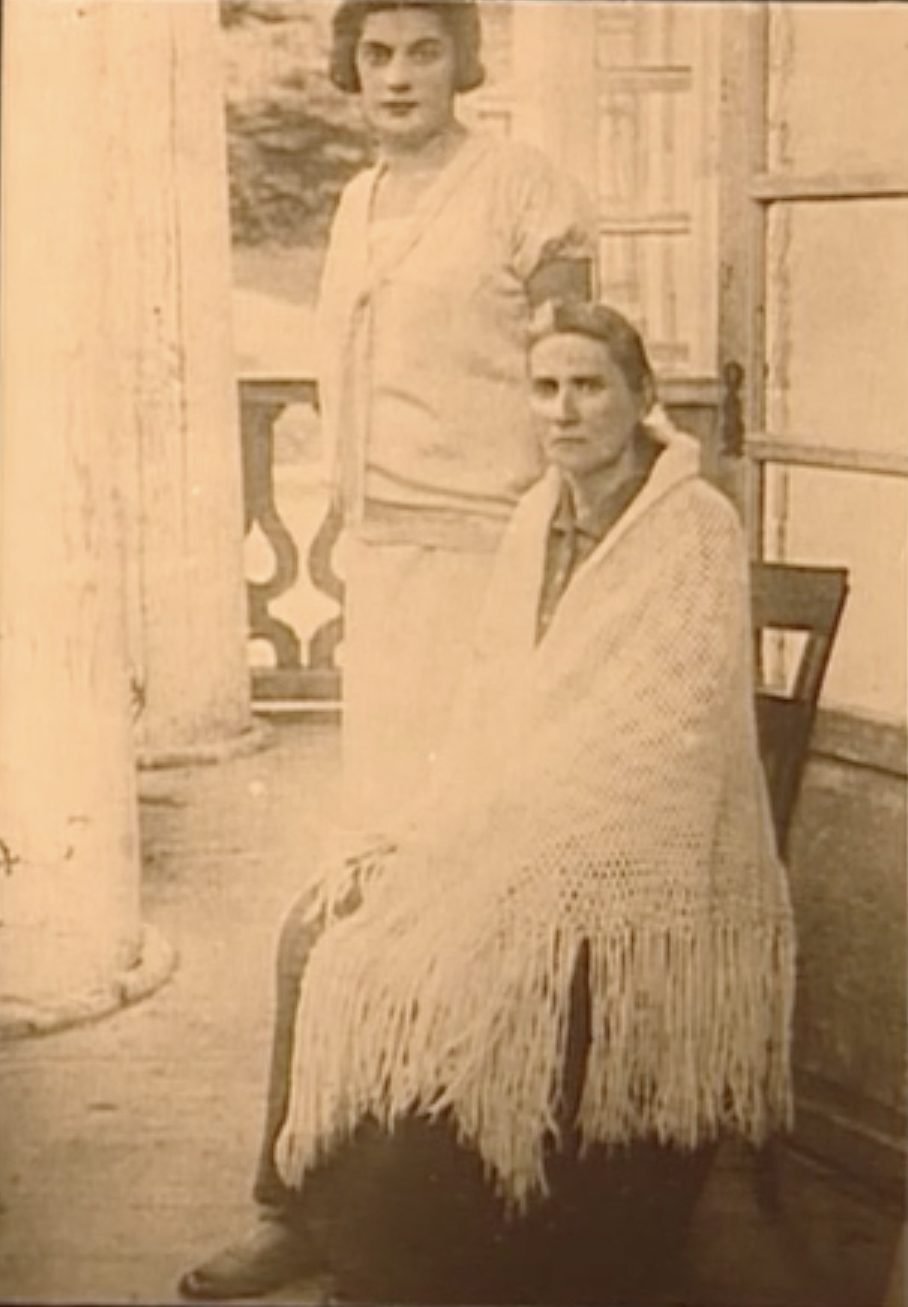
In this photograph are two women whose names appear on no list of survivors. The seated one is Chaja Greifinger, Ozjasz's mother; she perished in the Lwów ghetto. The standing one, Ozjasz's eldest sister, was also a victim of the Holocaust.
XIX. Memory
Elfriede Greifinger died on 16 June 1984 in the Bronx, at the age of 83. Ozjasz outlived her by fifteen months — he died on 20 September 1985 in Willow Grove, Pennsylvania, aged ninety. Edith Millman died on 12 October 2009 in Washington; her husband Irving three years later. Ozjasz, Elfriede and Edyta rest in the same cemetery — Shalom Memorial Park in Huntingdon Valley near Philadelphia, in neighbouring plots.
They left Złota 9 on 28 October 1939 and never returned here. They lived at this address for two years and twenty days. What remains of them is what they managed to write down — and two documents: a card in the residence register with three names and the same entry „Mosaic", and a registration card from 1946 on which someone wrote „Złota 7/9" in pencil. Passing this house, it is worth remembering that a whole epoch lived under one address — and that this one family came through it complete.
Timeline
| Date | Event |
|---|---|
| 8 Mar 1895 | Ozjasz Hersz Greifinger is born, son of Abraham and Chaja — the date from the Złota 9 residence register and from the gravestone in Pennsylvania. |
| 2 Jun 1901 | Elfryda (Elfriede) Posner is born, daughter of Samuel and Matylda née Roger. The post-war registration card gives the year 1902. |
| 30 May 1924 | Edyta is born in Bielsko — the Greifingers' only child. |
| until 1937 | The family lives in Czechowice near Bielsko, in house no. 611, where Ozjasz works at the refinery of the oil concern. |
| 1936 | The Greifingers file emigration papers for the USA; the American quota assigns them a place in the queue only for 1941. |
| 8 Oct 1937 | Registration of residence at Złota 9, apartment no. 21. The same day the maid who came with them, Teofila Kamińska, registers too. |
| 17 Aug 1938 | Teofila Kamińska deregistered to 18 Górnośląska St., apt. 5. |
| 27 Aug 1938 | A new maid registers in apartment no. 21 — Genowefa Rowicka, from 118 Marszałkowska St., apt. 7. |
| Sep 1939 | Ozjasz sets out east with the wave of mobilised men; the apartment is bombed, Edyta wounded. |
| 28 Oct 1939 | All three deregistered from Złota 9 „to 12 Noakowski St., apt. 3". The same day Genowefa Rowicka is deregistered — to 89 Podchorążych St., apt. 12. |
| Nov 1940 | Resettlement into the ghetto — one room on Sienna Street. |
| 1940–1942 | Edyta's clandestine classes; all three work in the shop of Karl Georg Schultz. |
| Jul–Sep 1942 | The Great Deportation. Ozjasz is driven to the Aryan side by his boss, returns to the ghetto with papers in the name of Henryk Nowakowski. |
| late 1942 | Edyta leaves the ghetto hidden in a German lorry; false documents are arranged by a friend in the underground, Czesiek. |
| 1943 | The parents on the Aryan side; Elfriede as Antonina Zoszak, Edyta as Edyta Zoszak and Jadwiga Olszewska. Edyta works in the German railway administration at the station in Otwock. |
| May 1943 | Anka perishes — the friend who left the ghetto after Edyta and went back behind the wall out of fear. |
| 1943–1944 | The fifth-floor apartment with the hiding place under the bed and the masked passage to the attic. |
| summer 1944 | The blackmailers' raid: the Greifingers are robbed and flee through the attic to Otwock. |
| Jul–Aug 1944 | Liberation of Otwock by the Red Army. |
| autumn 1944 | The family in Lublin, Bychawska Street; Edyta begins medical studies. |
| 1945 | All three appear in the Jerusalem „Register of Jewish Survivors II" as survivors registered in Lublin. |
| autumn 1945 | Edyta's student identity card of the university in Lublin. |
| 1946 | Registration card of Elfrieda Greifinger with the addresses: Warsaw, Złota 7/9, and Otwock. Edyta leaves for Germany and studies in Marburg. |
| Dec 1947 | Edyta, on a B'nai B'rith Hillel scholarship, comes to the University of Kentucky in Lexington. |
| 1949 | Ozjasz and Elfriede reach the United States. |
| c. 1950 | Edyta marries Irving Millman, a microbiologist. |
| 1967 | Irving Millman joins Baruch Blumberg's team at the Fox Chase Cancer Center in Philadelphia. |
| 1971 | The test detecting the hepatitis B virus enters the blood banks; transfusion-borne infections fall by a quarter. |
| 1982 | The hepatitis B vaccine enters the market — given since to more than a billion people. |
| 16 Jun 1984 | Elfriede Greifinger dies; she leaves memoirs written in German. |
| 20 Sep 1985 | Ozjasz Greifinger dies. |
| 2 May 1987 | In Israel Edith Millman records the account of Jadwiga „Giza" Zoszak née Greifinger. |
| 1993 | Irving Millman and Baruch Blumberg are inducted into the American National Inventors Hall of Fame. |
| 1996 | Edith Millman records an extensive account for the archive of USC Shoah Foundation. |
| 12 Oct 2009 | Edith Millman dies. |
A Note on Sources
The findings on the Warsaw address rest on two documents: the card of apartment no. 21 (p. 128) of the residence register of the house at 9 Złota Street, State Archive in Warsaw, and the post-war registration card of Elfrieda Greifinger of 1946, with the entry „W-wa, Złota 7/9, Otwock". The remaining sources: the account of Edith Millman née Greifinger recorded for the United States Holocaust Memorial Museum (summary in the USHMM catalogue, irn508663) and her interview in the archive of USC Shoah Foundation (no. 21310, recorded 1996); the memoirs of Elfriede Greifinger née Posner (1901–1984), written in German and translated into English by her daughter — Elfriede Posner Greifinger collection, USHMM, accession no. 2008.271.1; personal files and event descriptions in the getto.pl database; the account of Jadwiga Zoszak née Greifinger recorded and translated by Edith Millman on 2 May 1987 (USHMM, RG-50.462.0602, prepared in cooperation with Gratz College); „Register of Jewish Survivors II. List of Jews in Poland (58.000 names)", Jerusalem 1945; the Lublin registration list of survivors (address: Bychawska); the obituaries of Irving Millman in „The Washington Post", „The New York Times" and „The Sydney Morning Herald" of April and May 2012 and the note of the National Inventors Hall of Fame; the gravestone entries of Shalom Memorial Park; studies and iconographic materials concerning the companies Standard-Nobel w Polsce S.A. and Vacuum Oil Company S.A. in Czechowice and the Generali house at Złota 7/9. Family photographs and frames from recordings — from the family's collection; the provenance of individual prints is being established.
Discrepancies noted in the text: Ozjasz's year of birth (8 III 1895 per the residence register and gravestone — against 1893 in the Lublin register); Elfriede's year of birth (1901 per the residence register and gravestone — against 1902 on the registration card); the birthplaces of Ozjasz and Elfriede (Wrocław per the gravestones, Dziedzice per getto.pl); the family's pre-war address („Marszałkowska 7/9" in the getto.pl database — an erroneous finding, resolved in favour of Złota); the identity of „Czesiek" (probably, though without confirmation, Czesław Chruszczewski); the kinship of Jadwiga „Giza" Zoszak née Greifinger with Ozjasz — a hypothesis; the identification of the people in the family photographs, including Edyta's grandmother and aunt — to be confirmed. The full list of variants, theories and unused material is contained in the project's internal working document.
Opracowanie w ramach projektu upamiętnienia mieszkańców kamienicy przy ul. Złotej 7 i 9 w Warszawie — prepared as part of the project commemorating the residents of the house at 7 and 9 Złota Street in Warsaw · www.zlota7-9.com