„To remember and never to forget — that is the commandment of our generation."
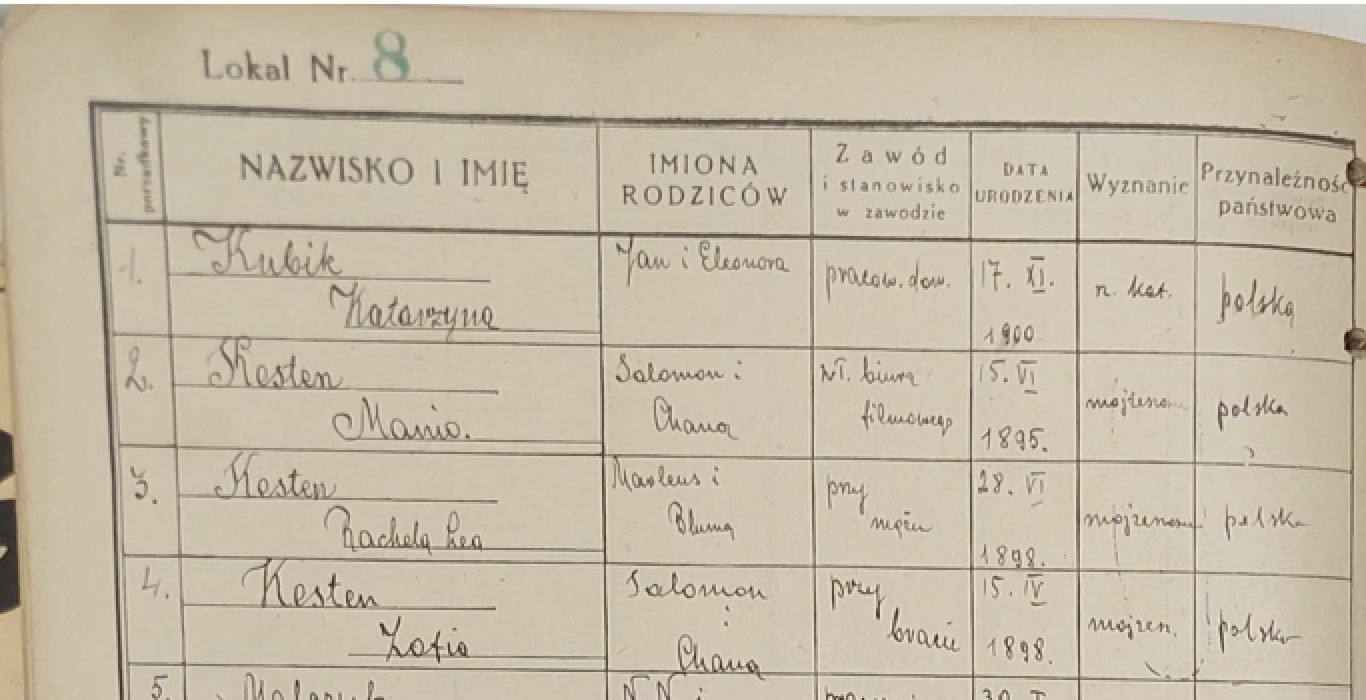
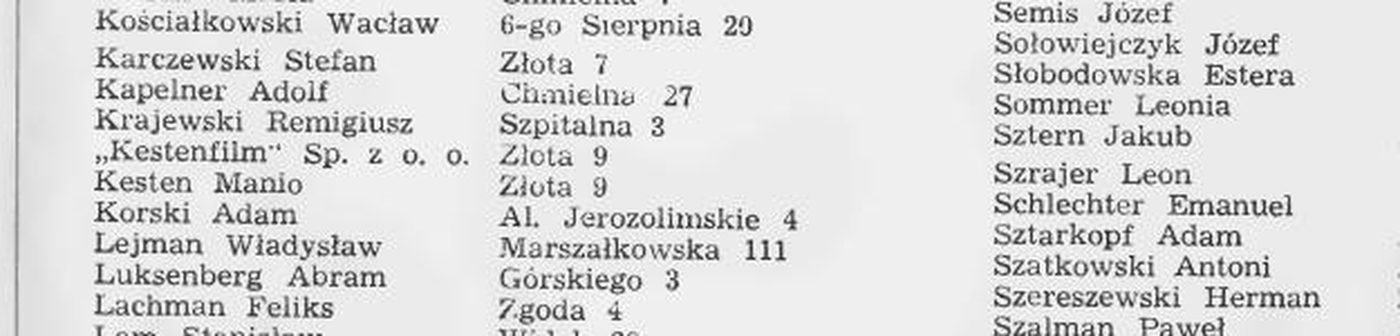
There were three of them. He — the owner of a film distribution office, a man who brought the best films of France to Polish screens. She — Rachela Lea, his wife, from the same border town and the same family. And Zofia, Manio's sister, living „with her brother." They lived in a modern building at 9 Złota Street. On 6 February 1940 they were struck from the residence register of their apartment with no forwarding address given. All three died in the Warsaw ghetto. Not a single photograph of them has survived.
This account gathers everything that is known about them. Every fact comes from a source: from the residence register, from the commercial register, from advertisements in the film press, from a spa guest list, from official announcements, from pages of testimony. Where the sources are silent, it is silent too.
I. Podwołoczyska — roots
The story begins far from Warsaw — in Podwołoczyska, a town in the Tarnopol province, situated literally on the border: the little river Zbrucz carried first the Austrian-Russian frontier and, after 1918, the Polish-Soviet one. Manio — properly Menachem Manes — Kesten was born there on 15 June 1895 (the family genealogical tree gives the year 1891), the son of Salomon Kesten (1854–1909) and Chana née Brandiss. The house was full of children: the family tree lists more than a dozen, born between 1878 and 1897. Four died in infancy or childhood — an ordinary fate in the Galician towns of that era. Those who reached adulthood alongside Manio were: Josef Meyer; Schmeril; Schije Gerson, known as Georg, who emigrated to Germany and settled in Mannheim — he died there in an accident in May 1932, as the family tree records, and rests in the Mannheim Jewish cemetery; Etie, married name Ziegenlaub; Sure Złata, known as Zofia; Frida, married name Scharf (who died in 1939 — on the threshold of the war); and the youngest, Moshe, born in 1897, who took his mother's family name — recorded in his documents as Brandriss. The fate of this last one is a separate odyssey of the century: he settled, like his brother Georg, in Mannheim, escaped during the years of Nazi persecution to France, appeared in French documents already as Maurice, and in March 1942 — in the very middle of the war — married in Nice the Poznań-born Lotte Dorothea née Schwarz; he died in September 1981 in New York. He alone of all the siblings survived.
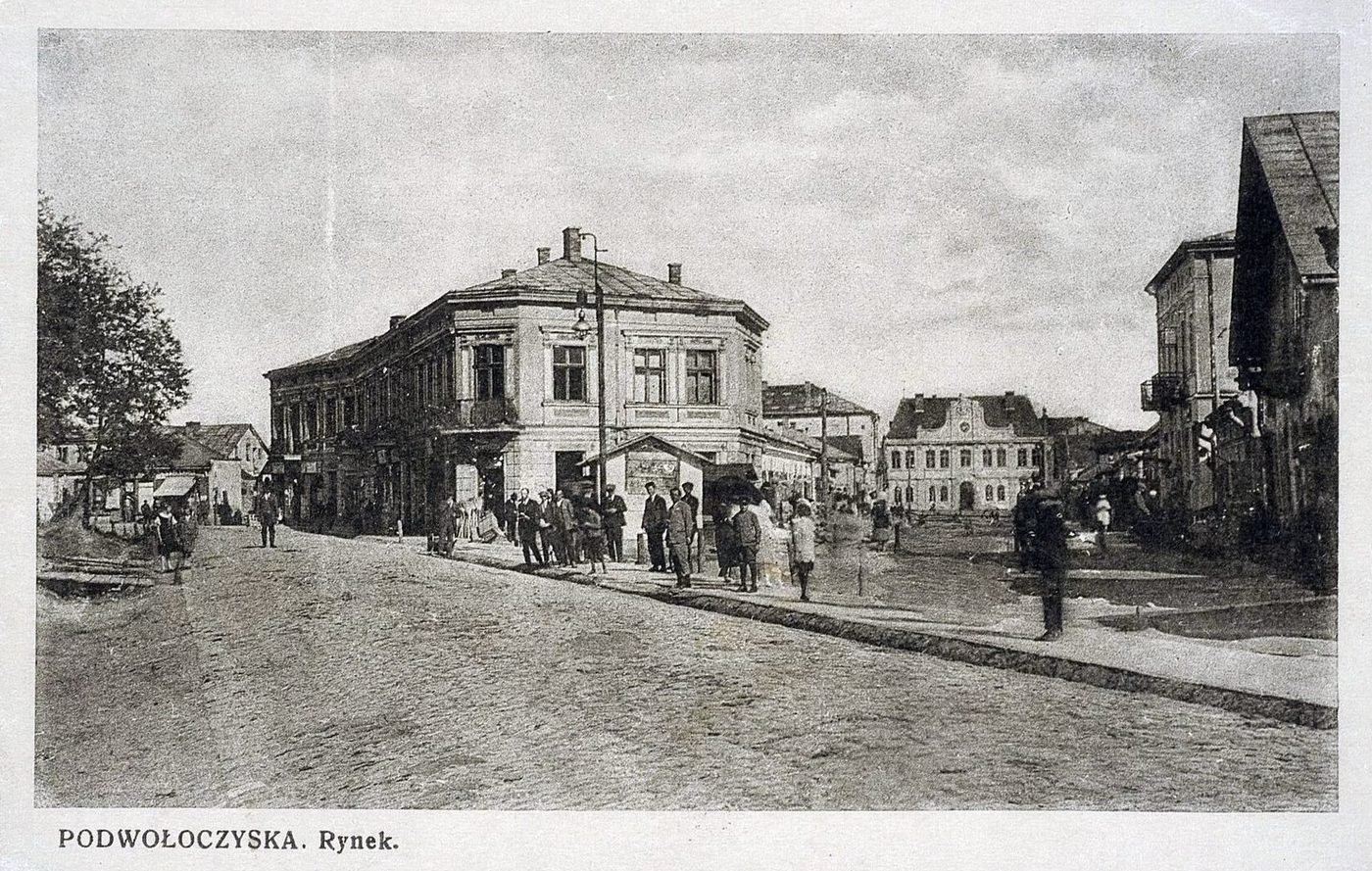
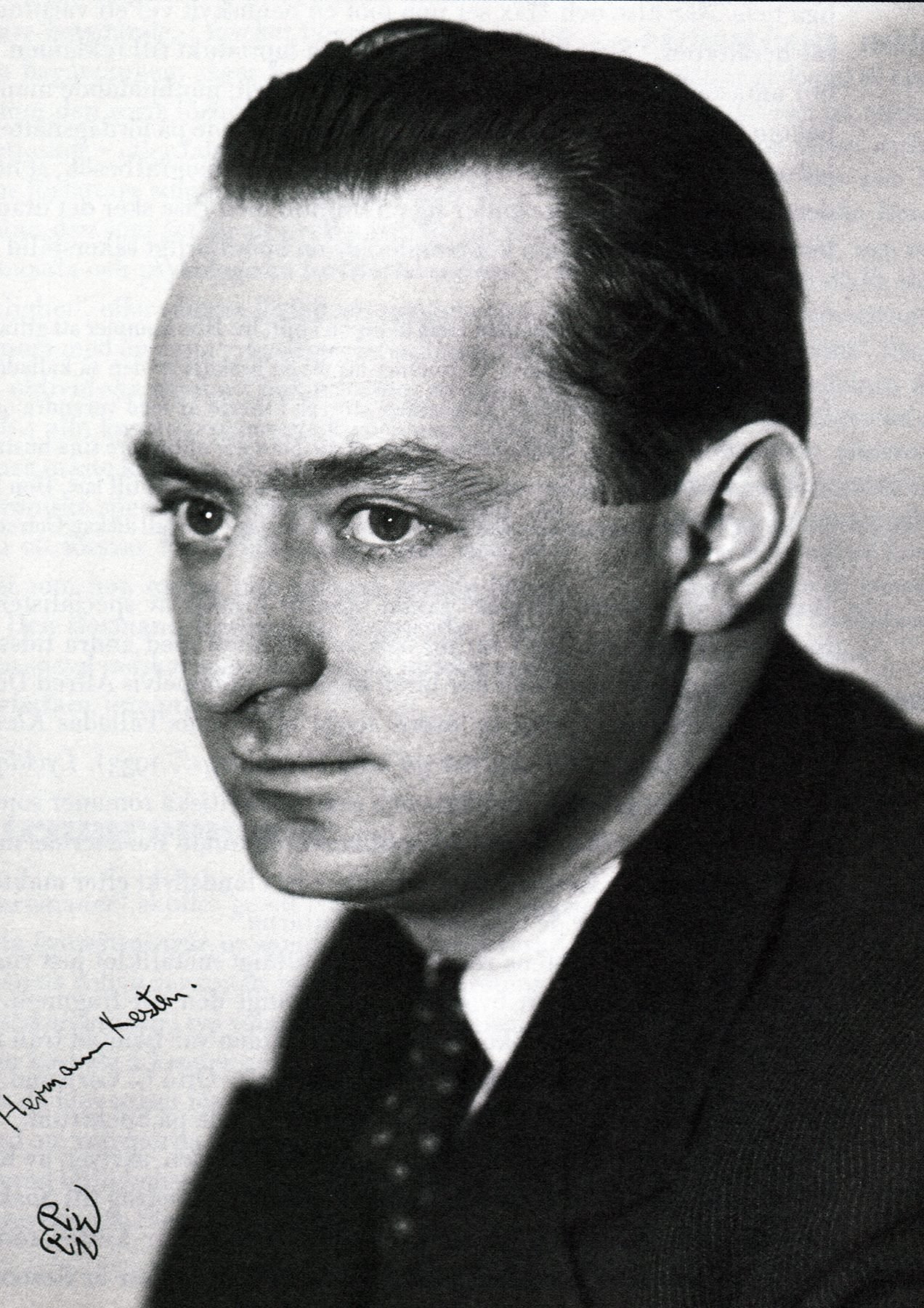
Podwołoczyska did not so much lie by the border as live off the border. From 1871 the railway line from Lwów reached here, and since on the other side of the Zbrucz the broad Russian gauge began, everything — travellers, grain, goods — had to change and be transloaded at Podwołoczyska. Around the border station grew up warehouses, customs agencies, exchange offices and hotels; a large part of the inhabitants were Jews, living from trade and the servicing of the border traffic. And yet it was a town both small and young: the community was formed only in 1880, town rights came a year later — Salomon Kesten, Manio's father, was older than his own town. Around 1900 Podwołoczyska numbered barely five thousand inhabitants, of whom nearly three quarters, not quite four thousand people, were Jews — the whole community from which the Kestens came would have fitted into the auditoria of a few great cinemas of the epoch. It was, then, no sleepy, age-old shtetl, but a newborn settlement: a boomtown at the meeting point of two empires, living off the border, the tracks and the transloading. Then history twice rolled over the little town's head: the First World War, whose front stood on the Zbrucz, and the war of 1920. The family paid its own tribute: Manio's uncle Isaak, wounded on the eastern front, died in January 1918 in a military hospital in Lublin — in the uniform of the Austro-Hungarian 15th infantry regiment, to which the men of the Tarnopol region went. The son of that same Isaak, and thus Manio's first cousin, Hermann Kesten (1900–1996), born in Podwołoczyska, became one of the most celebrated German émigré writers of the century: editor at Kiepenheuer in Berlin, head of the émigré programme of the Allert de Lange publishing house in Amsterdam, after the war president of the German PEN Club and laureate of the Büchner Prize — the highest laurel of German letters. From one clan of a border town grew a man of literature and a man of film — the writer was saved by exile. In independent Poland the border — now Polish–Soviet — was sealed tight, the great transit traffic died away, and Manio's generation had to seek its future elsewhere. The boy from the station through which the world had once passed chose the trade in which the world comes to people: the cinema.
Manio's wife also came from Podwołoczyska: Rachela Lea, born — according to the residence register — on 28 June 1898, daughter of Markus and Bluma. In post-war family testimonies she was also recorded as Rosa or, in the Jewish form, Reizel. Family trees now allow her parents to be identified precisely: Markus Kesten was Salomon's own brother, and Bluma came from the Halberstamm family — Manio therefore married his first cousin, as was not uncommon in the Galician shtetls; this is confirmed by the Yad Vashem Page of Testimony, in which the field „wife's maiden name" reads: Kesten. Rachela's father emigrated to Palestine and died in Haifa in August 1940, when his daughter was already trapped in occupied Warsaw; he rests in the old Jewish cemetery in Haifa. The third subject of this story is Zofia (Sure Złata) Kesten, Manio's sister, born on 15 April 1898 — in the residence records entered with the annotation „with her brother."
The family was wider and scattered across Europe — and the Holocaust found it everywhere. In Amsterdam in those same years lived another Kesten born in Podwołoczyska: Manus (Max), born 1898, recorded in the occupation card index as „director of a film enterprise" — a second film man of that name from one Galician town. His wife was Anna née Margulies — a name interwoven with the Kesten family: it is a Margulies cousin who after the war will submit the page of testimony for Rachela. Manus's fate we know from a single card: on 17 April 1943 interned in the Westerbork transit camp, without any „Sperre" protecting him from deportation; on 20 July 1943 deported on the last transport from Westerbork to the extermination centre at Sobibor. The post-war Dutch official list adds the rest: Manus, Anna — born in Berlin — twelve-year-old Hermann, born in Duisburg, and five-year-old Bilha, born already in Amsterdam, perished at Sobibor all four, with the officially adopted date of 23 July 1943 — the day of the transport's arrival. The children's birthplaces mark the family's road: from Germany, after Hitler's coming to power, to Holland — which proved a trap.
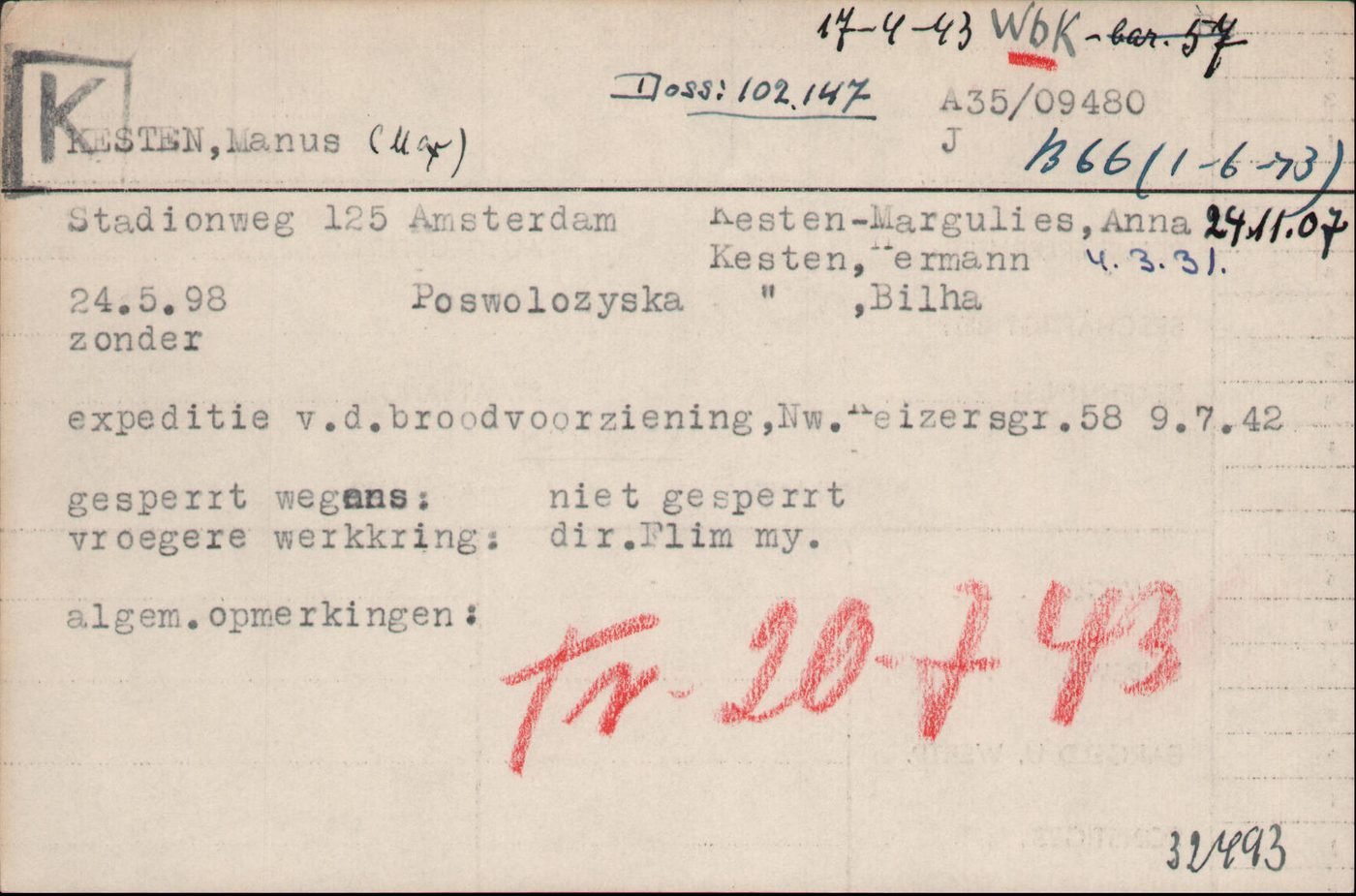
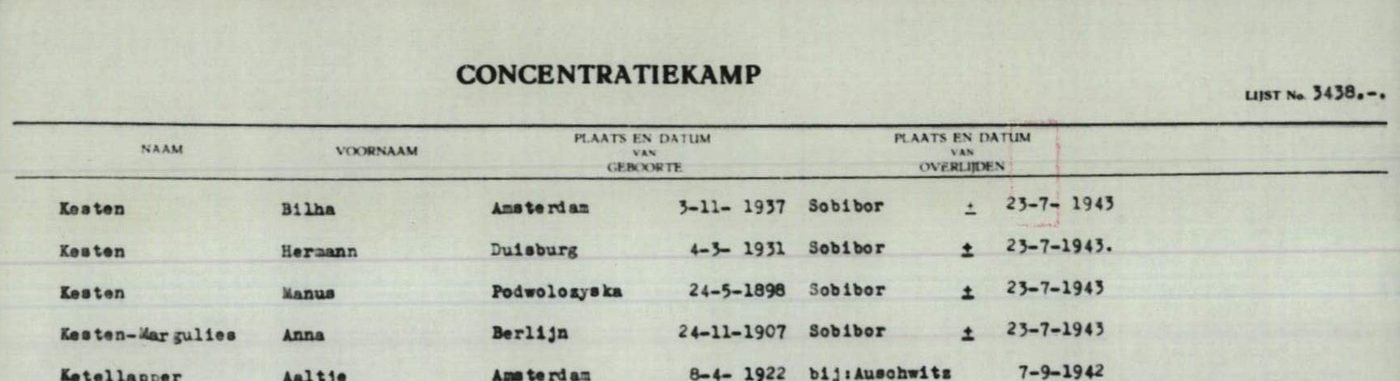
And one more thing must be seen in these records: the dates. Manio — 1895. Moshe — 1897. Manus — 1898. Rachela — 1898. Hermann — 1900. Five years, one small town, one family under one name, Kesten. They grew up in the same years on the same little streets between the station and the Zbrucz. And then they dispersed across the whole continent: Manio chose Warsaw and the cinema; Manus — Amsterdam and the cinema too; Hermann — Berlin and literature; Moshe — Mannheim, and when Germany became a trap, France and New York. From a border town through which the world merely passed came people who helped to make that world. The war caught each of them somewhere else: Manio in Warsaw, Manus in Amsterdam, Hermann in the exile that saved him, Moshe in the America he reached in time. The two men of the cinema perished — in the Warsaw ghetto and at Sobibór; Hermann, saved by emigration, and Moshe, the youngest of Manio's brothers, survived.
II. Kesten-Film
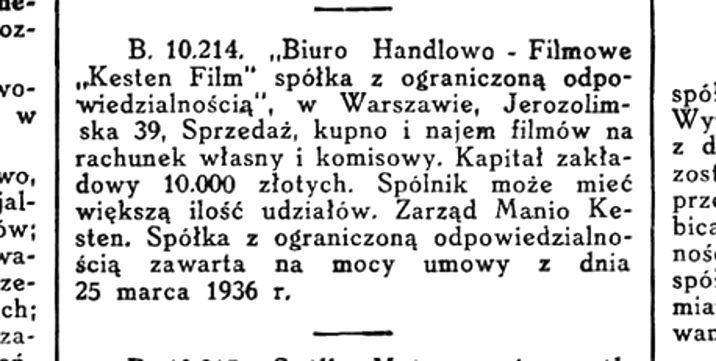
We do not know exactly when the Kestens moved to the capital. We do know to the day when the firm was born: on 25 March 1936 the contract of the limited-liability company „Kesten-Film Commercial-Film Bureau" was concluded, entered subsequently in the commercial register under number B 10.214. The object of its activity was defined broadly: „the sale, purchase and hire of films on its own account and on commission"; the share capital was 10,000 złoty, and the one-man management was exercised by Manio Kesten himself. Its seat was 39 Aleje Jerozolimskie — at the same address, in apartment number 26, lived the family, and the bureau had telephone 985-56. In the registration documents Manio's profession was defined briefly: „owner of a film bureau".
Within a year the firm had an established position in the trade. „Kesten-Film imports Viennese, French and English films," wrote the Warsaw weekly „Wiem wszystko" in April 1937, adding: „Although »Kesten-Film« has existed for only a year, it has won a well-deserved name in the film trade." In time French cinema became the office's speciality — „of the French films it has chosen the best!", proclaimed one advertisement — and in the autumn of 1937 the firm boasted that its „Robinson Crusoe" was „the biggest box-office film of 1937."
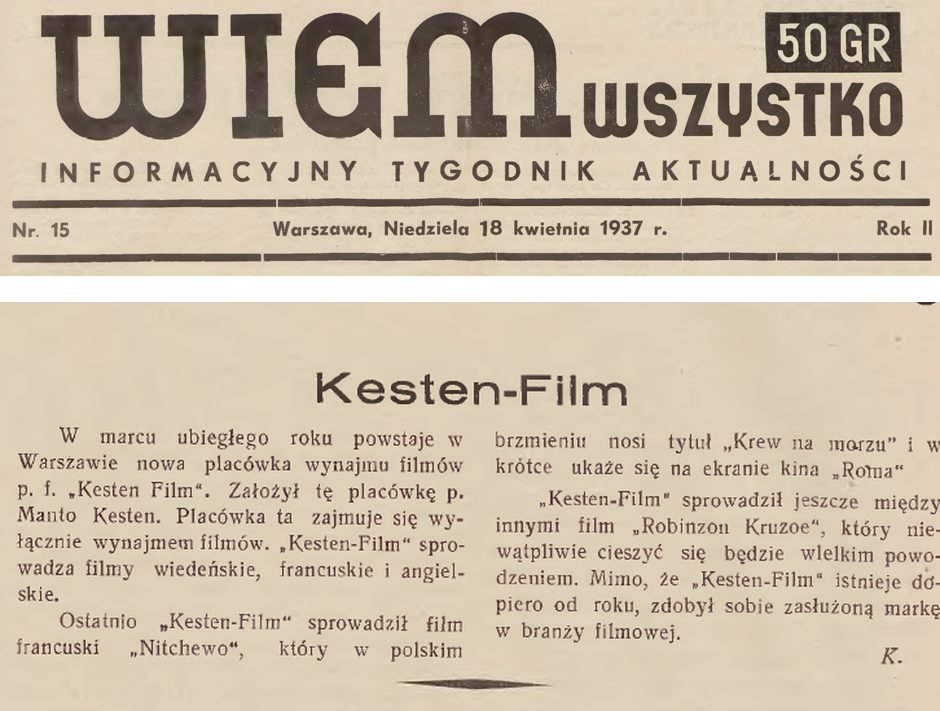
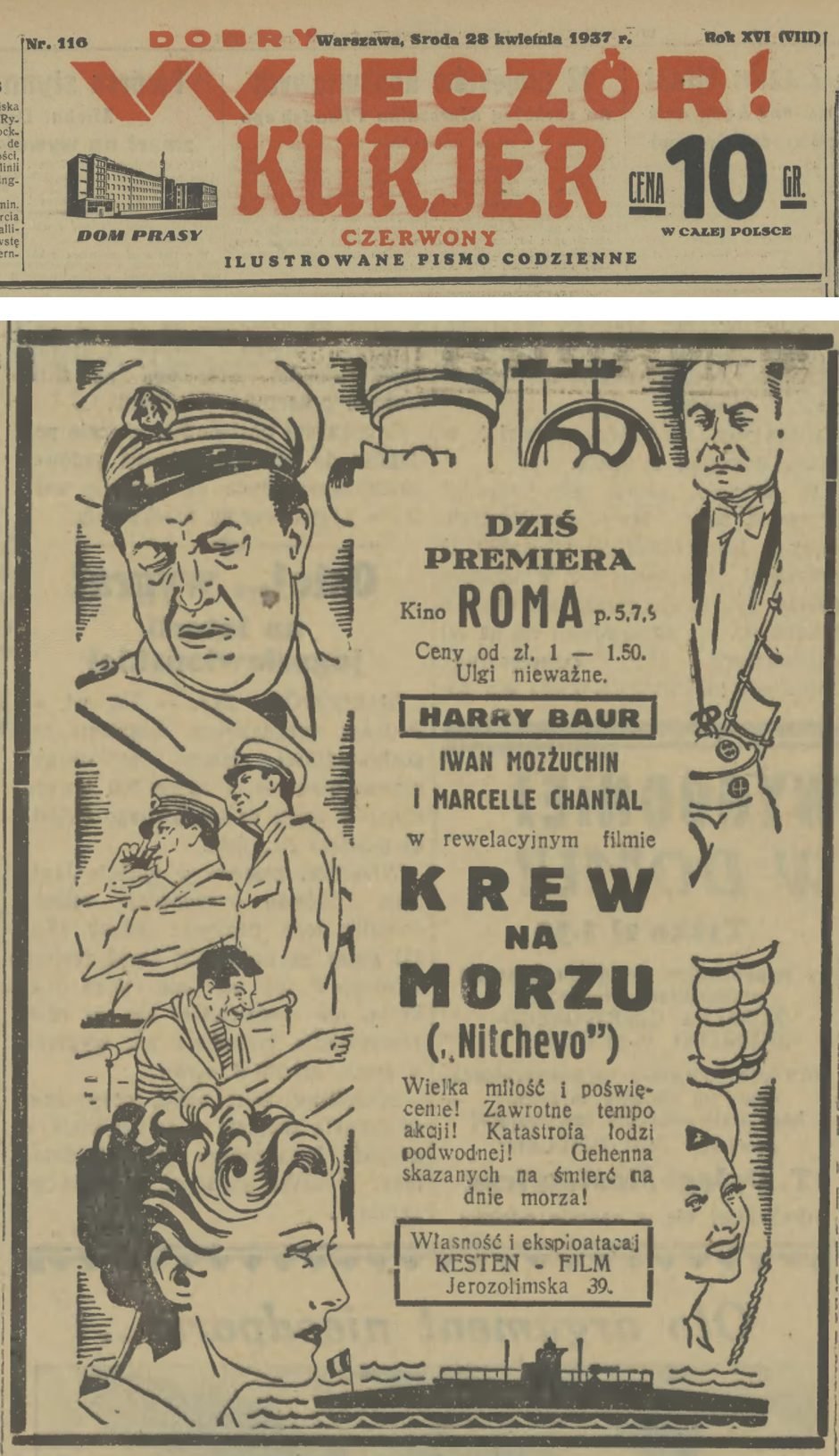
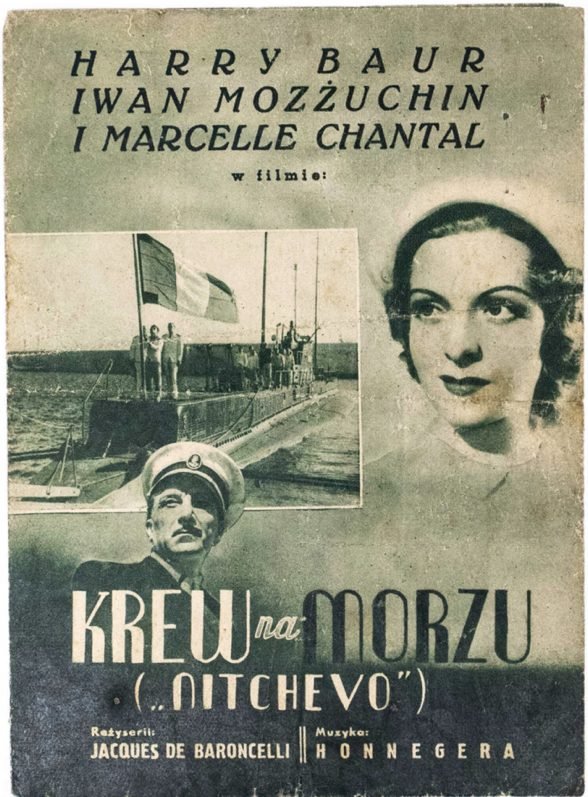
A week after that article came the first great success. „Nitchevo" by Jacques de Baroncelli — a submarine drama with Harry Baur, Marcelle Chantal and the great Ivan Mozzhukhin, with music by Arthur Honegger — entered Polish screens as „Krew na morzu" (Blood on the Sea). The Warsaw premiere took place on 28 April 1937 in the Roma cinema; the advertisements in the capital's press cried: „Great love and sacrifice! A dizzying pace of action! A submarine catastrophe!" — and in a box was added: „Property and exploitation Kesten-Film, Jerozolimska 39".
III. The house on Złota — autumn 1937
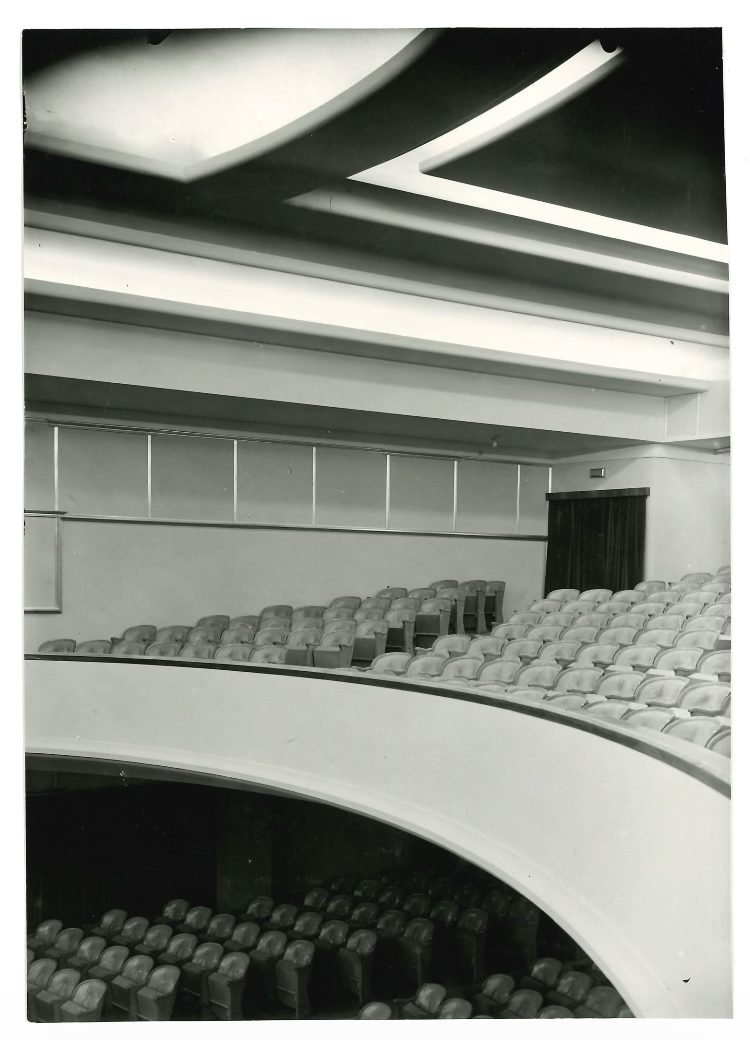
In 1935–1937 the Italian insurance company Assicurazioni Generali raised at 7 Złota Street in Warsaw a modern building to a design by Edward Eber — with the Palladium cinema below and apartments above. For a film entrepreneur a better address was hard to find: the quarter of Marszałkowska, Złota, Zielna, Chmielna and Sienna Streets was the film-trade basin of interwar Warsaw, and in the house next door, at 9 Złota, were the offices of film-hire firms.
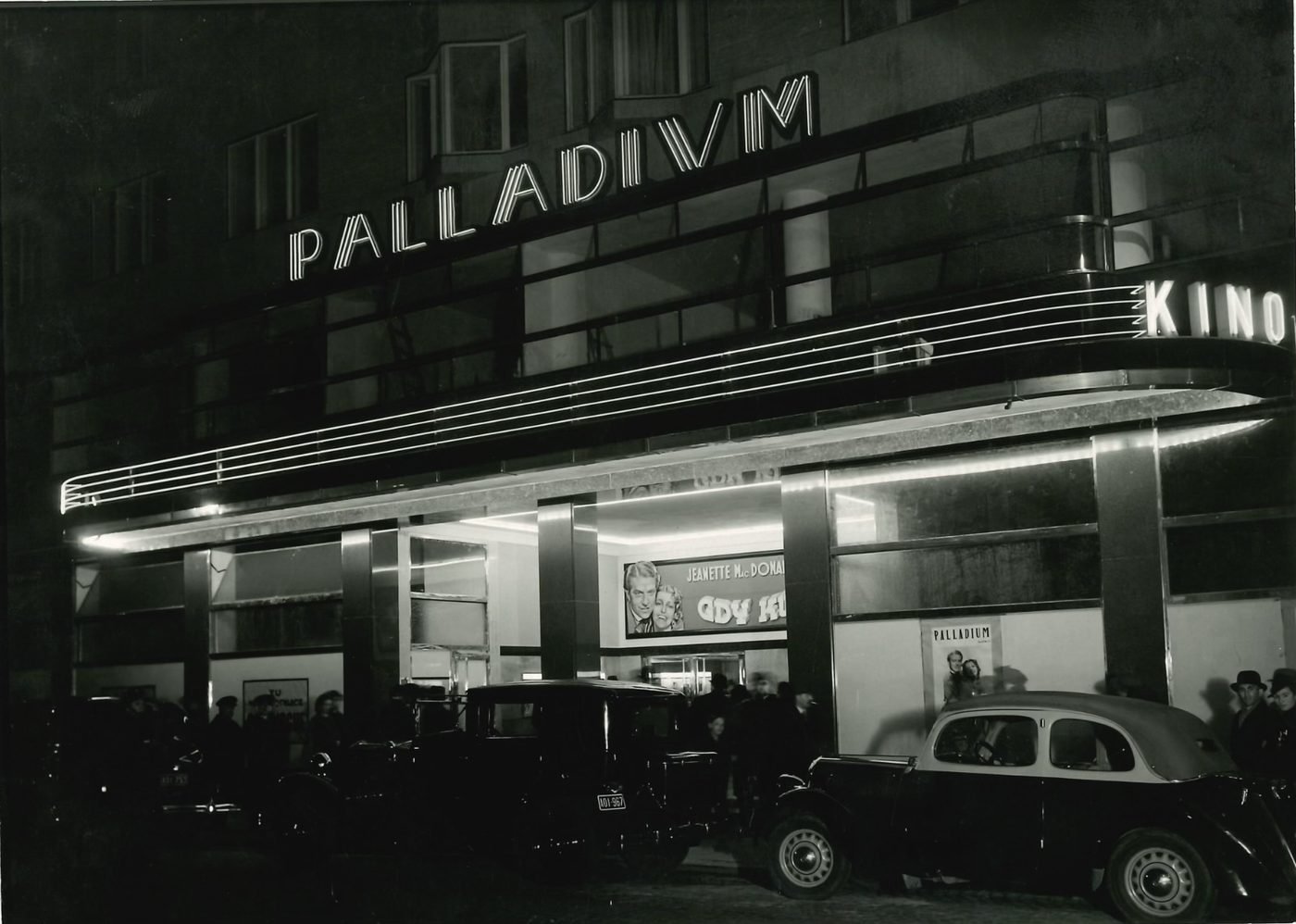
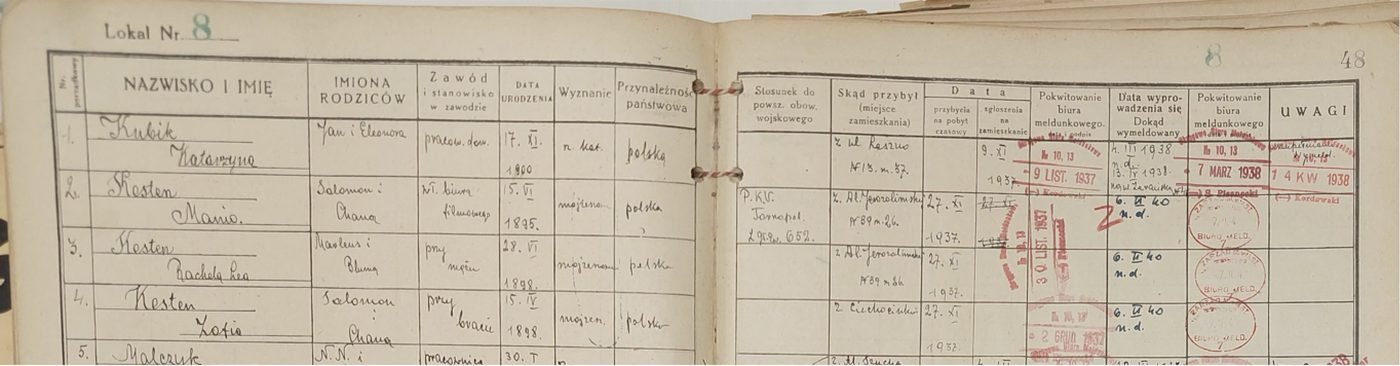
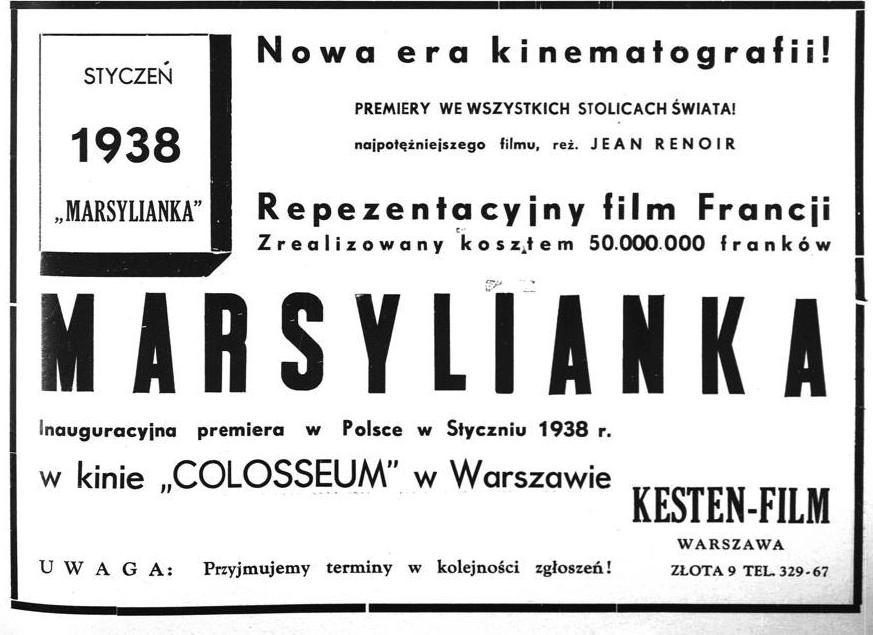
In the autumn of 1937 the firm and the family moved to 9 Złota Street (telephone 329-67). In the residence register of the property, apartment card number 8 has survived, dated 27 November 1937. They had the Palladium cinema one floor below; the „first-run" premières of their own films they arranged, among other places, at the great Colosseum cinema.
The card of apartment no. 8 of the residence register of Złota 7. Entries 2–4: Manio, Rachela Lea and Zofia Kesten; registered 27 Nov 1937, deregistered 6 Feb 1940 without a destination address.
IV. French cinema on Złota Street
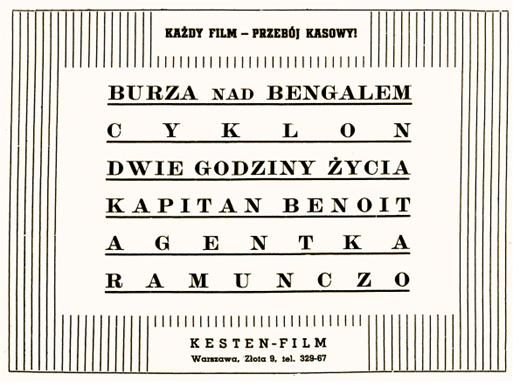
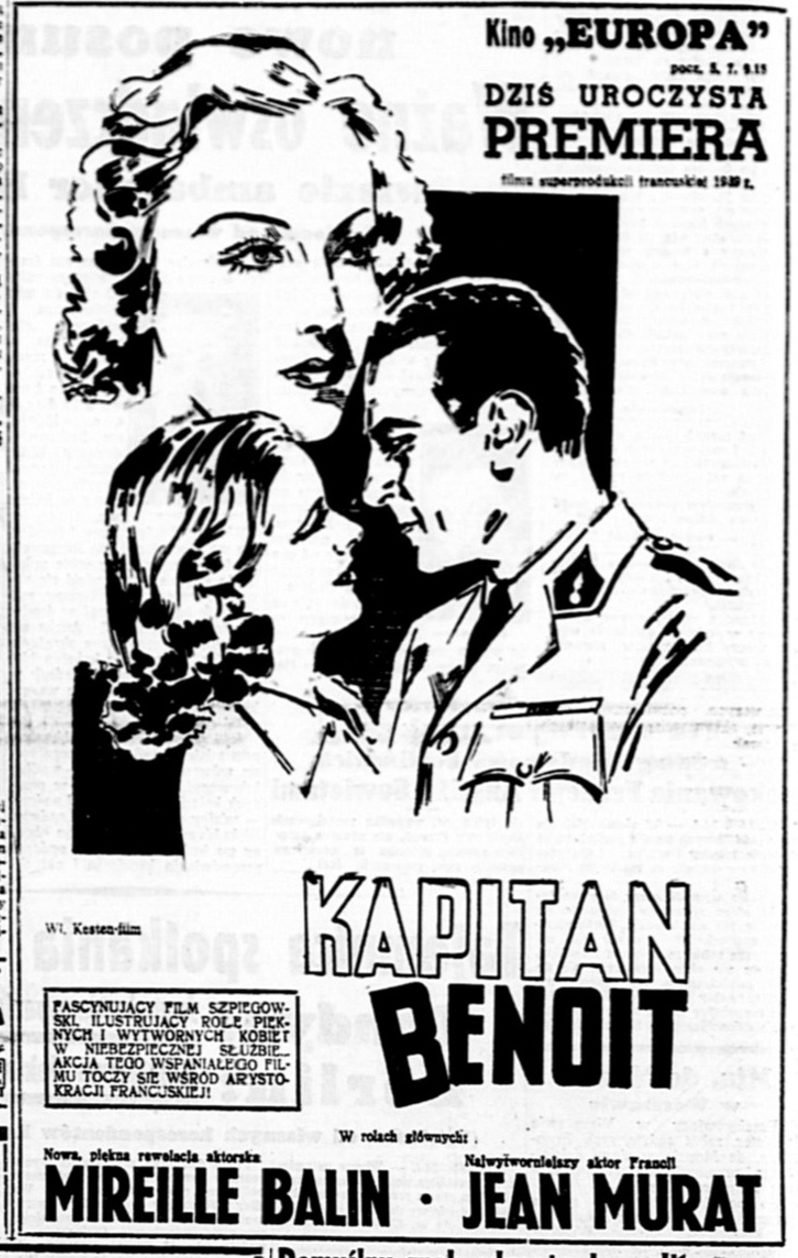
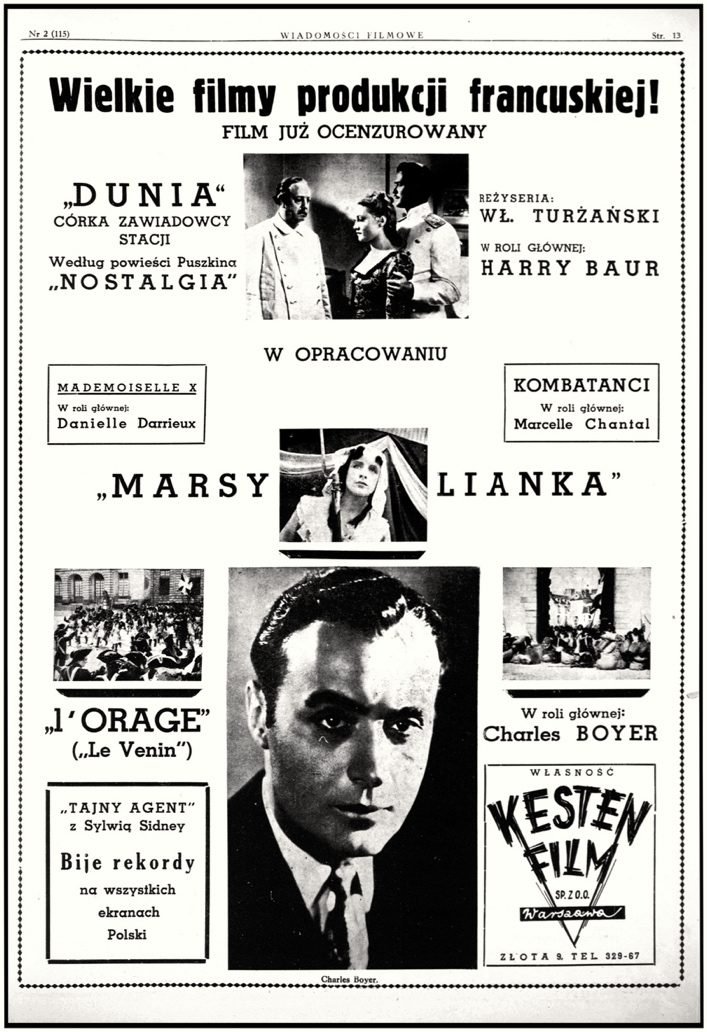
After the move to Złota the catalogue grew from season to season. Beside „Blood on the Sea" it came to include „Ramuntcho" — the 1938 screen version of Pierre Loti's novel, „Capitaine Benoit" — a French spy film with Jean Murat and Mireille Balin, whose gala premiere was held in the Europa cinema, and also „Cyclone", „Storm over Bengal", „The Agent", „Two Hours of Life", „Mademoiselle X" with „the superb Danielle Darrieux in the leading role", the spectacular „Chicago", „Dunia" after Pushkin with Harry Baur, „L'Orage" with Charles Boyer, „La Marseillaise" and „The Secret Agent" with Sylvia Sidney, which — as the advertisement proclaimed — „is breaking records on all the screens of Poland".
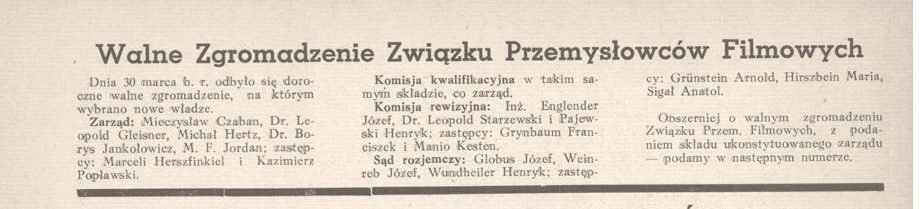
Manio himself was a well-known figure in the trade: in April 1938 the trade press recorded his election — alongside Franciszek Grynbaum — as a deputy in the governing body of the association of film entrepreneurs. A man from the border town of Podwołoczyska sat in the self-government of Polish cinema. Business was growing: at the beginning of 1939 the firm opened a branch in Lwów at Jagiellońska 70, serving the cinemas of Eastern Małopolska.
„Kino dla Wszystkich i Teatr", 15 April 1938: „…deputies: Grynbaum Franciszek and Manio Kesten."
V. The shadow of the coming storm
Jewish film entrepreneurs worked in the 1930s in ever tighter air — and it was not a phenomenon of Poland alone. In Germany, after Hitler's coming to power in 1933, Jews were removed from the cinema by statute; hundreds of directors, producers and actors went into emigration, and German diplomacy intervened in the European capitals against films unfriendly to the Reich. In Poland after 1935 the slogan of the economic boycott of the Jews entered the mainstream of politics; the nationalist press demanded the „de-Jewing" of one profession after another, and since the film-hire firms and many cinemas belonged to Jewish entrepreneurs, the film trade became one of the favourite targets of this campaign. The Kestens knew that first pressure not only from the newspapers: Manio's brother, Moshe Brandriss, lived in Mannheim and had to flee Germany for France. The two pressures — German and home-grown — were soon to meet also in the history of the firm from Złota 9.
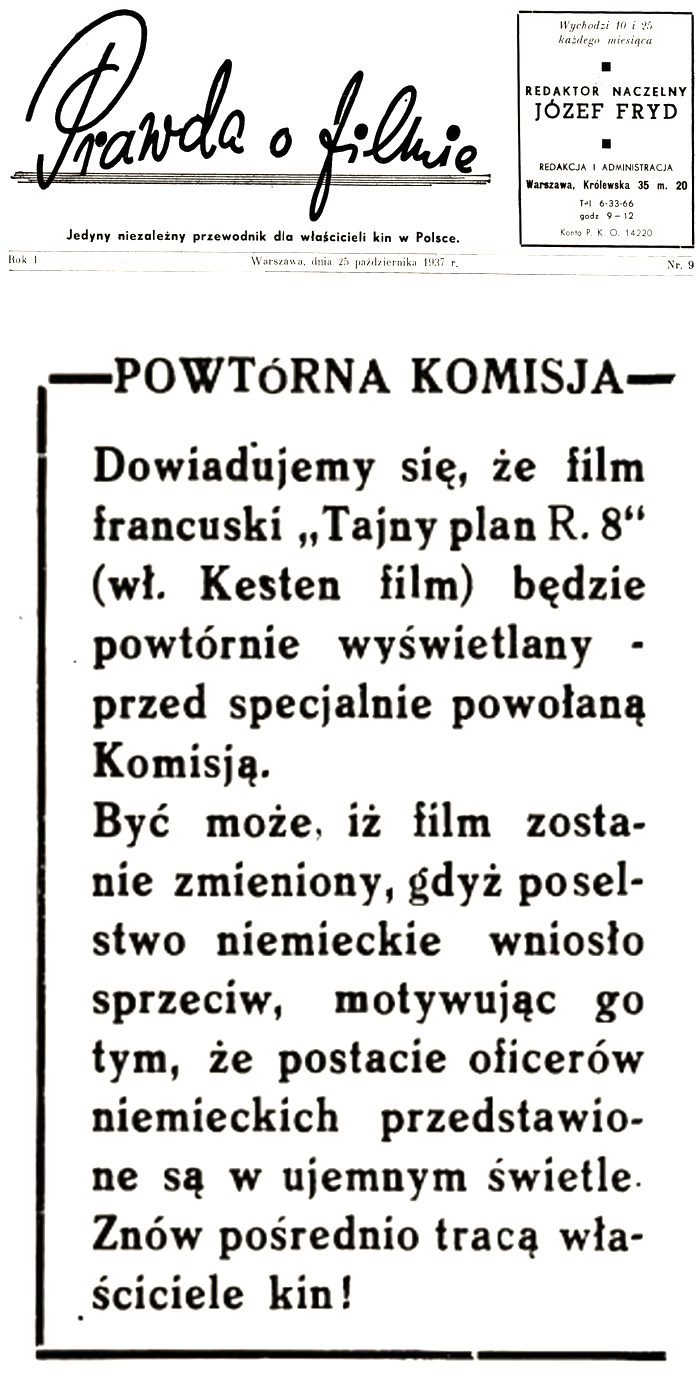
The first warning came in the autumn of 1937 — and directly from the Reich's embassy. The trade fortnightly „Prawda o filmie" reported in October that the French spy film „Secret Plan R. 8" from the Kesten-Film catalogue would appear a second time before a specially appointed censorship commission: „the German legation lodged an objection, on the grounds that the figures of German officers are presented in an unfavourable light." Two years before the outbreak of war, German diplomacy was already forcing the censorship in Warsaw of a film distributed by a Jewish entrepreneur from Złota Street.
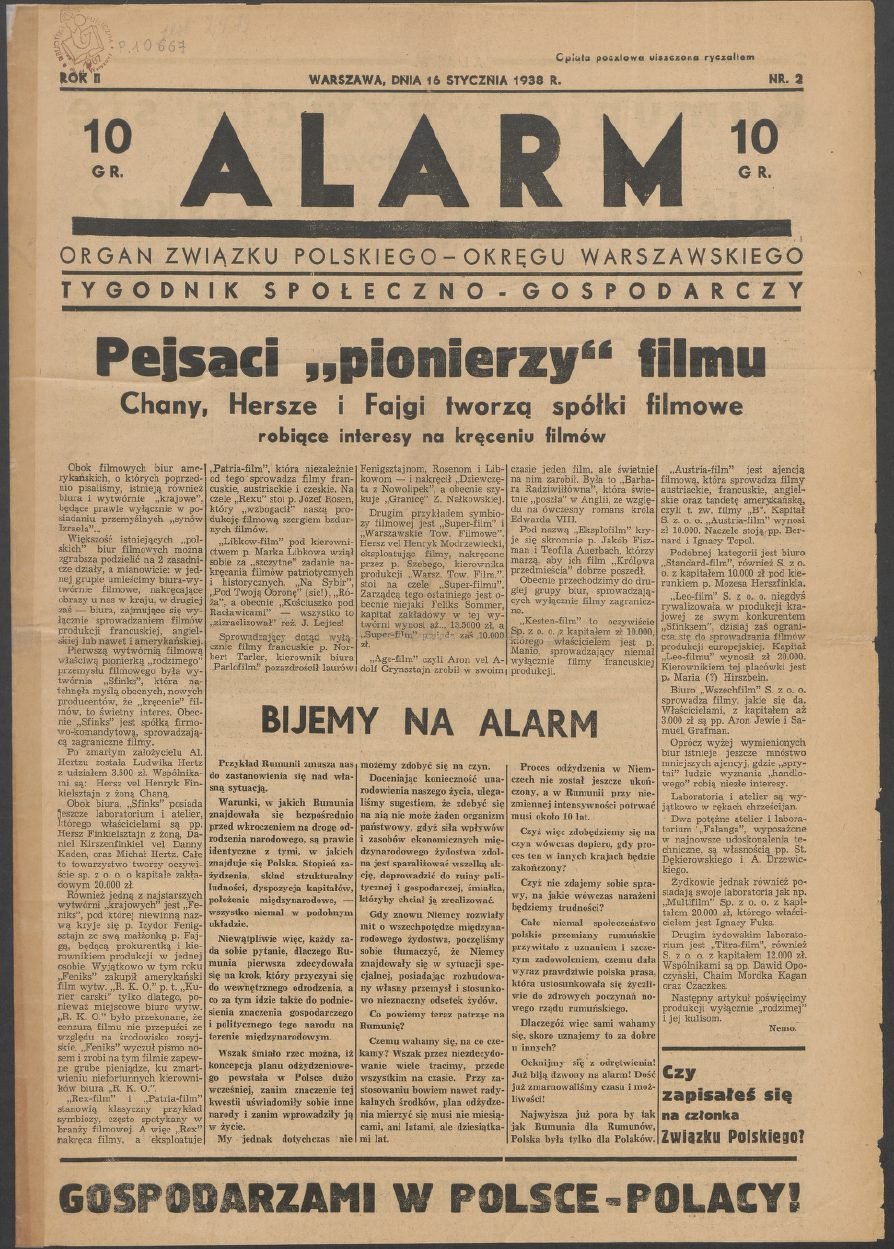
The real campaign began in the new year. On 16 January 1938 the National-Democratic paper „Alarm" — „organ of the Polish Union of the Warsaw district" — devoted its whole front page to the film trade: „Sidelocked »pioneers« of film. Chanas, Hershes and Fajgas form film companies doing business on the making of films". Inside the issue: name-by-name lists of Jewish producers and distributors, demands for the removal of Jews from the trade's governing bodies and the withdrawal of licences, and the action of a „Week without Jewish cinema" — a boycott of cinemas and films behind which Jewish entrepreneurs stood. At the bottom of the page a slogan that said everything: „Poles the masters in Poland!".
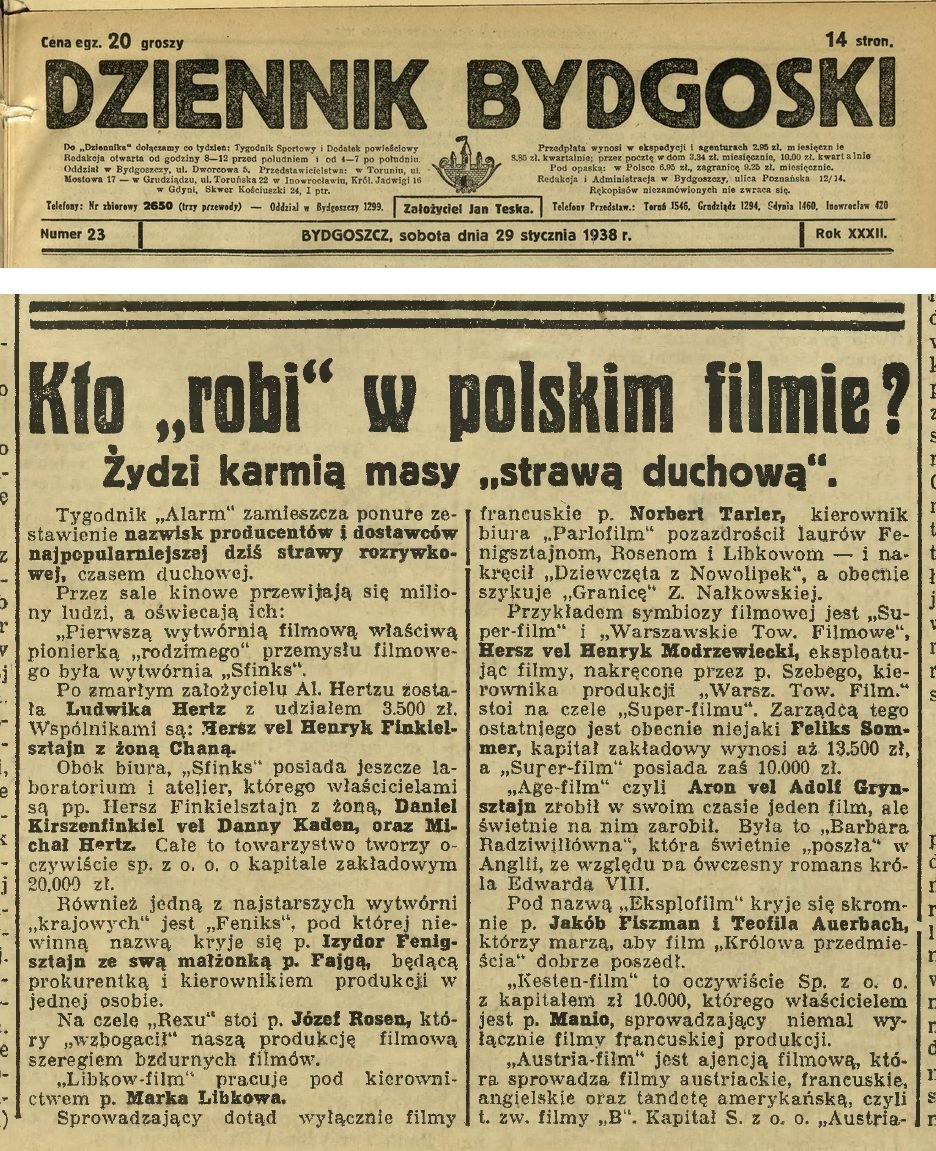
The echo went out across Poland. Already on 29 January 1938 the „Dziennik Bydgoski" reprinted the findings of „Alarm" in the article „Who »operates« in Polish film? Jews feed the masses »spiritual nourishment«" — and this time the name fell outright: „»Kesten-film« is of course a Ltd. with a capital of 10,000 złoty, whose chief is Mr Manio, importing almost exclusively films of French production".
In the autumn of 1938 the campaign took the form of an organised action. For 15–23 October a nationwide „Week without Jewish cinema" was announced, and the Polish Organisation of Cultural Action — founded in December 1936 and tied to the ONR-„Falanga" — published for the occasion a four-page one-day paper „W natarciu" (On the Attack), devoted entirely to „the fight for the Polishness of film and cinema in Poland". It was a complete catalogue of the machinery of boycott: a list of „Jewish" and „Christian" cinemas, name-by-name lists of Jewish producers, bureaus and film-hire firms — among them, in the list „Jewish film bureaus and hire firms in Warsaw", outright: „«Kesten-Film» — Manio (?) Kesten"; the question mark in the original — the boycott's authors were not sure even of the first name, but the surname they had already entered — and seven „minimal" demands, among them „the tightening of film censorship" and „forbidding Jews to represent Polish film abroad". The whole was clasped by the slogan: „Through the de-Jewing of culture — to its greatness. Through the greatness of culture — to a Great Poland". A year before the war the programme of exclusion was already written down, printed and handed out.
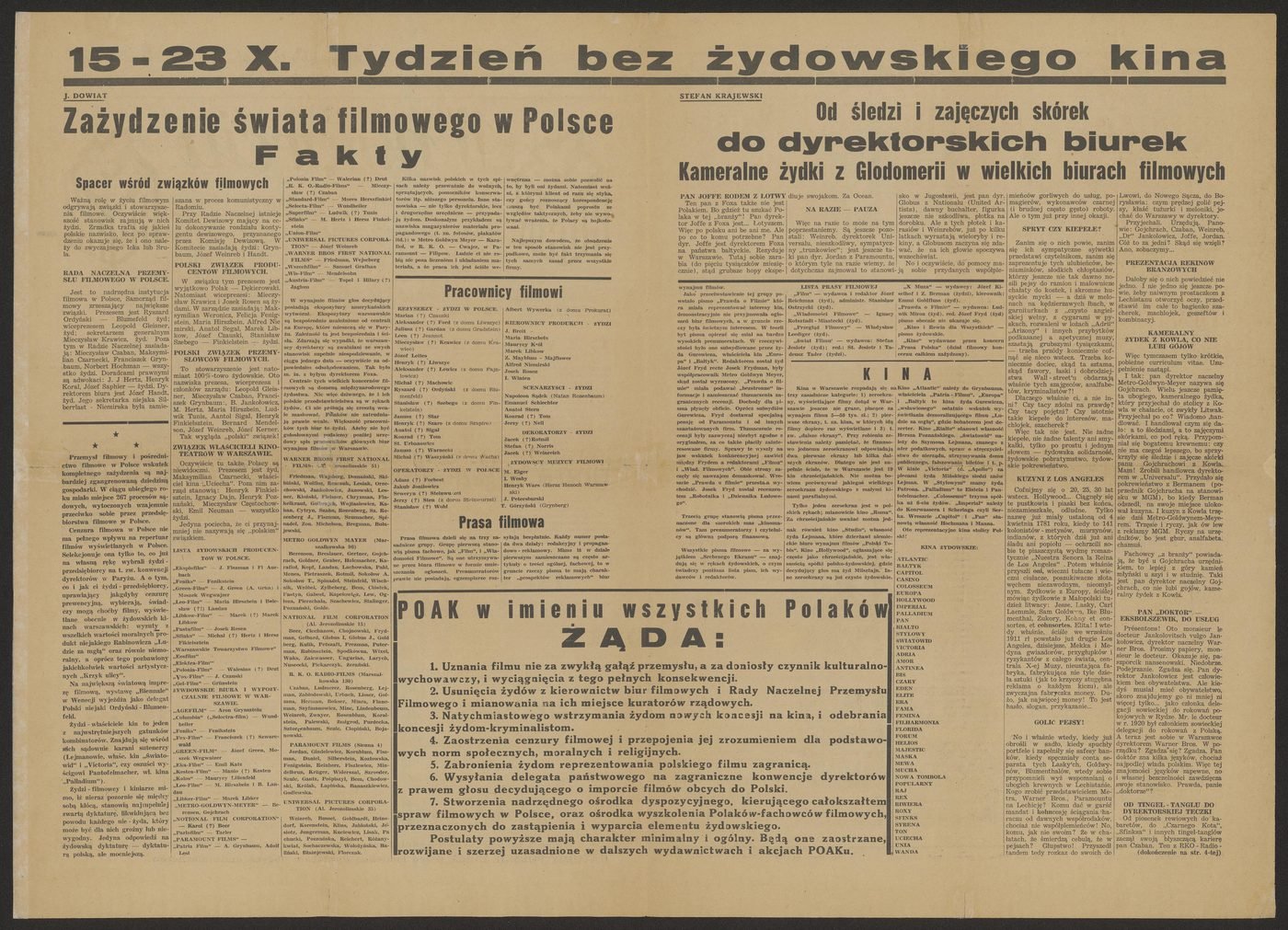
The owner of the bureau from Złota 9 was from then on pointed out by name in the press from Warsaw to Pomerania. Kesten-Film worked on nevertheless: it booked dates, printed advertisements, planned the 1939/1940 season.
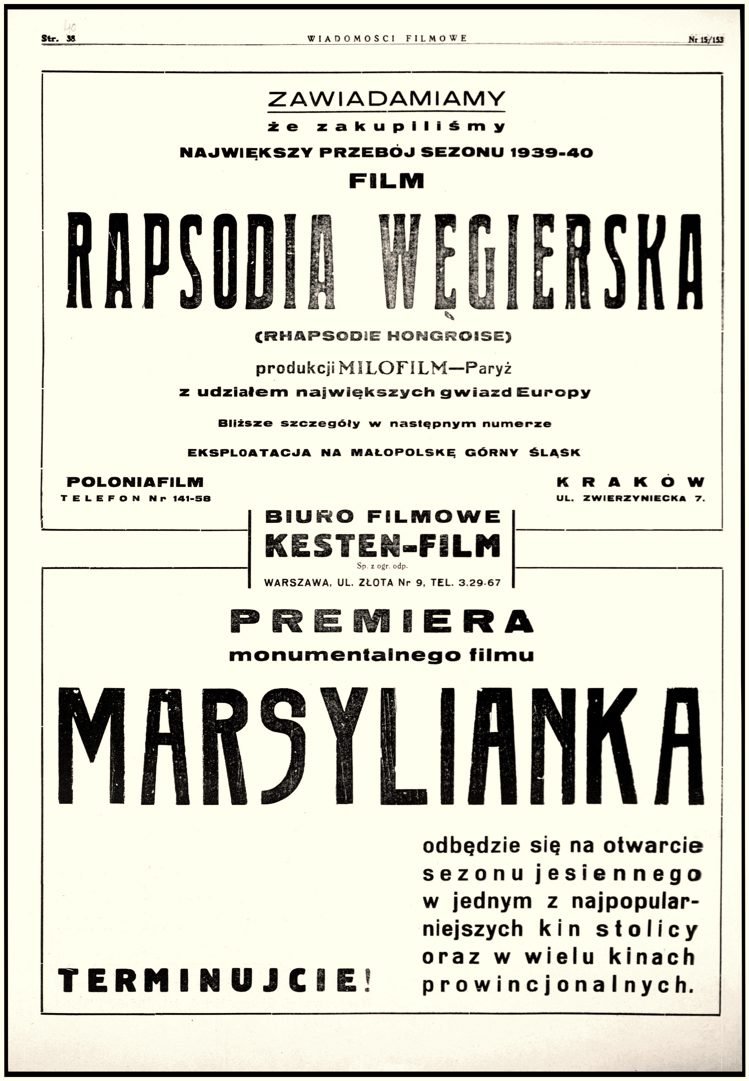
The last chord of that work survives in the trade press of 1 August 1939. The Kesten-Film Bureau announced the premiere of a „monumental film" — Jean Renoir's „La Marseillaise", „the representative film of France", whose Polish premiere the firm had already announced for January 1938 in the Colosseum cinema: now it was to take place „at the opening of the autumn season in one of the most popular cinemas of the capital and in many provincial cinemas". „Book your dates!" — the cinema owners were urged. To the announced premiere there remained weeks; to the outbreak of war — thirty-one days.
VI. War. 6 February 1940
On 1 September 1939 the war broke out; on 28 September Warsaw capitulated. For a film entrepreneur it meant an immediate end: the cinemas were taken over by the German administration, the distribution market ceased to exist. For a Jewish family it was barely the beginning: from 1 December 1939 all Jews of the General Government above the age of twelve had to wear armbands with the Star of David; successive decrees took from them their firms, their accounts, the right to practise their professions.
On 6 February 1940 Manio, Rachela Lea and Zofia were deregistered from the apartment at 9 Złota Street. In the column „whither deregistered" the clerk entered no address. It is the family's last certain registration trace. Half a year later only the tax office was still looking for them: in the announcement of the Municipal Board of 23 July 1940, publishing the list of persons to whom „payment orders for income tax for the years 1938 and 1939 could not be delivered owing to the impossibility of establishing their place of residence", there figure side by side „»Kestenfilm« Ltd." and „Kesten Manio" — both with the old address: Złota 9. In September 1940 the company appeared for the last time in the official list of changes of firms' addresses. Then the sources fall silent.
On 2 October 1940 the governor of the Warsaw district, Ludwig Fischer, signed the decree creating the „Jewish residential district". It was announced on 12 October — on the feast of Yom Kippur. Within six weeks about 138,000 Jews had to abandon their apartments across the whole city and move behind the designated line. On 16 November 1940 the ghetto was closed: behind a wall three metres high and eighteen kilometres long some 400,000 people — a third of the inhabitants of Warsaw — were crammed onto an area of less than three per cent of the city's surface. Złota 7/9 remained on the „Aryan" side. The home and the bureau, built up over years, found themselves on the other side — within arm's reach and forever out of reach.
VII. The ghetto
Life in the ghetto was dying by instalments. The official food ration for a Jew amounted in 1941 to about 184 calories a day — less than a tenth of an adult's needs. Spotted typhus spread. In 1941 alone about 43,000 people died in the ghetto — mainly of hunger and disease; the bodies of the dead, covered with paper, lay on the pavements in the mornings until the funeral carts took them away.
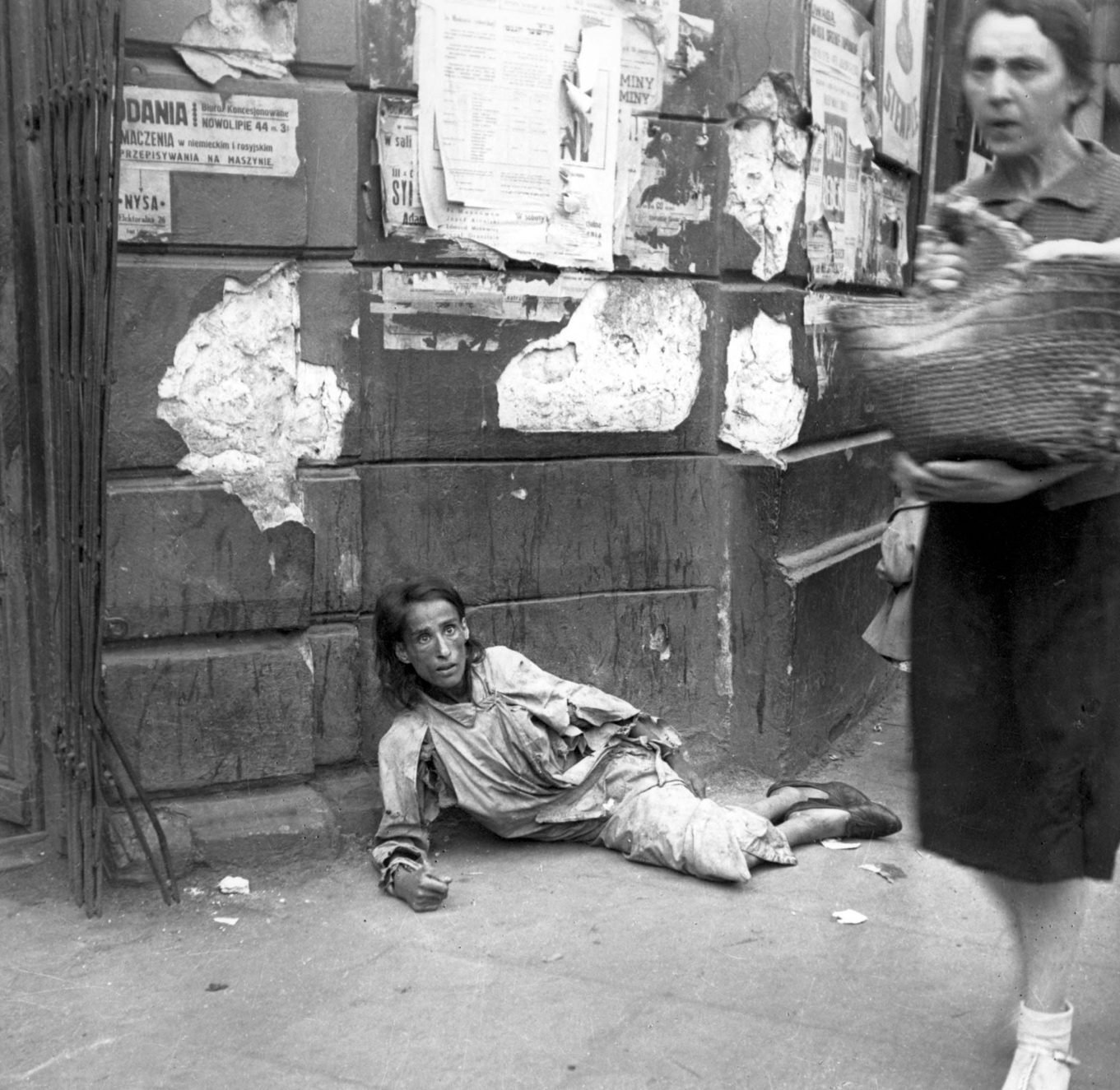
Among the victims of this first, „quiet" stage of the Holocaust were Manio, Rachela Lea and Zofia, Manio's sister.
Pages of Testimony were submitted for them after the war at Yad Vashem by the family.
On 22 July 1942 the Germans began the „great deportation action" in the Warsaw ghetto. Every day from the ramp on Stawki Street — the Umschlagplatz — goods trains departed, officially „to the East, to work". In reality they travelled eighty kilometres north-east, to the immediate-extermination centre Treblinka II, where the arrivals were murdered in the gas chambers within two or three hours of arrival. By 21 September 1942 — the action was closed symbolically on Yom Kippur, exactly two years after the announcement of the ghetto's creation — about 254,000–300,000 Warsaw Jews had been deported and murdered.
VIII. Memory
The house on Złota survived. Of the Kesten-Film firm there remain the advertisements in the yellowed annuals of the film press, the entry in the Monitor Polski and the posters of the films it sent out to the cinemas — today collectors' and museum pieces. The memory of the people was saved by the pages of testimony at Yad Vashem, filled in after the war by their relatives.
And the family's history did not end in the ghetto. Four children of Georg — three nephews and a niece of Manio — managed to escape Germany before the war and created a whole branch of the family. Here are their fates — and their faces.
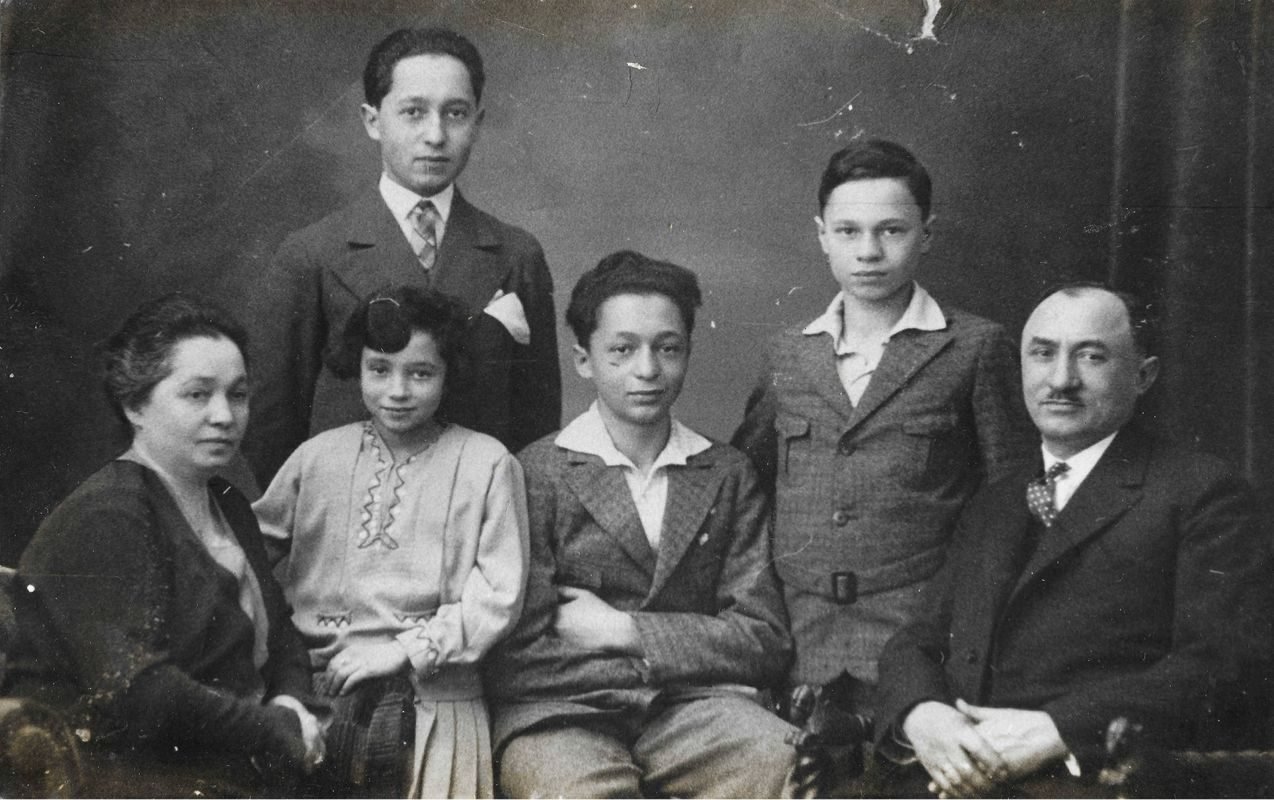
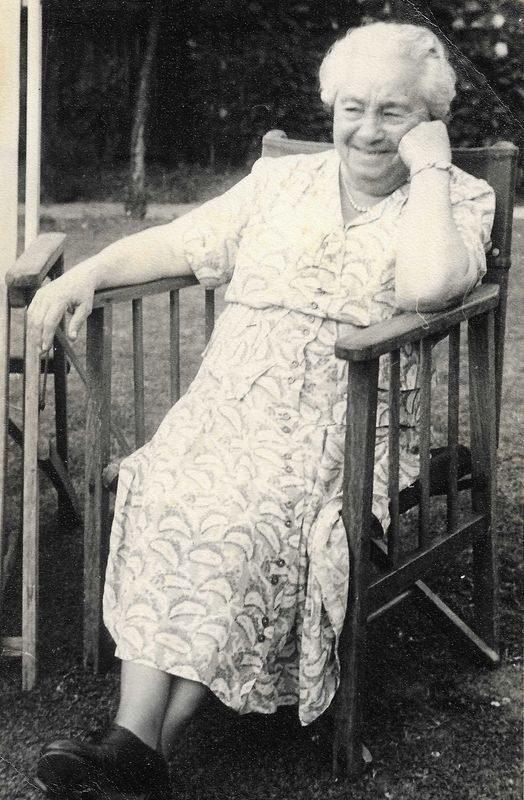
Over this branch watched Etty (1888–1964). Widowed in 1932, she lived to see all her surviving children in Erec Israel; she died in Tel Aviv and rests in the Givat Chaim Ichud cemetery.
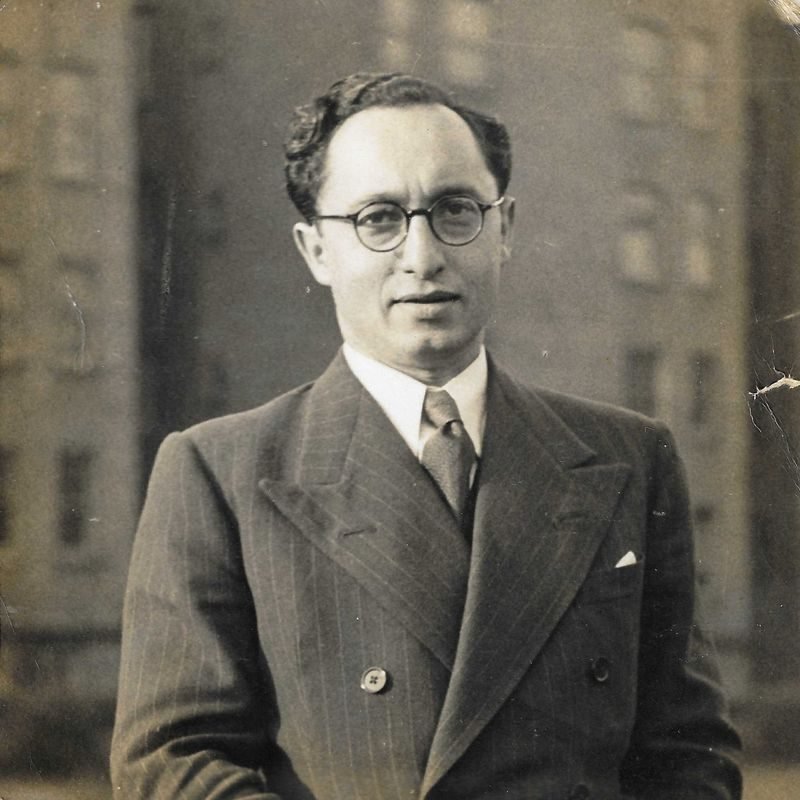
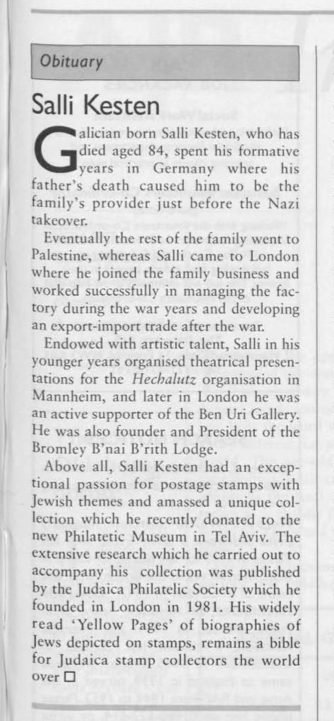
Salli (1910–1995), the eldest, was born still in Galicia, in Skałat; he grew up in Mannheim, where his father's death made the twenty-two-year-old the family's breadwinner — „just before the Nazis came to power", as his London obituary would write years later. In Mannheim he organised the theatrical performances of the Zionist Hechalutz; in London during the war years he ran the family factory, after the war he developed an export-import trade, supported the Jewish Ben Uri gallery and founded the B'nai B'rith lodge in Bromley. World renown came to him through philately: he gave his unique collection of stamps on Jewish themes to the museum in Tel Aviv, and his „Yellow Pages" — biographies of the Jews depicted on stamps — remain the bible of collectors of Judaica.
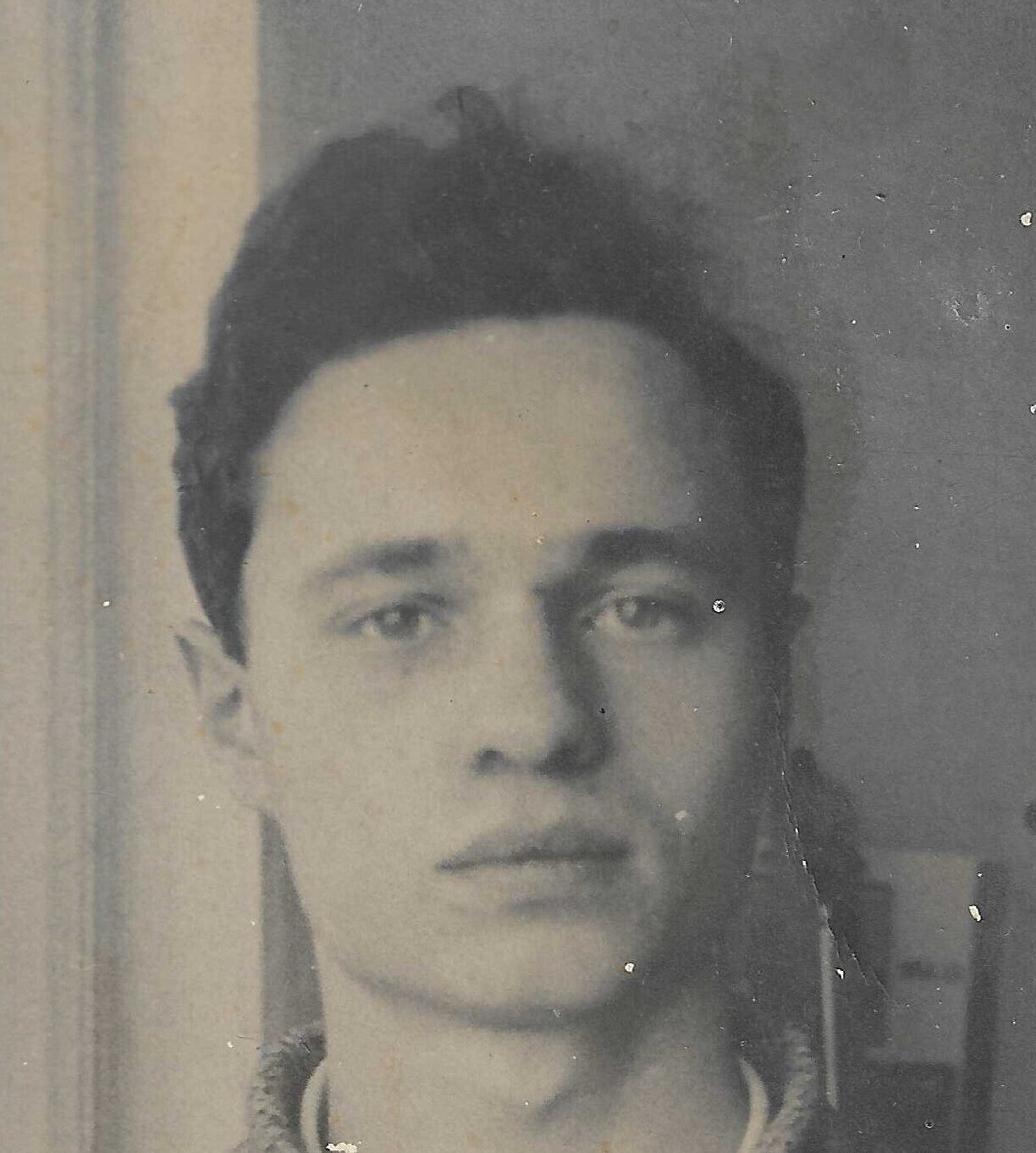
Alex (1912–1994), properly Alexander, born in Mannheim on 8 April 1912, reached Erec Israel, where on 3 May 1940 he received Palestinian citizenship. He bound his life to the kibbutz circle of Givat Chaim; he rests in the Givat Chaim Ichud cemetery — beside his mother.
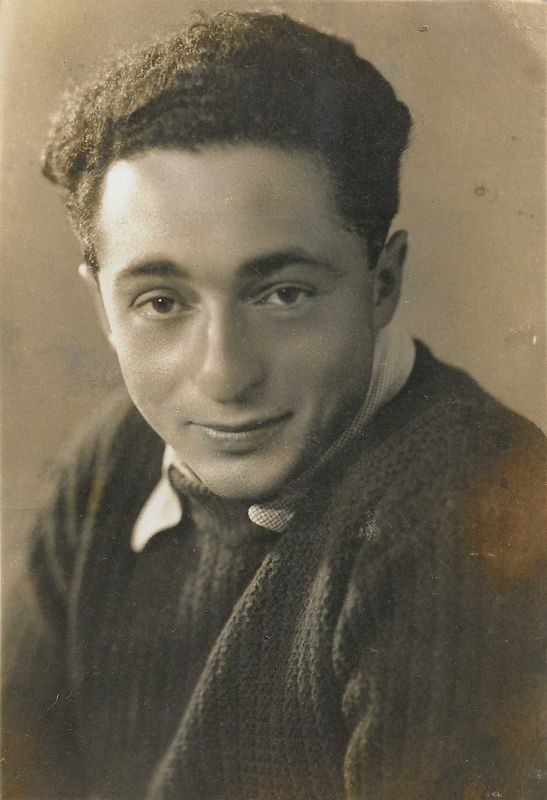
Abraham Adolf (1913–1948), born in Mannheim, was the first of the siblings to set out for Erec Israel. He fell on 11 June 1948 in the defence of Mishmar haYarden, in Israel's War of Independence. He rests in the Nahalat Yitzhak military cemetery in Tel Aviv; the Hebrew inscription of his matzevah sums up that road in three phrases — born in Germany, came to the Land in the year 5697, fell at Mishmar haYarden — and beside it are carved the names of his parents: Gershon and Etti.
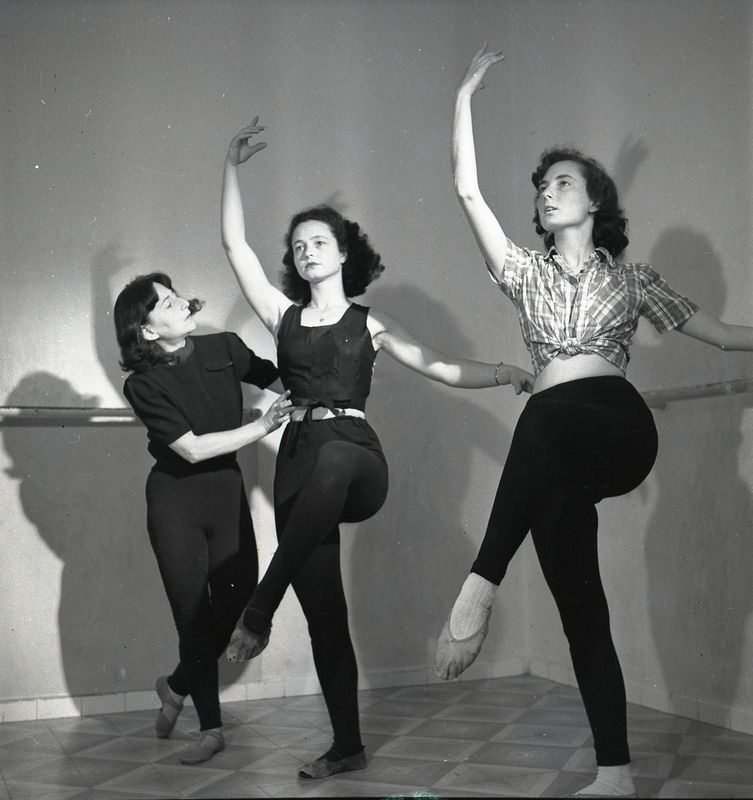
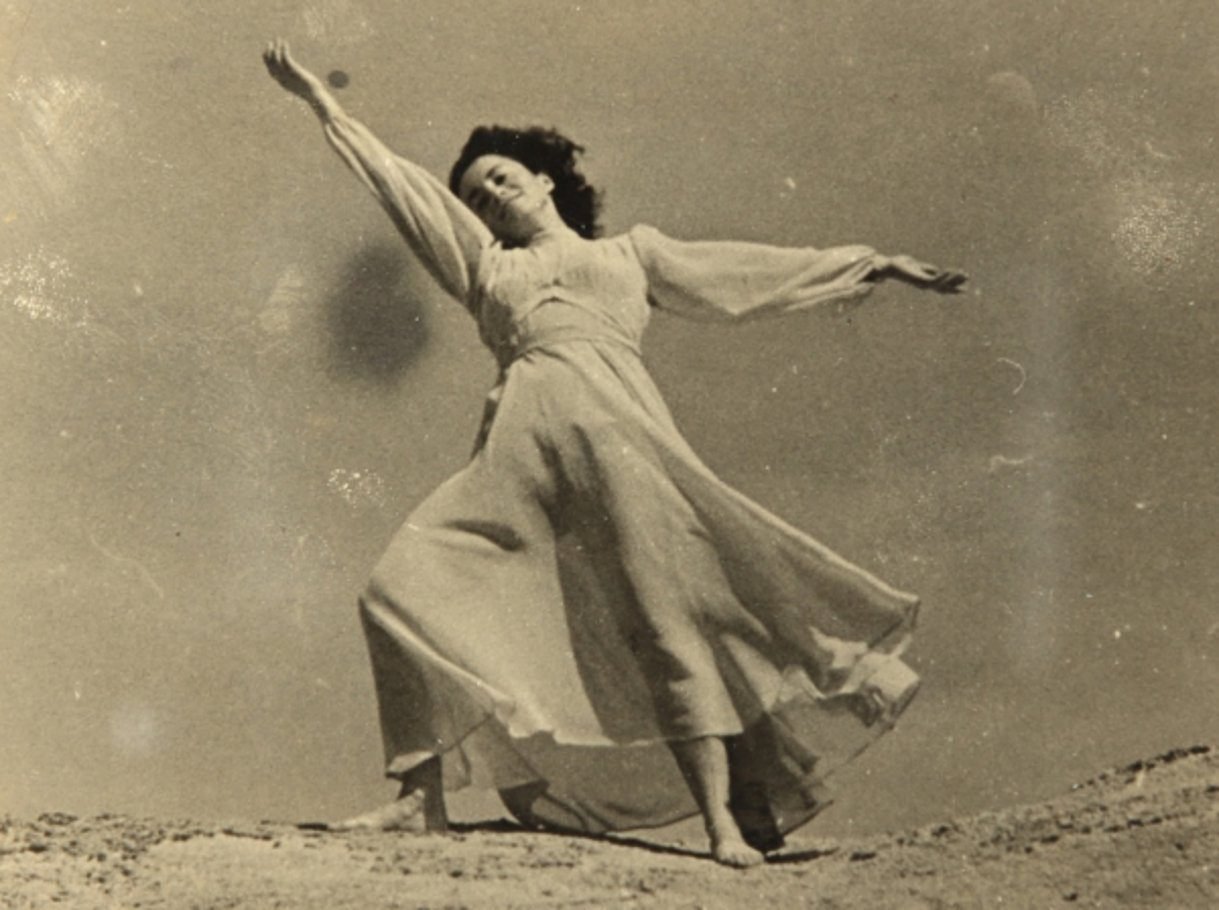
Hilda Berta (1917–2002), the youngest, in 1933 — sixteen years old — left alone for England, and on 1 May 1938 stepped ashore in Erec Israel. A pupil of Gertrud Kraus, a dancer of the Palestine Folk Opera and a soloist appearing with the philharmonic orchestra, she ran her own studio in Ramat Gan and passed into history as one of the pioneers of Israeli artistic dance. She married the painter and stage designer Anatol Gurevitch; their son is a theatre director — the family gene of art works in Israel to this day. Her archive — letters, documents, photographs — is kept today by the National Library of Israel.
Their descendants live today in Israel and Great Britain — among them people of the Israeli stage and arts.
Timeline
| Date | Event |
|---|---|
| 15 Jun 1895 | Manio (Menachem Manes) Kesten is born in Podwołoczyska, son of Salomon and Chana née Brandiss (the family tree gives the year 1891). |
| 1898 | 28 Jun — Rachela Lea (in the testimonies: Rosa) is born, daughter of Markus — Salomon's own brother — and Bluma née Halberstamm; 15 Apr — Zofia (Sure Złata), Manio's sister (the family tree gives 1891 and 1892 respectively). |
| 1930s | Kesten-Film operates in Warsaw at 39 Aleje Jerozolimskie (tel. 985-56); the family lives in the same house, apt. 26. |
| 25 Mar 1936 | Contract of the company „Kesten-Film Commercial-Film Bureau Ltd." (reg. B 10.214): the sale, purchase and hire of films; share capital 10,000 złoty; management — Manio Kesten; seat: Jerozolimska 39. |
| 28 Aug 1936 | Manio on the Karlsbad spa guest list (item 25119). |
| 1935–1937 | Assicurazioni Generali builds the house at 7 Złota Street (des. Edward Eber, Palladium cinema). |
| 28 Apr 1937 | Warsaw premiere of „Blood on the Sea" („Nitchevo") in the Roma cinema — advertised in the press with the note „Property and exploitation Kesten-Film". |
| Oct 1937 | The German legation protests against the film „Secret Plan R. 8" from the Kesten-Film catalogue; the film goes before a second censorship commission („Prawda o filmie", 25 Oct 1937). |
| Oct–Nov 1937 | The bureau moves to Złota 9 (tel. 329-67); 27 Nov 1937 — Manio, Rachela Lea and Zofia registered at Złota 7, apt. 8. |
| 16 Jan 1938 | „Alarm": the campaign of the „Week without Jewish cinema" and demands for the removal of Jews from the film trade. |
| 29 Jan 1938 | The „Dziennik Bydgoski" reprints the theses of „Alarm", naming „Kesten-film" and „Mr Manio" outright. |
| 15–23 Oct 1938 | The nationwide action „Week without Jewish cinema"; the POAK one-day paper „W natarciu" with lists of cinemas and Jewish firms of the film trade. |
| 15 Apr 1938 | Manio elected a deputy in the governing bodies of the film entrepreneurs' trade organisation. |
| 10 Nov 1938 | Entry in register B 10.214: change of the company's premises — „at 9 Złota Street" (announced Monitor Polski, 3 Apr 1939). |
| Feb 1939 | A branch of the firm in Lwów, 70 Jagiellońska Street. |
| 1 Sep 1939 | Outbreak of the war; the end of distribution activity. |
| 6 Feb 1940 | Manio, Rachela Lea and Zofia deregistered from Złota 7, apt. 8 — without a destination address. The last certain registration trace. |
| 23 Jul 1940 | Announcement of the Municipal Board: tax orders for 1938–1939 undeliverable — „Kestenfilm Ltd." and „Kesten Manio", old address: Złota 9. |
| Nov 1940 | Closure of the Warsaw ghetto; Złota remains on the „Aryan" side, its Jewish residents — behind the wall. |
| 1941 | Hunger and typhus in the ghetto; c. 43,000 dead within the year. In the ghetto perish Manio, Rachela Lea and Zofia. |
| 22 Jul – 21 Sep 1942 | The Great Deportation: c. 300,000 Jews deported from the ghetto to Treblinka. |
| after 1945 | The Yad Vashem pages of testimony. |
| Oct 2024 | The Israeli branch of the family (Joel Shalvi) gives its consent to the commemoration with stones of remembrance. |
A Note on Sources
This account rests exclusively on sources: the card of apartment no. 8 of the residence register of the Złota 9 property (entries 27 Nov 1937 – 6 Feb 1940); the registration announcements of company B 10.214 — the original one (contract of 25 Mar 1936, seat Jerozolimska 39) and the entry of the change of premises to Złota 9 of 10 Nov 1938, announced in the Monitor Polski of 3 Apr 1939; the advertisements and reports of the press of 1936–1939: „Wiadomości Filmowe", „Kino dla Wszystkich i Teatr", „Wiem wszystko" (18 Apr 1937), „Dobry Wieczór! Kurjer Czerwony" (28 Apr 1937 — advertisement of the premiere in the Roma cinema), „Prawda o filmie" (25 Oct 1937 — the note „Second commission"); the Karlsbad spa guest list of 28 Aug 1936; the announcement of the Municipal Board of 23 Jul 1940 and the list of changes of firms' addresses of Sep 1940 (Gazette of Announcements of the City of Warsaw); the press of the anti-Jewish campaign: „Alarm" (16 Jan 1938) and the „Dziennik Bydgoski" (29 Jan 1938) and the one-day paper of the Polish Organisation of Cultural Action „W natarciu" (Warsaw, Oct 1938 — on the cover mistakenly „1939"; ed. Bogdan Łoziński; ephemeral print in the project collection); the Yad Vashem pages of testimony (ID 3642818 and 1483942); the family's genealogical tree (MyHeritage) and correspondence with the Israeli branch of the family (2024–2026). The birth dates are given after the residence register, written down in the family's lifetime from documents produced; the differing years from the family tree (Manio: 1891, Rachela: 1891, Zofia: 1892) are noted in the text. The death of uncle Isaak in 1918 — after the Austro-Hungarian casualty lists of the First World War (list no. 669 of 24 Apr 1918) and the biographical literature on his son, the writer Hermann Kesten (1900–1996), whose kinship with Manio was established by the agreement of the genealogical tree with the writer's published biographical entries. Rachela's parentage (daughter of Markus, Salomon's brother, and Bluma née Halberstamm) — after the residence register confronted with the record of Markus Kesten in the Geni World Family Tree (d. 16 Aug 1940, Haifa; burial: Old Jewish Cemetery). The siblings' dates of life — after the family's genealogical trees (MyHeritage and Geni; Georg: profile with the dates 24 Jan 1885 – 25 May 1932, Mannheim, burial in the Jüdischer Friedhof Mannheim); Moshe Brandriss's residence in Mannheim and his emigration to France — after the database „Victims of the Holocaust and Jewish residents of Germany 1939–1945" (censuses of the Jewish population in the Reich) and the record „Moses Brandriss-Kesten" in the Geni World Family Tree (marriage: Nice 1942; death: New York, Sep 1981); the fate of Manus (Max) Kesten of Amsterdam — after the card of the Jewish Council / Westerbork camp card index and the Dutch official death list no. 3438 of 1959 (copies in the project collection); the degree of his kinship with Manio remains the subject of research. The formulas concerning the deaths of Manio, Rachela Lea and Zofia are given in the wording of the inscriptions of the stones of remembrance dedicated to them; the divergent year entries of the secondary sources are discussed in the project's working documentation and deliberately left unresolved here. The historical context of Podwołoczyska, the pre-war film trade, the Warsaw ghetto and Treblinka — after the findings of the historiography of the Holocaust (among others the United States Holocaust Memorial Museum). The population data of Podwołoczyska — after the Jewish encyclopaedias (among others Brockhaus–Efron: 1880 — 1,004 Jews, 53.6% of the total; 1900 — 3,779, 73%; 1910 — 3,836, 68.1%); the dates of the community's creation (30 Dec 1880) and the grant of town rights (1881) — after the regional literature. The searches continue: the family's address after 6 Feb 1940, the registration files B 10.214, Zofia's fate, family photographs.
Opracowanie w ramach projektu upamiętnienia mieszkańców kamienicy przy ul. Złotej 7 i 9 w Warszawie · www.zlota7-9.com