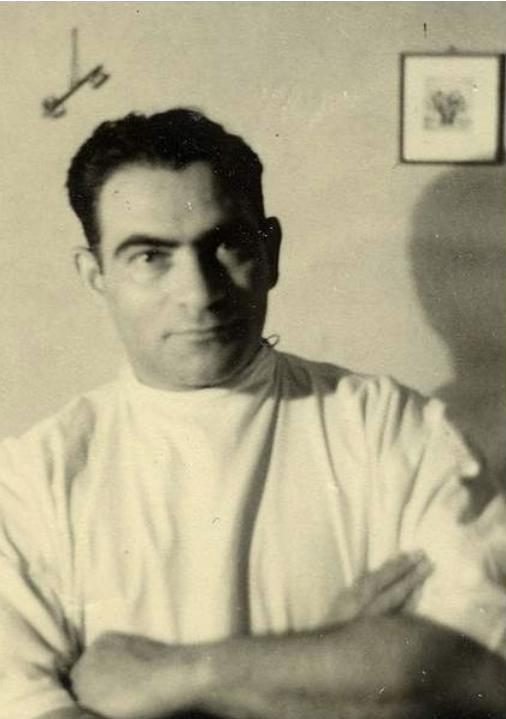
„I cannot. If war comes, I must stay and defend the country."
They were brother and sister — two of the six children of Jakub and Salomea Fiszhaut. He — a dental surgeon, senior assistant to the most famous Polish professor of that specialty, owner of one of the busiest practices in Warsaw. She — also a dental surgeon, wife of a cinema owner, mother of Jurek. They lived together at 9 Złota Street, in apartment number 6. The war divided their fates as it divided the fate of the whole family: one of them survived a leap from a train bound for Treblinka and a year of hiding in a bathtub opposite Gestapo headquarters; the other left the house on 8 May 1943 and never came back.
This account gathers everything that is known about them. Every fact comes from a source: from the residence register of the house, from advertisements in the pre-war press, from court files and registers of victims, from the catalogues of the Institute of National Remembrance, from a letter of a Jewish relief organisation — and from the memoir written down years later by Iza Fiszhaut-Laponce, Stanisław's adopted daughter, passed to us together with photographs by Dr Mark Fishaut, nephew of the subjects of this story.
I. Freta 16 — roots
The Fiszhauts came from Lublin. The father of the family, Jakub (Jankiel) Fiszhaut, was a prosperous Warsaw merchant — owner of a store of ladies' outerwear and of the tenement house at 16 Freta Street in the New Town. There, in the family home on Freta, the youngest of his children was born. The mother, Salomea (Sura) née Czapek, came from a family whose support would prove priceless: when Jakub died in 1912, the widow and six children were taken under the financial care of her brother, „uncle Max" Czapek.
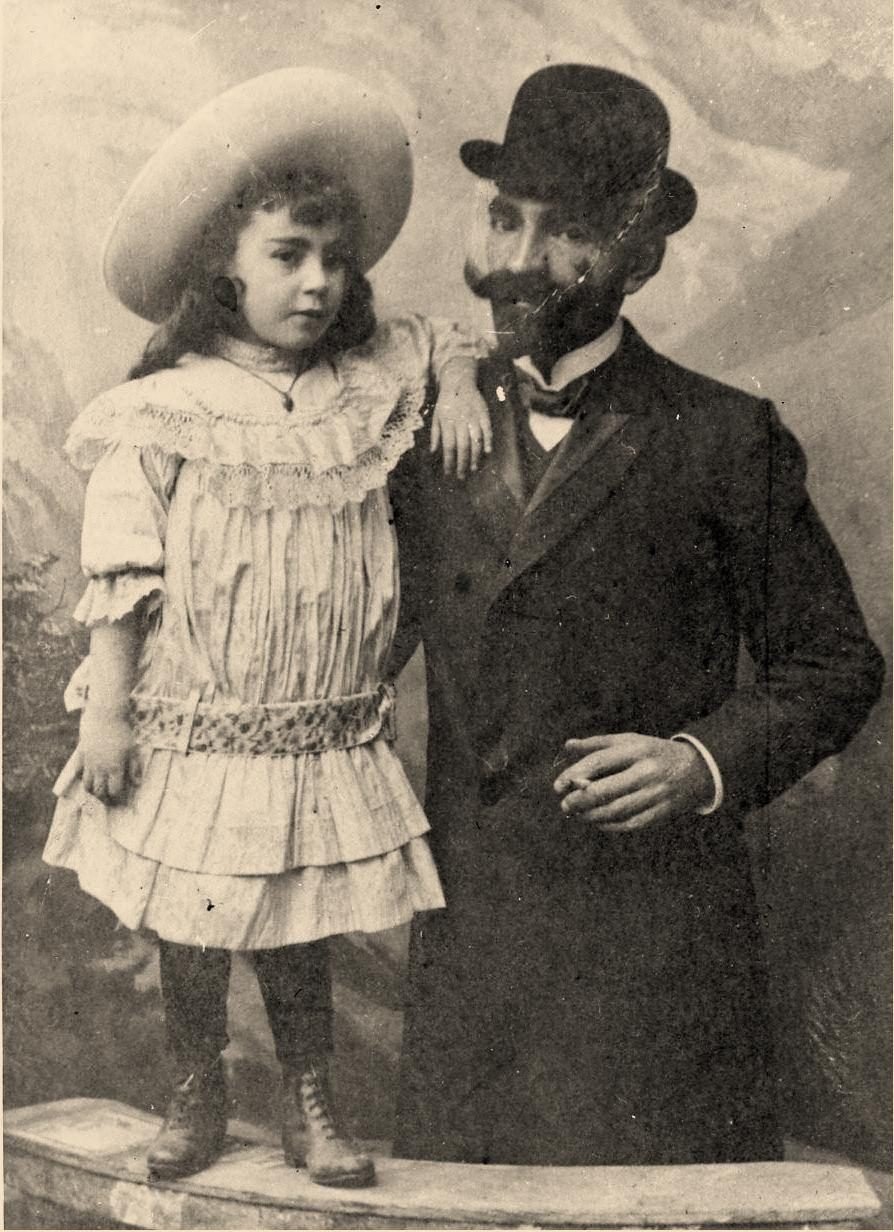
It was a home of the Polonised Jewish intelligentsia — and a home in which medicine became the family vocation. The eldest of the brothers, Józef, born in 1893, became a master of pharmacy. Helena, born on 10 July 1900, and the youngest, Stanisław, born on 14 April 1906 — dental surgeons. Henryk, properly Salomon Henryk, born on 27 August 1903 — a pulmonologist. Ludmiła, in the family called Lola, born in 1905 — a neurologist (from 1932 the wife of the psychiatrist Henio Zeldowicz). The list of heirs to the house at 16 Freta Street names beside them also Leon Fiszhaut, who ran the father's store of ladies' outerwear at 11 Miodowa Street, and the physician Rudolf Fiszhaut of 22 Leszno Street — a trace of the wider family; it was most likely the sons of one of them who were the nephews Jasio (Jean) and Romuś, to whom the whole family went visiting. Family memory preserved the image of Stanisław as a child gifted with an unusual ease in winning people over; Iza would write down years later the French saying that fitted him all his life: „il était bien dans sa peau" — he was at ease in his own skin.
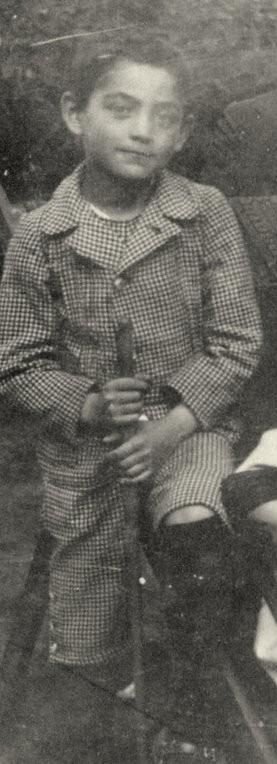
Stanisław was schooled first at Stanisław Kopczyński's school (1911–1915), then at Tomasz Niklewski's mathematics-and-science gymnasium, which Heniek had attended before him. He passed his school-leaving examination in 1924. Medical studies then required Latin, which his school had not taught — he made it up in half a year, and for pleasure added Greek, which he recited to the end of his life.
II. 1928 — the Academy of Stomatology
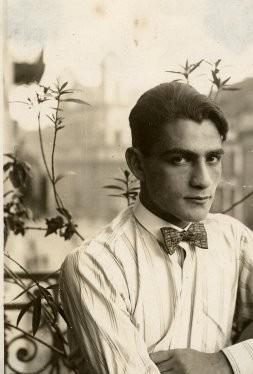
In 1928 he graduated from the Warsaw State Dental Institute — the later Academy of Stomatology — and left for specialist training in Germany, then the most advanced country in the field. He returned as an assistant, and soon senior assistant, to Professor Alfred Meissner, a maxillofacial surgeon of world renown. Around 1930 he took charge of the Academy's surgical ward; together with Meissner he published papers on operations for cleft palate and lip in infants. The 1939 register of academic staff notes him briefly: „dental surgeon, senior assistant of the surgical clinic of the Academy of Stomatology, Złota 9".
III. 31 July 1935 — the disaster on Freta Street
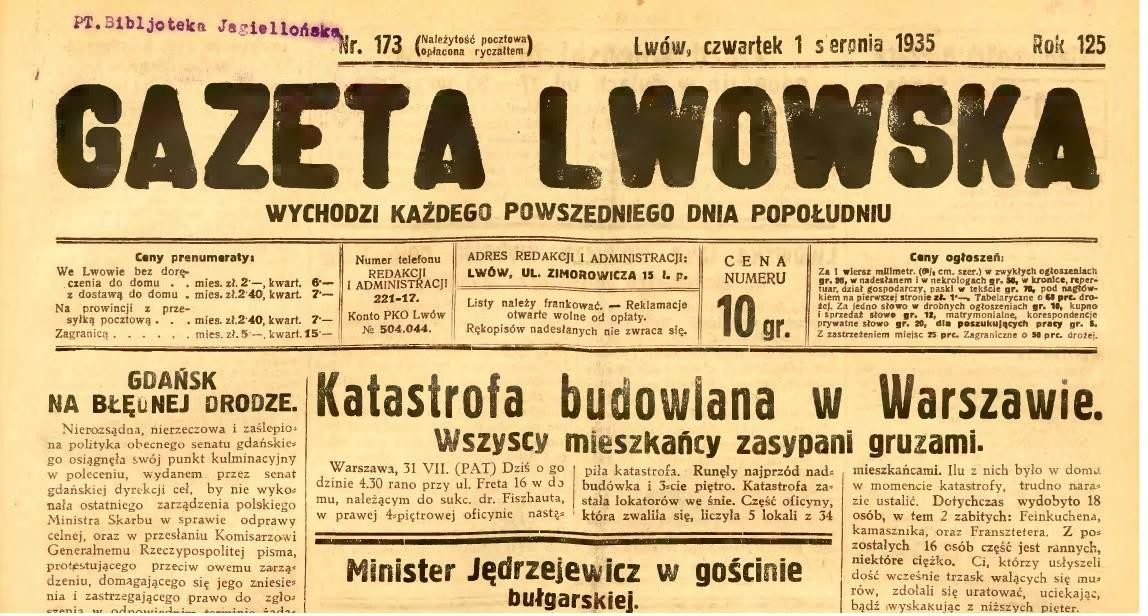
The family house at 16 Freta Street — with Jan Gąssowski's pharmacy and the „Moro" photographic studio on the ground floor — managed by the heirs after Jakub's death, was struck by tragedy in 1935. On 31 July, at half past four in the morning, the superstructure and third floor of the four-storey annexe collapsed; the fallen section comprised five apartments with thirty-four residents.
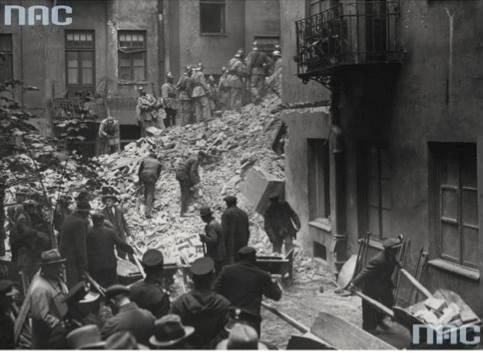
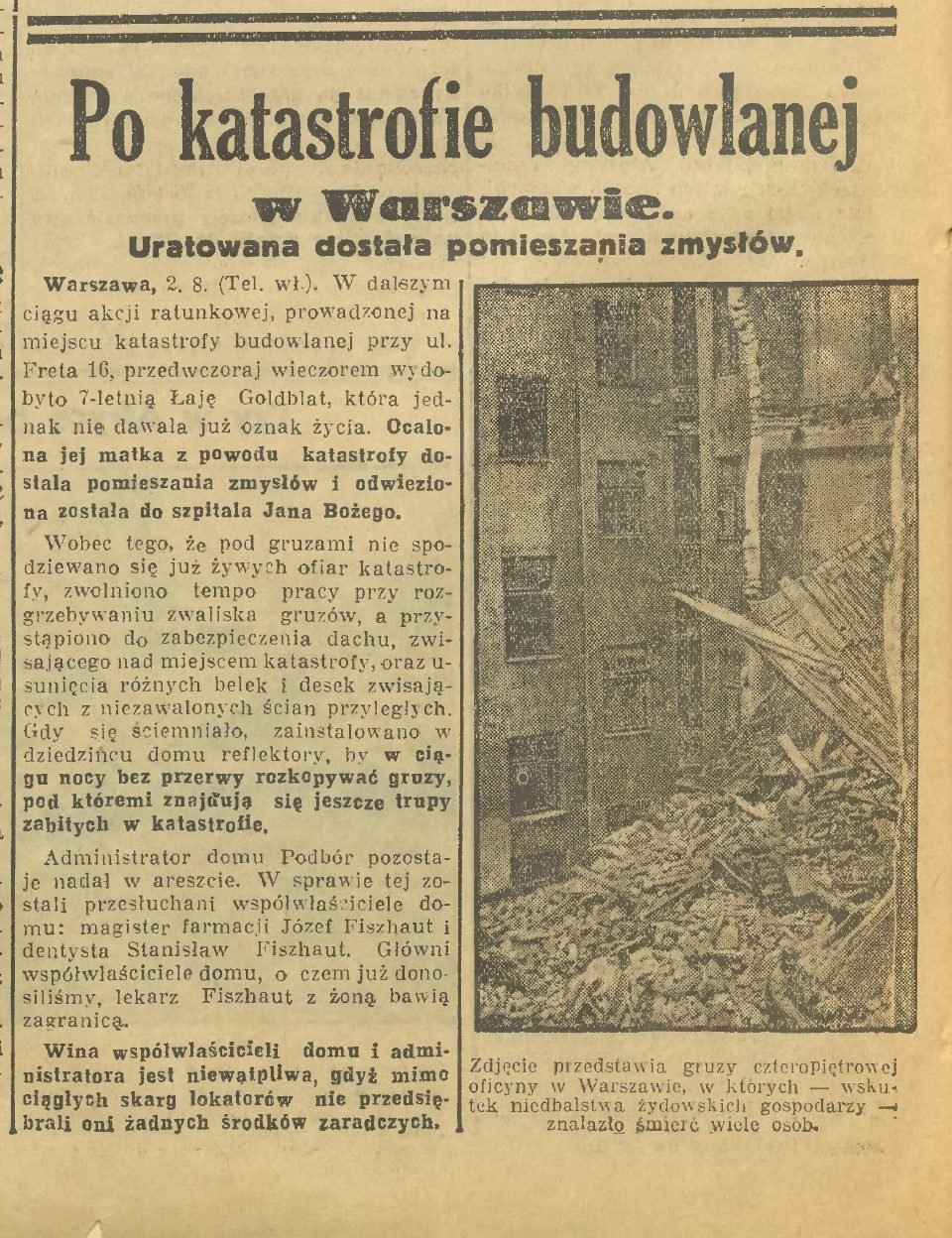
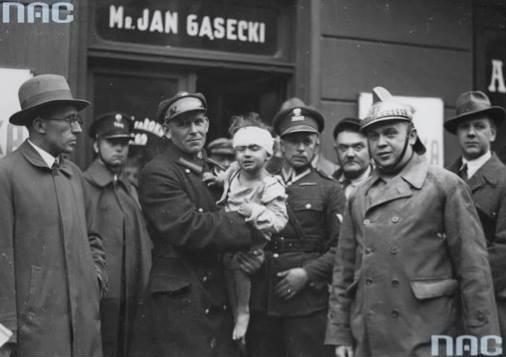
The living and the dead were brought out from under the rubble — among the victims was seven-year-old Łaja Goldblat, whose rescued mother, as the press reported, „lost her reason as a result of the disaster" and was taken to the St John of God hospital. The building's administrator, Podbór, was arrested, and the co-owners — the master of pharmacy Józef and the dentist Stanisław Fiszhaut — were questioned. Part of the press of the day reported the disaster in an openly antisemitic tone: the „Dziennik Bydgoski" of 3 August 1935 wrote of rubble in which „through the negligence of the Jewish landlords many people found their death", and pre-judged the verdict before the investigation: „the guilt of the house's co-owners and of the administrator is beyond doubt".
IV. October 1937 — Złota 9
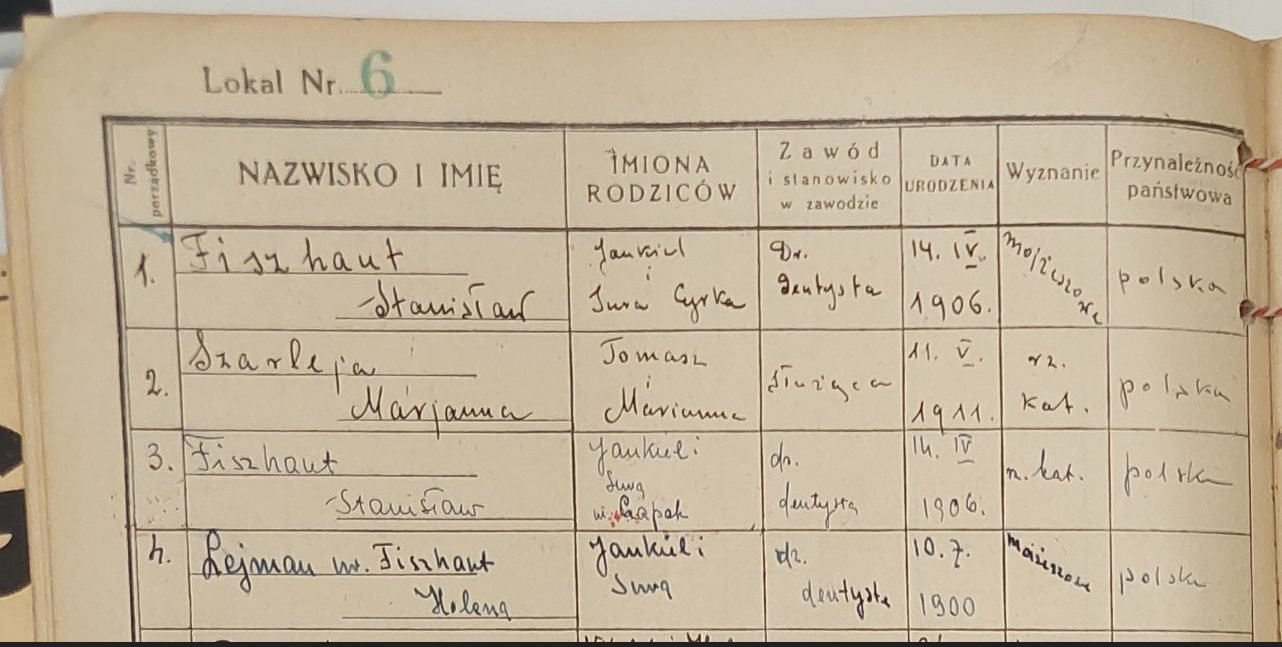
In the autumn of 1937 Stanisław moved from the family home at 16 Freta Street to apartment number 6 at 9 Złota Street — the residence register of the house, kept from that year and preserved in its entirety, records his registration on 30 October 1937.
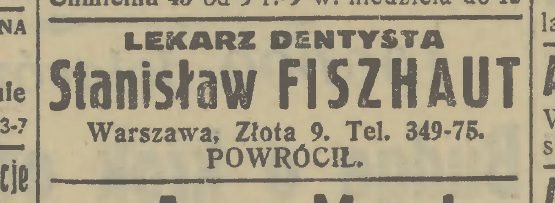
At Złota 9 he ran at the same time one of the busiest private practices in the city. The family remembered his waiting room as a place where millionaires sat next to labourers: from patients of little means he took no money — the rich, as he used to say, „subsidised" the poor.
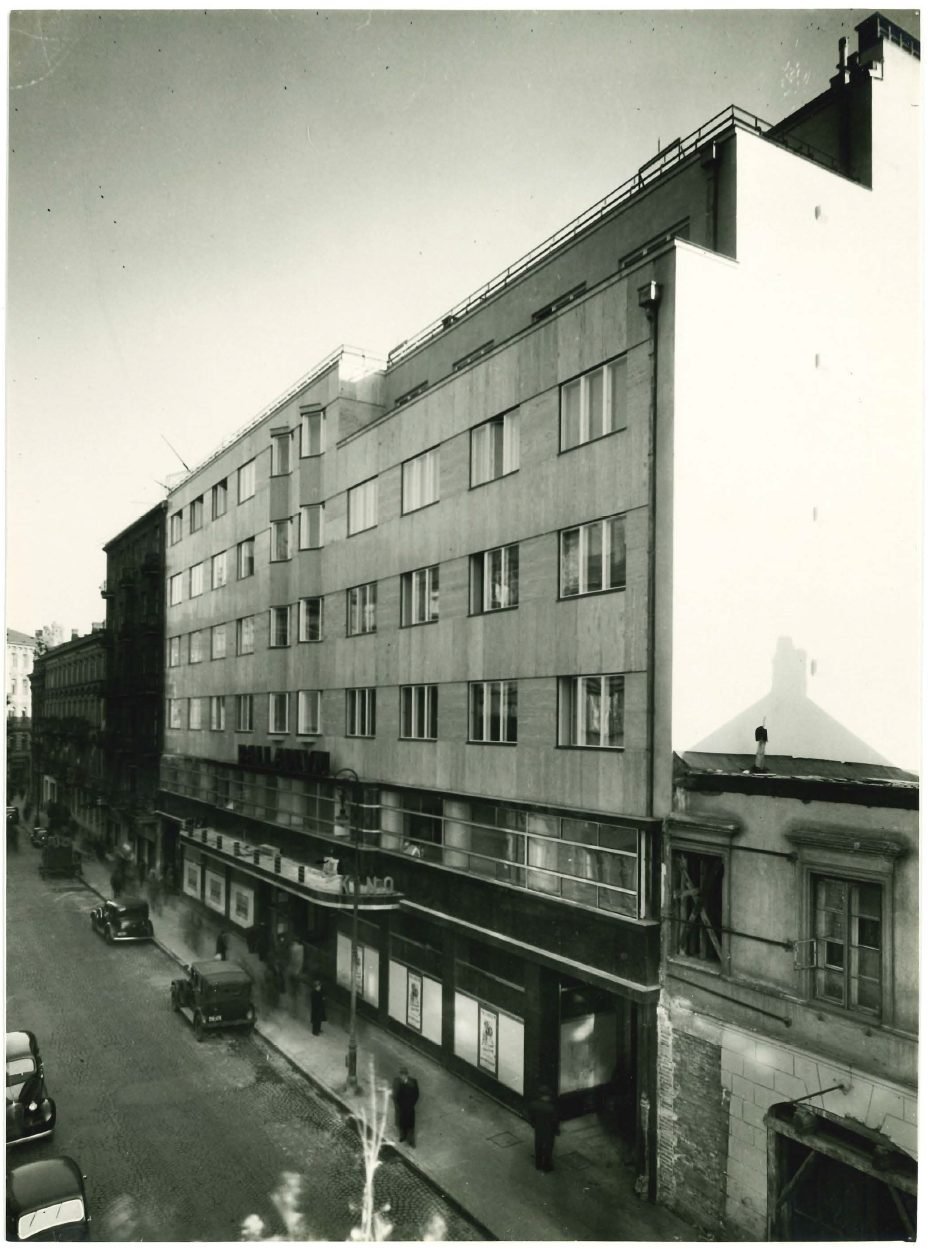
The windows of apartment number 6 looked out directly above the neon of the „Palladium" cinema — one of the most famous cinemas of pre-war Warsaw, operating in the Złota 7/9 complex. And this was no coincidence foreign to the family: the co-owner and manager of the „Palladium" was Szymon Lejman — Helena's husband. The Lejmans, sons of Moszek Lejman, a tailor who made a fortune and in 1913 opened the „Apollo" cinema in Warsaw, belonged to the magnates of the capital's cinema trade; Szymon also owned the „Światowid" at 111 Marszałkowska Street, in whose building he lived with Helena and Jurek. Stanisław thus lived literally above his brother-in-law's cinema. In 1938 he appears — alongside his sister Helena — on the electoral roll of the District Council of the Chamber of Dental Surgeons in Warsaw („Monitor Polski", 1 September 1938).
V. August 1939 — „I must stay"
On 27 August 1939 a patient and friend knocked at Stanisław's door — the ambassador of Italy. The embassy was evacuating; the diplomat begged Stanisław to pack a suitcase at once: a visa was waiting, a place on the train with the embassy staff, and a hiding place in the family estate in southern Italy. Stanisław refused, in words the family remembered for ever: „I cannot. If war comes, I must stay and defend the country."
On 1 September Józef and Stanisław were mobilised to the same military hospital and within a few days found themselves in the retreat eastward. After 17 September, to their stupefaction, they came face to face with the Red Army — and fell into Soviet captivity. Stanisław urged his elder brother to escape from the transport; Józef, an officer, refused, invoking the honour of the uniform. Stanisław, at a small station, simply walked off the platform. On foot, by side roads, given lifts on peasant carts, at the end of October 1939 he reached Warsaw. He never saw his brother again.
VI. November 1939 — baptism
From the first weeks of the occupation comes one of the most piercing traces in the residence register of the house. Stanisław appears on the card of apartment number 6 twice. The first entry, with the Jewish faith, was closed on 14 November 1939 with an annotation referring to a new entry — under which the same man, with the same date of birth, already figures as a Roman Catholic. In the remarks column the clerk noted the basis: a certificate of baptism issued on 8 November 1939 (record no. 424) by a Warsaw Roman Catholic parish.
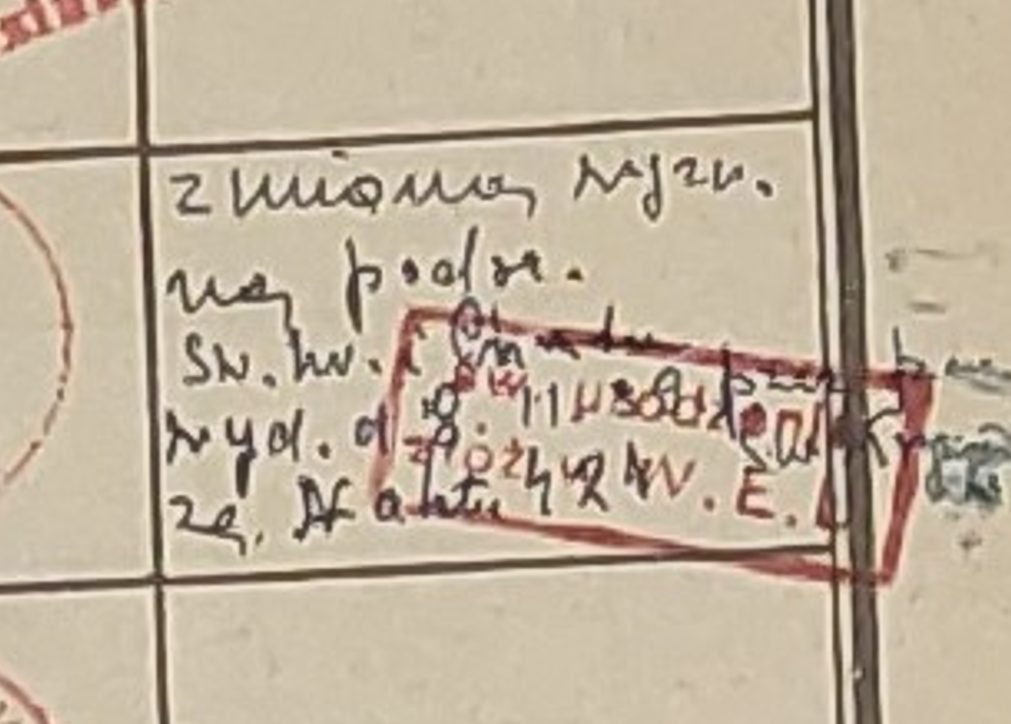
Stanisław, whom the family remembered as a non-believer, in the second month of the occupation accepted baptism — like many assimilated Warsaw Jews, he tried to save himself this way. In vain. For the occupier it was not faith that counted but the racist Nuremberg criteria: „descent" was determined by the grandparents' records, not by a certificate of baptism. The converts went behind the walls together with everyone else — inside the ghetto there even operated the All Saints parish on Grzybowski Square, gathering baptised Jews. Helena did not change her faith. The dates in the register close into a bitter bracket: on 14 November 1939 Stanisław was entered as a Catholic — and on 14 November 1940, exactly a year later, the same office deregistered him to the ghetto.
VII. 1940 — the noose tightens
On the night of 18 January 1940 the Gestapo came for Stanisław at Złota 9. Chance saved him: he was staying the night with friends, because the curfew had not allowed him to return after supper. Instead of him the Germans took his guest — the barrister Natan Bialer, a childhood friend to whom Stanisław, when Bialer lost his apartment in the bombardment, had given a room in his own. Bialer, together with several hundred hostages from the Polish and Jewish intelligentsia detained in the so-called Kott affair, was soon murdered. His young wife, Zofia née Bałaban, for more than a year did not know she was a widow. Stanisław, as best he could, watched over her.
In March 1940 the elder sister moved into the apartment on Złota. The residence register records her as „Lejman née Fiszhaut Helena, dental surgeon", with her brother; formally she arrived from the family home at 16 Freta Street (apartment 34), though before the war she had lived with her husband and son at 111 Marszałkowska Street, above the „Światowid". Neither husband nor son is recorded in the register at Złota — Helena figures here alone, and we do not know where Szymon and Jurek lived in those months of the occupation.

Their brother Józef perished in the spring of 1940 — one of the nearly twenty-two thousand victims of the Katyń massacre, murdered under the decision of the Soviet authorities of 5 March 1940. The prisoners of the Starobielsk camp, some three thousand eight hundred men, were shot in the NKVD headquarters in Kharkiv and buried at Piatykhatky. When in 1946 his sister filed in a Warsaw court an application to have Józef declared dead, she could write only that he „was held in the camp at Katyń" — the truth about the place of the murder was revealed only by the documents handed to Poland after 1990. Today Józef Fiszhaut figures in the Institute of National Remembrance's database of victims of the Katyń massacre.
In May 1940 a German officer-dentist requisitioned the apartment, the practice and the modern equipment brought from Berlin.
The third of the brothers, Henryk, made his way in September 1939 to Lithuania — and his road proved one of the most extraordinary roads of rescue of that war. In Kaunas the Japanese consul Chiune Sugihara, against instructions from Tokyo, issued in the summer of 1940 transit visas to Jewish refugees from Poland — more than two thousand documents that saved about six thousand people. With such a visa Henryk and his wife Pola crossed Siberia, sailed to Japan, and in May 1941 reached Vancouver.
VIII. November 1940 — behind the walls
In the autumn of 1940 the Germans created the ghetto — a „Jewish district" closed off by a wall, in which more than four hundred thousand people were crowded into an area of less than four square kilometres.
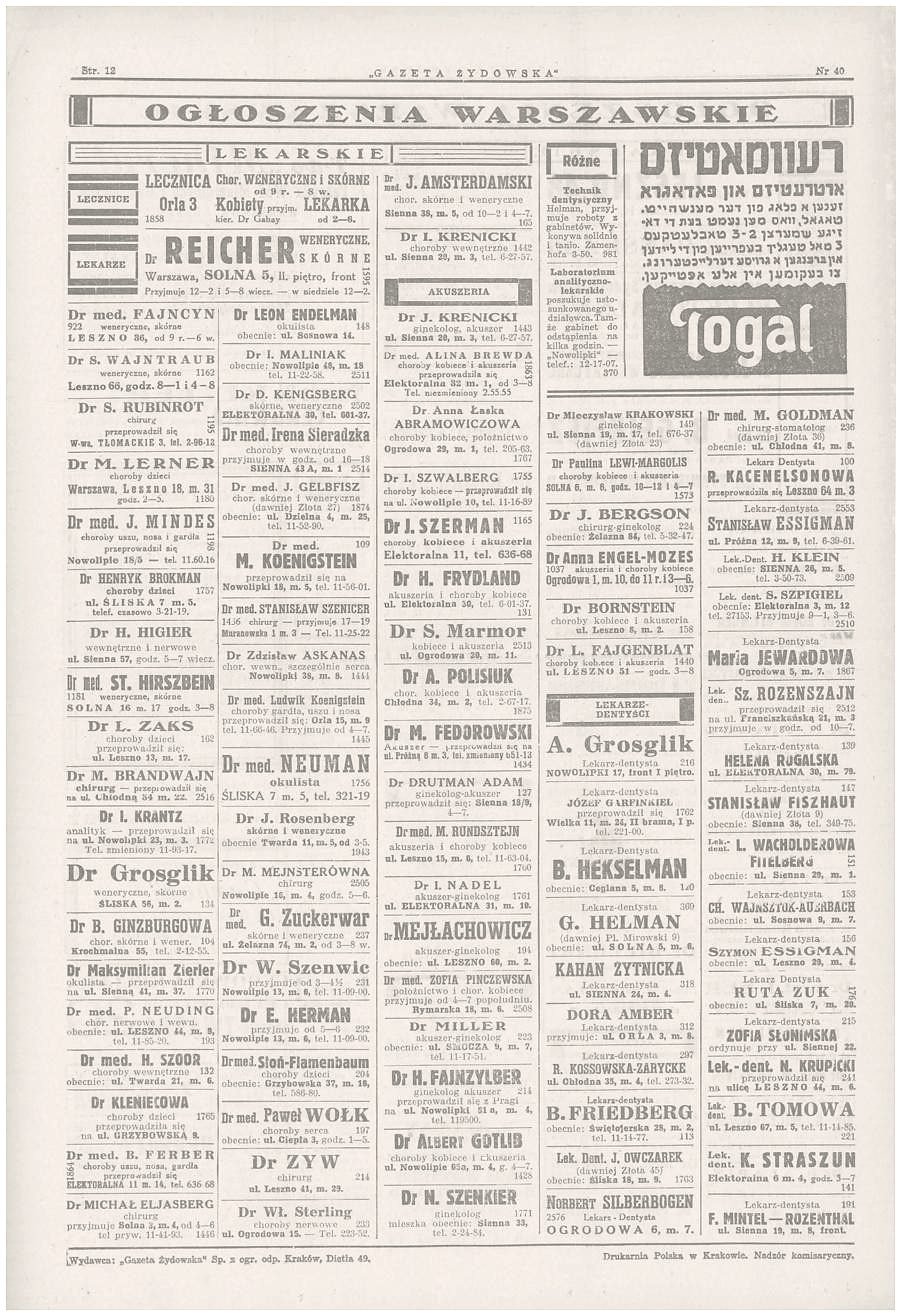
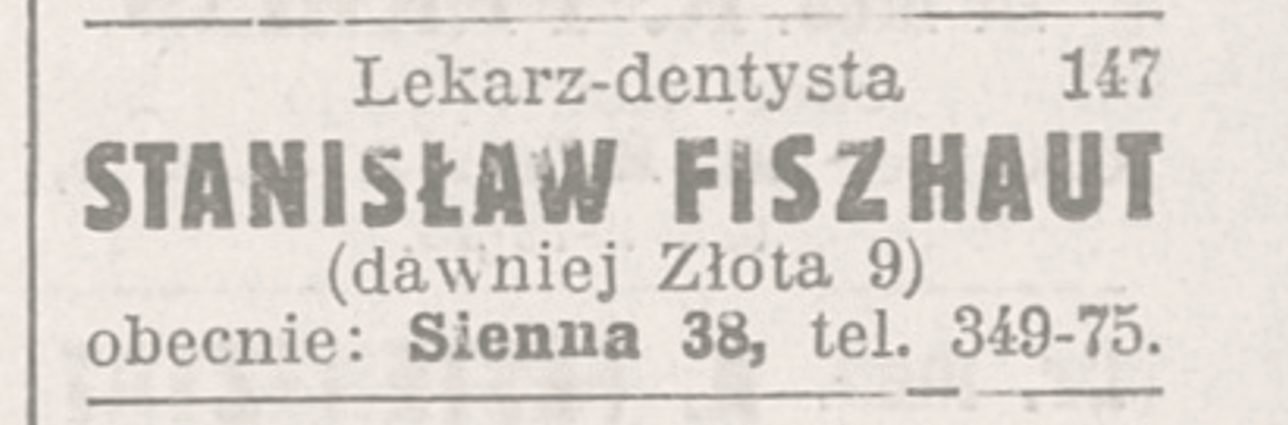
The walls divided the brother and sister from Złota already at the level of registration. On 31 October 1940 Helena was deregistered „to 17 Sienna St., apt. 27" — the address at which, as the family recalls, their sister Ludmiła had secured two rooms. Two weeks later, on 14 November — two days before the final closing of the walls — Stanisław went to 38 Sienna Street, where he lived in two rooms shared with the whole Bałaban family.
IX. The ghetto, 1941–1942
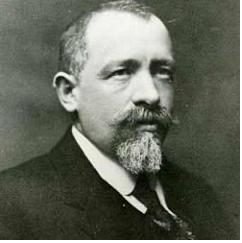
Zofia's father was Professor Majer Bałaban — the great historian of Polish Jewry, honorary rabbi of the Great Synagogue on Tłomackie. In the ghetto Stanisław worked without pay in a dental outpatient clinic: it brought a plate of watery soup a day and momentary protection from deportation to the labour camps, while hunger and typhus killed, by the summer of 1942, about a hundred thousand inhabitants of the closed district.
On 22 July 1942 the Germans began the Great Deportation — the round-ups to the Umschlagplatz and onward, to the gas chambers of Treblinka. By mid-September about three hundred thousand people had been deported. A work card in a German „shop" became, for a short time, a pass to life; Stanisław in a single day, for ten thousand złoty, obtained a card at the K.G. Schultz works on Ogrodowa Street. Zofia was not protected by a card — she was protected by marriage. That same day they were married, and the wedding was performed by the bride's father: Professor Bałaban through that whole week did nothing but perform weddings, because a wedding could save a life. In September, during the „cauldron on Miła Street", the two of them did not report for the selection and survived in hiding, passing into the „wild", illegal population of the ghetto. In the autumn they moved in with the Bałabans at 42 Muranowska Street. In December 1942 the professor died of heart failure; the Jewish Council still managed to give him a funeral and a separate, marked grave, which survived the war.
X. 18 January 1943 — the night of the brother and sister
On 18 January 1943 the Germans entered the ghetto without warning to complete its liquidation. For the first time they met the armed resistance of the fighters of the Jewish Combat Organization — and yet in four days they deported to Treblinka and Majdanek some five to six thousand people, and shot more than a thousand on the spot. The bunker in which Stanisław, Zofia and her mother were hiding was discovered. Beaten, they were driven to the Umschlagplatz and loaded into a cattle wagon.
Stanisław had for months not parted with a strong file. Still on the ramp he bribed the guard watching the train's roof to „look the other way". In the moving train he sawed through the wire in the wagon's window. About twenty kilometres beyond Warsaw, Zofia jumped first. Her mother, older and terrified, caught her coat on a nail and hung outside the window. Stanisław, holding the frame with one hand, seized the collar of her coat with his teeth and so — with his teeth and one free hand — set her up for a safe jump, then jumped himself. Battered but alive, they returned by night along the tracks to Warsaw; on the way they were taken in for a few days, at the risk of his life, by the Polish caretaker of the former Jewish sanatorium „Brijus" in Otwock, whom Stanisław knew from before the war. The destination of the train from which they escaped they learned later: Treblinka II, the extermination camp operating from 23 July 1942, in which about nine hundred thousand people were murdered.
That same January night also inscribed itself for ever in the fate of Ludmiła. From September 1939, when her husband's unit withdrew before the Germans, Lola had had no word from him and considered herself a widow; in the ghetto she worked as a physician of the Schultz works. On 18 January 1943 — the same day on which her brother was sawing the wire in the wagon window — she entered the ghetto on a special pass, called to a gravely ill child. The unexpected blockade of the district cut off her way back: for four days she hid in a cellar bunker together with Stanisław Adler, a lawyer and former officer of the Order Service who in July 1942 had demonstratively left the service, and with the physician Julian Lewinson and his mother, amid the sounds, reaching them from outside, of the ghetto's first armed resistance.
At the beginning of February 1943 they escaped in a way no screenwriter would have invented: on the horse-drawn hearse that carried the dead out of the ghetto every day. Adler in a gravedigger's cap, Ludmiła — in a doctor's coat, with her pass in her pocket. When at the checkpoint the gendarmes, weapons at the ready, moved towards the cart, the driver shouted in broken German: „Alle Tote, alles kaputt!" — all dead — and whipped up the horses. On the „Aryan side" they hid first with the writer Zenon Skierski in Saska Kępa, then — until the autumn of 1944 — in a villa in Anin belonging to the Jaśkiewicz family, Ludmiła's former patients. Behind the wall of the hiding place they slept in turns, guarding one another against snoring; water was rationed by sips. Freedom came with the entry of the Red Army onto the Praga bank.
XI. Spring 1943 — Helena and Jurek
In the spring of 1943, after obtaining false papers, Stanisław separated from his wife and mother-in-law — his „Semitic" looks, about which he himself joked bitterly, endangered everyone around him. The women found paid shelter; he chose life „in the wild": the cellars of burnt-out houses, hiding places changed every week, food obtained by night. In those same weeks the fate of his elder sister was being fulfilled.
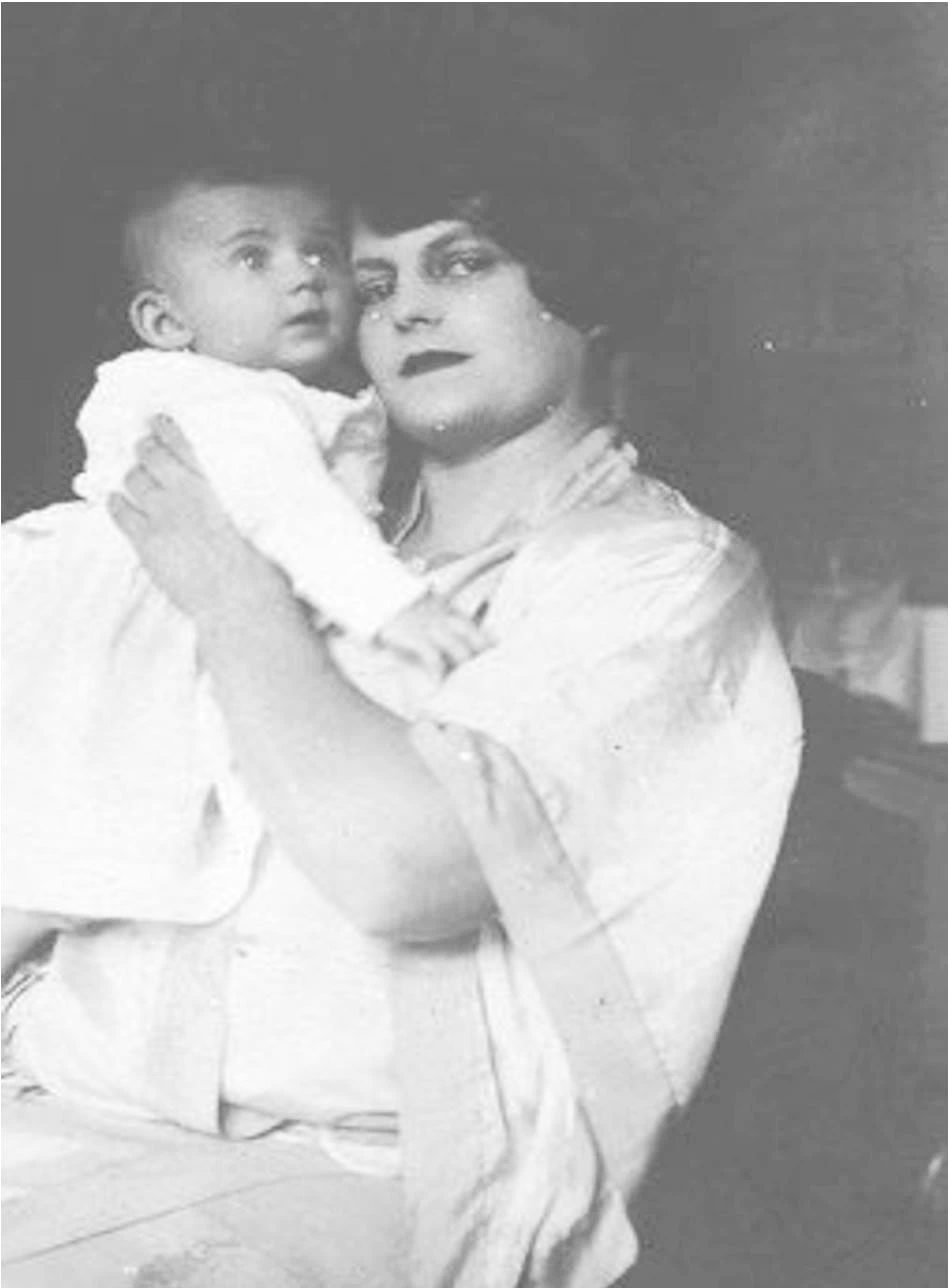
Today, thanks to the family memoir, we know far more about Helena's last months. The Lejmans survived the Great Deportation in the ghetto; Szymon went out with a placówka — a work column led out daily to the „Aryan side" — and, as the actor Jonas Turkow recalls in his own memoir, was engaged in smuggling Jewish children out of the ghetto and placing them in the care of Poles. Just before the January action of 1943 all three got beyond the walls: Szymon hid separately, while Helena and Jurek found shelter in Żoliborz — together with Helena Cytrynik, Hela's closest friend and the sister of Henio Zeldowicz — and from January to the beginning of May they lived there in relative safety.
They were undone by a street round-up — the daily reality of occupied Warsaw. At the beginning of May Jurek left the house and fell into a German round-up for forced labourers; a search revealed that he was circumcised, and the boy was taken to the notorious Gestapo prison on Szucha Avenue. When word from chance witnesses reached his mother, Hela Cytrynik could not hold her back: Helena went to Szucha to save her son — and was arrested on the spot. On 8 May 1943 the two of them, mother and son, were led back into the field of rubble that had so recently been the ghetto, and there shot. It was seen from the „Aryan" side by a chance witness — Mundek Reichert, a close friend of Stanisław and Hela. Szymon was still alive in the spring of 1943; then his trace vanishes.
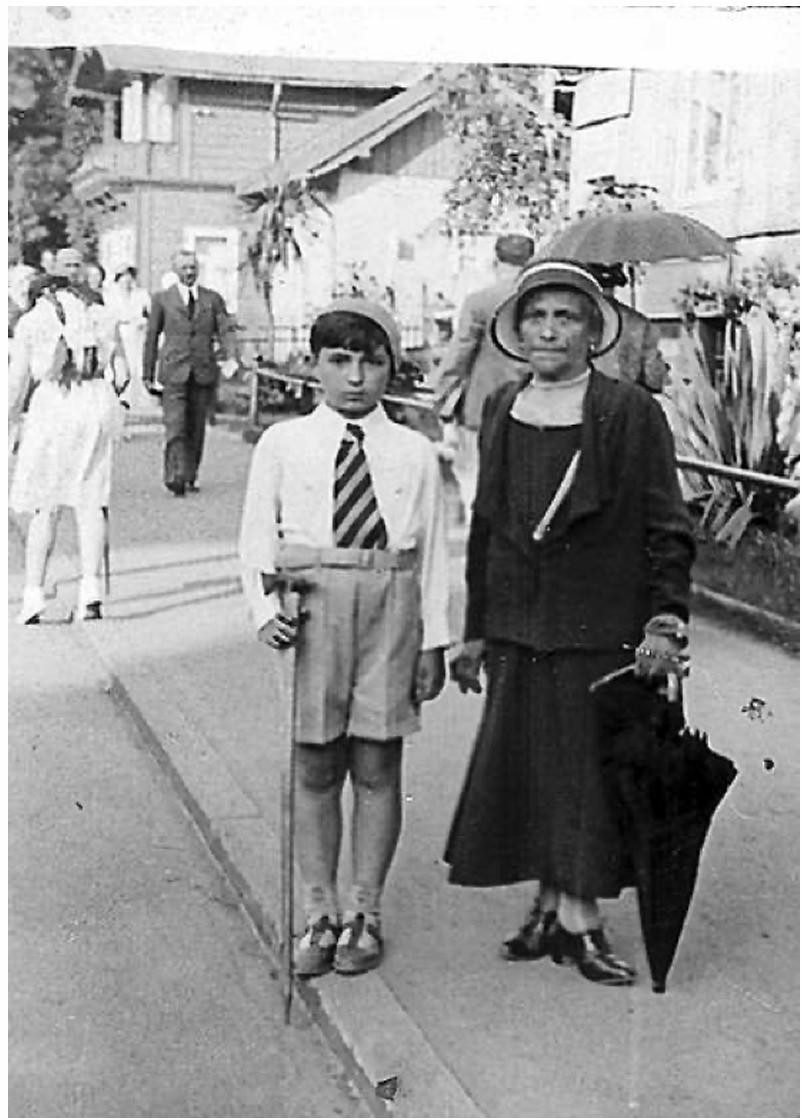
A surviving court document notes the same day drily: Helena „left the house on 8 May 1943 and was arrested by the Gestapo". It was the week in which the staff of the ghetto uprising, with Mordechaj Anielewicz, died in the bunker at 18 Miła Street; a few days later Jürgen Stroop ordered the Great Synagogue on Tłomackie to be blown up as a sign that „the Jewish district in Warsaw has ceased to exist".
XII. A year in a bathtub
In the autumn of 1943 word reached Stanisław that Zofia and her mother had been denounced and murdered. He never learned the circumstances of the denunciation.
In June 1944 he chanced upon a cellar bunker occupied by a larger, well-organised group of Jews in hiding — among them were two of his pre-war friends, and it was they who invited him in. He stayed a month. At the beginning of August the hiding place was discovered by two Wehrmacht soldiers; they feigned sympathy and promised to bring food if those in hiding gave them money and valuables „for the shopping". Stanisław did not believe them for a moment. He persuaded his two friends and they left at once; the rest preferred to stay. When after three days he returned to see how the others fared, he found only bodies.
After the outbreak of the Warsaw Uprising on 1 August 1944 the Germans began methodically to burn and dynamite the city. As the ring closed, Stanisław with two companions decided on a desperate step: they fought their way thirty blocks to the tenement house that had belonged before the war to uncle Max Czapek — burnt out already in 1939 — standing directly opposite Gestapo headquarters, and therefore, as he reasoned, long since searched and of no interest to anyone. On the fourth floor a fragment of a bathroom had survived: two walls, a piece of roof, a bathtub and — because the water had not been cut off to the Germans across the street — a working tap. For nearly four months the three men lay by day motionless in the bathtub covered with a dark sheet, living on a sack of flour and whatever could be caught in the ruins. In the middle of January 1945, half dead with hunger and convinced that the Germans had won the war, they came downstairs to have done with hiding — and walked straight into a dumbfounded Red Army patrol. The Russian doctors, former prisoners themselves, knew that feeding a man in extreme starvation to the full kills — and that night they saved them a second time, rationing food by the spoonful. In the ruins of left-bank Warsaw, destroyed in more than eighty per cent, hundreds of such people in hiding lived to see the liberation — they were later called the „Robinsons of Warsaw".
XIII. 1945–1948 — return to life
In the winter of 1945, already in uniform, Ludmiła took charge of the neurology ward of the Lublin military hospital — and it was on her ward that her utterly exhausted brother woke. Soon afterwards the notice boards of the Red Cross, posted across Europe for families searching for one another, brought improbable news: someone had seen Henio Zeldowicz in Palestine, in the uniform of the British army. The husband who had thought her dead was alive — he had passed the trail of Anders' Army, including the Italian campaign at Monte Cassino.
For half a year Ludmiła mercilessly drove her brother through rehabilitation until his strength returned. Both went back to Warsaw before 1945 was out: she to organise the neurological clinic of the reviving medical faculty, he — as Professor Meissner's closest collaborator — to the rebuilding of the ruined Academy of Stomatology, carting surviving equipment from the Recovered Territories and working as a dental surgeon, among other places in the government health service.
Ludmiła in that time was closing matters that no one else could any longer settle. In 1946 she filed in a Warsaw court the applications to have her brother and sister — Józef and Helena — declared dead. On 4 May 1946 she left Warsaw for Prague, to meet her recovered husband, carrying in her luggage the typescripts entrusted to her by Adler — the chronicle of the ghetto written down in hiding. Adler himself remained in Poland; shaken by the wave of post-war antisemitism, he took his own life on 11 July 1946.
In Gdańsk, where he had gone to fetch equipment for the Academy, he met Helena Longina „Lena" née Milewicz-Rygalska — a soldier of the Home Army, widow of an executed Home Army man. During the occupation Lena and her family had hidden a Jewish girl brought out of the ghetto — Iza. It was Stanisław who insisted that Helena be called „Lena" from then on — he wanted, as Iza judged years later, to separate his wife from the name of the sister he had not managed to save. In 1946 Stanisław and Lena married; in 1948 they formally adopted Iza. It is she, as Iza Fiszhaut-Laponce, who would years later write down the family history to which this account owes so much.
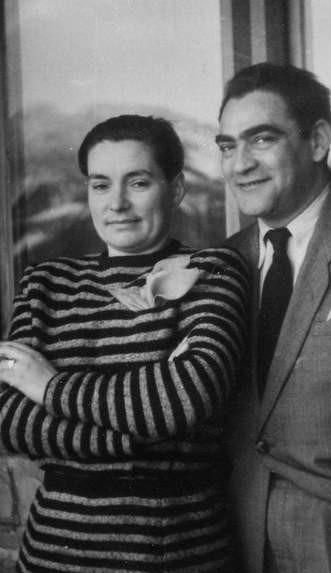
XIV. 4 January 1949 — the „Batory"
The decision to leave ripened as the Stalinist noose tightened — and it had to be fought for. The wife of Jakub Berman, the all-powerful „grey eminence" of the new regime, resolved as minister of health to keep her pre-war lecturer in the country: the physician examining candidates for the Canadian embassy „found" in Stanisław a past tuberculosis, which at that time closed the road to Canada. Stanisław assembled eight lung specialists who overturned the diagnosis, and for nearly two years played with the offices a grim game of alternately expiring passports and visas. He won. On 3 January 1949 the Warsaw office of the Joint wrote to the New York organisation for aid to immigrants: Dr Fiszhaut of Warsaw, „one of the best dentists in Poland", sails the next day from Gdynia aboard the „Batory" via New York — and carries twelve tons of luggage: dental equipment. At the end of January 1949 Stanisław, Lena and Iza stepped off the train in Vancouver, where Henryk and Pola were already waiting, together with Ludmiła and her husband — the psychiatrist Henio Zeldowicz, a physician of Anders' Army and veteran of the Italian campaign.
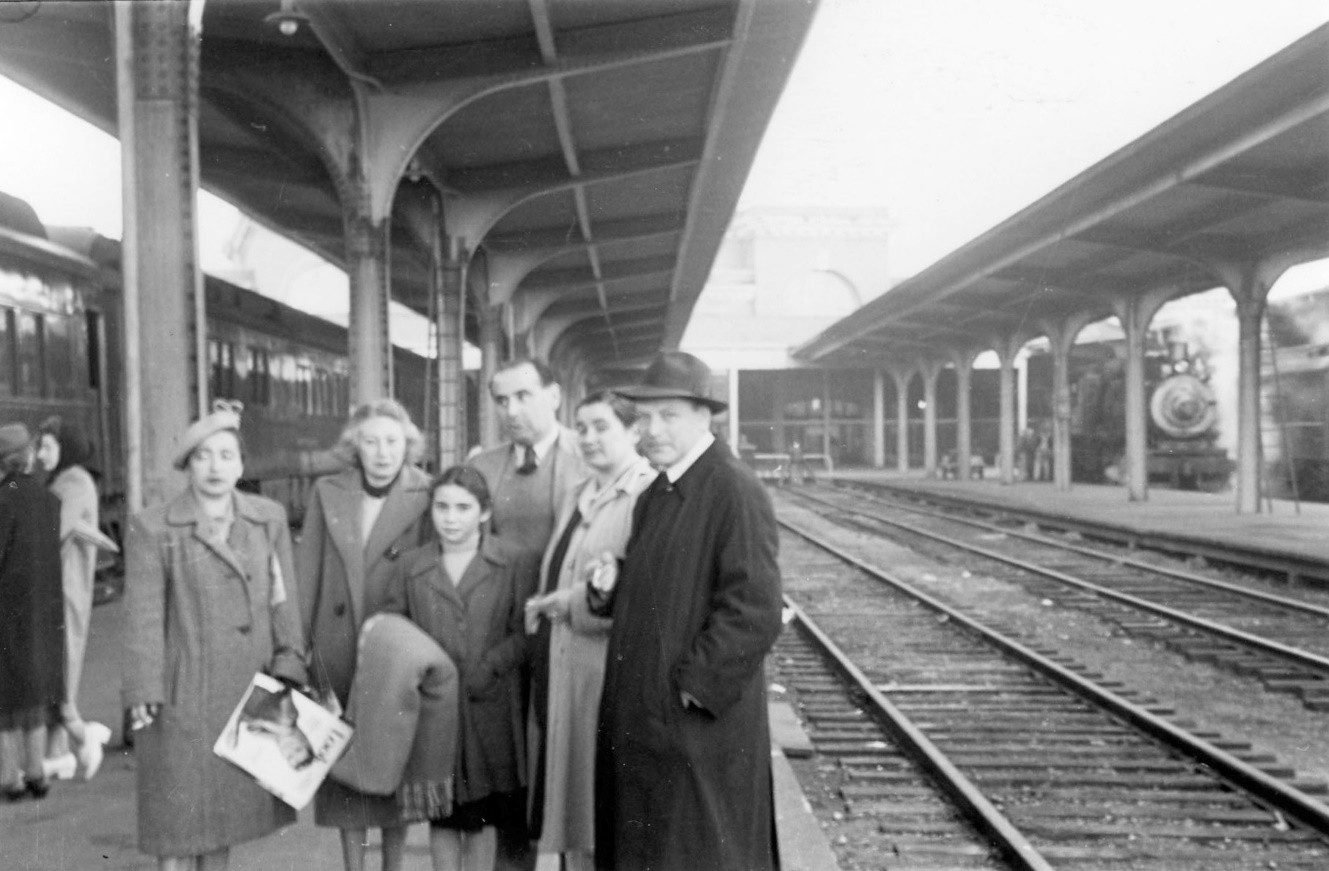
XV. Vancouver
Canada did not recognise his diploma. The man who had taught Warsaw students root-canal treatment and operated on cleft palates in newborns had to sit down again at a student's desk. Only Tufts University in Boston valued his qualifications, crediting him with half the course of study. When the Jewish charitable organisations refused help, the loan for his studies was made by the poor Polish community of Vancouver; he repaid it to the last penny within two years of his diploma. Lena meanwhile, knowing not a word of English, cleaned hotel rooms to keep the household.
In 1952 he obtained his American diploma, passed the examinations of the province of British Columbia and opened a practice in Vancouver to which the „new Canadians" flocked — Polish, Italian, Ukrainian, Russian and German immigrants, with whom he could speak in their own languages. His home became the heart of Polish social life in the city. Around 1954 a daughter, Ewa, was born. Around 1958 Stanisław noticed in himself a small, disquieting symptom; the diagnosis was made by his sister-neurologist: amyotrophic lateral sclerosis. For seven more years he worked and — as Iza remembered — never once complained. He died on 27 October 1965 in Vancouver; he rests in the cemetery at New Westminster.
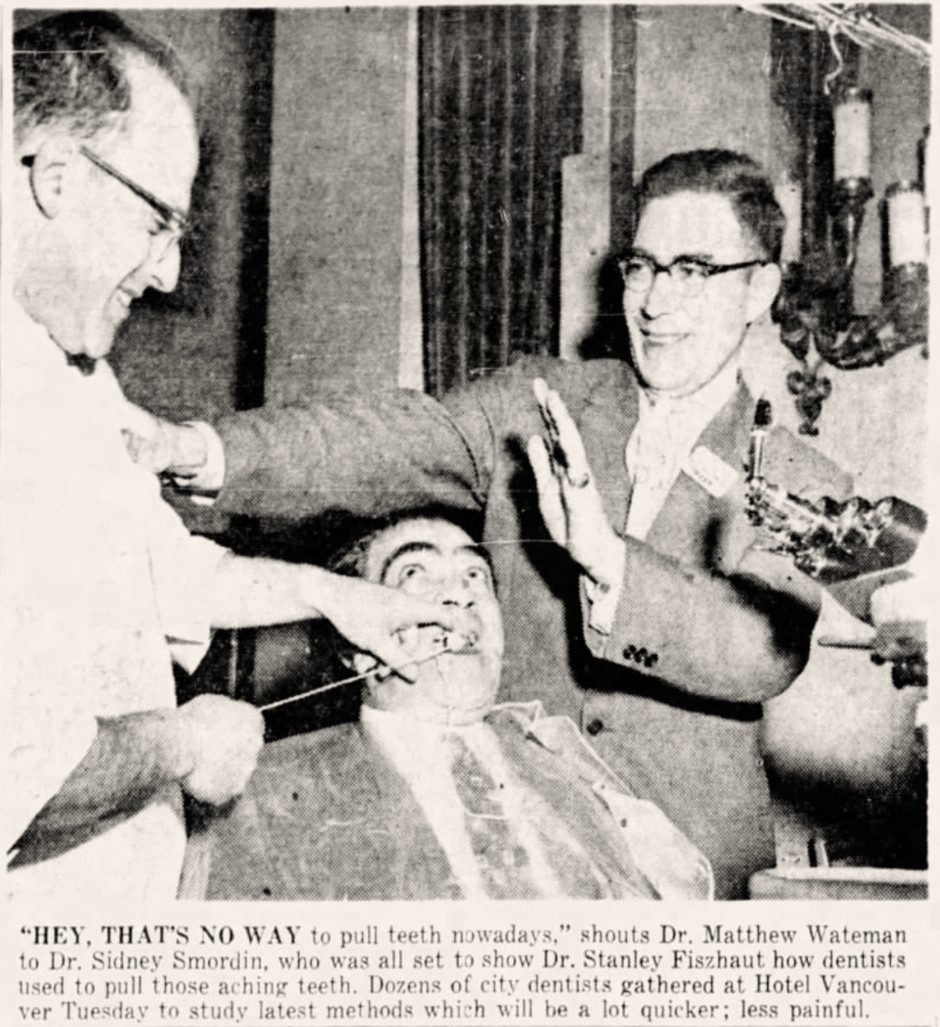
Henryk practised in Vancouver as a pulmonologist into late old age; he died in October 1989. His son Mark — born in America shortly before his uncle's arrival — has been a paediatrician for nearly fifty years; it is to him that we owe the family photographs, documents and Iza's memoir. Ludmiła and Henio Zeldowicz practised in Vancouver for decades as neurologist and psychiatrist; both lectured in the Faculty of Medicine of the University of British Columbia, and in 1976 Ludmiła co-created Vancouver's first symposium on the Holocaust for school youth. It was in Vancouver too that she closed the obligation of years before: she brought about the translation and publication of Adler's memoir „In the Warsaw Ghetto 1940–1943" (Yad Vashem, 1982) — handing a copy to the psychiatrist Robert Krell, she said: „Robert, this is my story too." She died in 1991; a university research prize today bears her and her husband's name. Lena, who nursed her husband to his last breath, outlived him by six years.
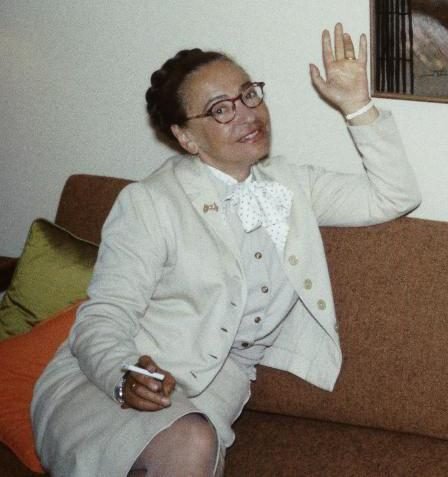
XVI. Memory
They moved out of Złota 9 under compulsion in November 1940 — and never returned here. On 21 August 2026, in front of the house at Złota 7/9, the Stones of Remembrance of Stanisław Fiszhaut and Helena Lejman née Fiszhaut will be set in the pavement. Passing them, it is worth remembering that under one address lived a whole epoch: a doctor who accepted baptism in the vain hope of rescue, and in January 1943 tore himself, his wife and her mother out of a transport to Treblinka; his sister, who left the house on 8 May 1943 and did not return; a brother murdered with a shot to the back of the head in Kharkiv; a brother saved by the signature of a Japanese consul; and a sister who in a Lublin hospital set one of the last Robinsons of Warsaw back on his feet.
Timeline
| Date | Event |
|---|---|
| 1893 | Józef Fiszhaut, the eldest of the brothers and future master of pharmacy, is born in Warsaw. |
| 10 Jul 1900 | Helena Fiszhaut, future dental surgeon, is born. |
| 27 Aug 1903 | Salomon Henryk Fiszhaut, future pulmonologist, is born. |
| 1905 | Ludmiła („Lola"), future neurologist, is born. |
| 14 Apr 1906 | Stanisław Fiszhaut is born in the family home on Freta Street. |
| 1912 | Jakub Fiszhaut dies; the house at Freta 16 passes to his heirs. |
| 1928 | Stanisław graduates from the State Dental Institute; assistant to Prof. Alfred Meissner, from c. 1930 head of the surgical ward of the Academy of Stomatology. |
| 1932 | Ludmiła marries the psychiatrist Henio Zeldowicz. |
| 31 Jul 1935 | Building disaster at Freta 16 — collapse of the annexe, fatalities; the co-owners questioned. |
| 30 Oct 1937 | Stanisław moves to Złota 9 (apartment 6, above the neon of the „Palladium" cinema), arriving from the family home at Freta 16; practice „Złota 9, tel. 349-75". |
| 27 Aug 1939 | Stanisław refuses evacuation with the Italian embassy: „I must stay and defend the country". |
| Sep 1939 | Józef and Stanisław in Soviet captivity; Stanisław escapes from the transport. Henryk makes his way to Lithuania. |
| 8–14 Nov 1939 | Stanisław's baptism (certificate of 8 XI 1939, record no. 424); a new entry in the residence register: Roman Catholic. |
| 18 Jan 1940 | The Gestapo comes for Stanisław (the Kott affair); Natan Bialer perishes in his place. |
| Mar 1940 | Helena moves in with her brother at Złota 9, arriving from Freta 16; the register records neither husband nor son. |
| spring 1940 | Józef murdered by the NKVD in Kharkiv — the Katyń massacre. |
| 31 Oct 1940 | Helena deregistered from Złota 9 to the ghetto, „to 17 Sienna St., apt. 27" — a different address from her brother's. |
| 14 Nov 1940 | Stanisław deregistered from Złota 9 to the ghetto, to Sienna 38 — two days before the walls were closed. |
| May 1941 | Henryk and his wife Pola, saved by a Sugihara visa, reach Vancouver. |
| Jul 1942 | The Great Deportation; the wedding of Stanisław and Zofia Bałaban, performed by Prof. Majer Bałaban. |
| early Jan 1943 | Just before the January action Helena, Jurek and Szymon escape the ghetto; mother and son hide in Żoliborz. |
| 18 Jan 1943 | The January action: Stanisław deported, escapes through the window of a wagon bound for Treblinka. The same day Ludmiła, called to a sick child, is cut off by the blockade in the ghetto; at the beginning of February she escapes hidden on the hearse. |
| 8 May 1943 | Jurek, seized in a street round-up in Żoliborz, is taken to Szucha; Helena, trying to save her son, is arrested. On 8 May both are shot in the ruins of the ghetto. |
| autumn 1943 | Zofia and her mother denounced and murdered. |
| Aug 1944 – Jan 1945 | The Warsaw Uprising; Stanisław hides in a bathtub opposite Gestapo headquarters; liberated in mid-January 1945. |
| 1946 | Marriage of Stanisław and Lena; Ludmiła files the applications to have Józef and Helena declared dead, on 4 May leaves Poland with Adler's manuscript and finds her husband. |
| 4 Jan 1949 | The voyage of the „Batory" from Gdynia; end of January — Vancouver. |
| 1952 | Tufts University diploma; practice in Vancouver. |
| 27 Oct 1965 | Stanisław Fiszhaut dies in Vancouver; he rests in New Westminster. |
| 1982 | Through Ludmiła's efforts, Stanisław Adler's memoir „In the Warsaw Ghetto 1940–1943" is published (Yad Vashem). |
A Note on Sources
This account rests exclusively on sources: the residence register of the house at 9 Złota Street for 1937–1940 (State Archive in Warsaw); the family memoir of Iza (Fiszhaut) Laponce and the accounts of Dr Mark Fishaut; the announcements of „Dobry Wieczór! Kurier Czerwony" (no. 293, 1938) and „Gazeta Żydowska" (1940); the „Gazeta Lwowska" of 1 August 1935 and the „Dziennik Bydgoski" of 3 August 1935, with the photographs of the National Digital Archives from the Freta 16 disaster; „Monitor Polski" no. 62 of 15 July 1946 (files Zg. 302–306/46 of the Municipal Court in Warsaw) and the register of declaration-of-death cases (USHMM RG-15.270); the Institute of National Remembrance's database of victims of the Katyń massacre; the IPN catalogues; the memoirs of Jonas Turkow, „C'était ainsi. 1939–1943, la vie dans le ghetto de Varsovie" (Paris 1995); the memoirs of Stanisław Adler, „In the Warsaw Ghetto 1940–1943" (Yad Vashem 1982), and of Helena Szereszewska, „Krzyż i mezuza"; the getto.pl database; the accounts of Betty Keller and the note on Ludmiła Zeldowicz at abcbookworld.com; the AJDC letter of 3 January 1949; „The Boston Sunday Globe" of 10 June 1951; „The Province" (Vancouver) of 8 January 1956; and the documentation of Henryk Fiszhaut's refugee road (among others „Flight and Rescue", USHMM). The family photographs — from the collection of the Fishaut family, by kind courtesy of Dr Mark Fishaut.
Opracowanie w ramach projektu upamiętnienia mieszkańców kamienicy przy ul. Złotej 7 i 9 w Warszawie — prepared as part of the project commemorating the residents of the house at 7 and 9 Złota Street in Warsaw · www.zlota7-9.com