„Everything that technology has devised for the convenience of domestic life has found its application here."
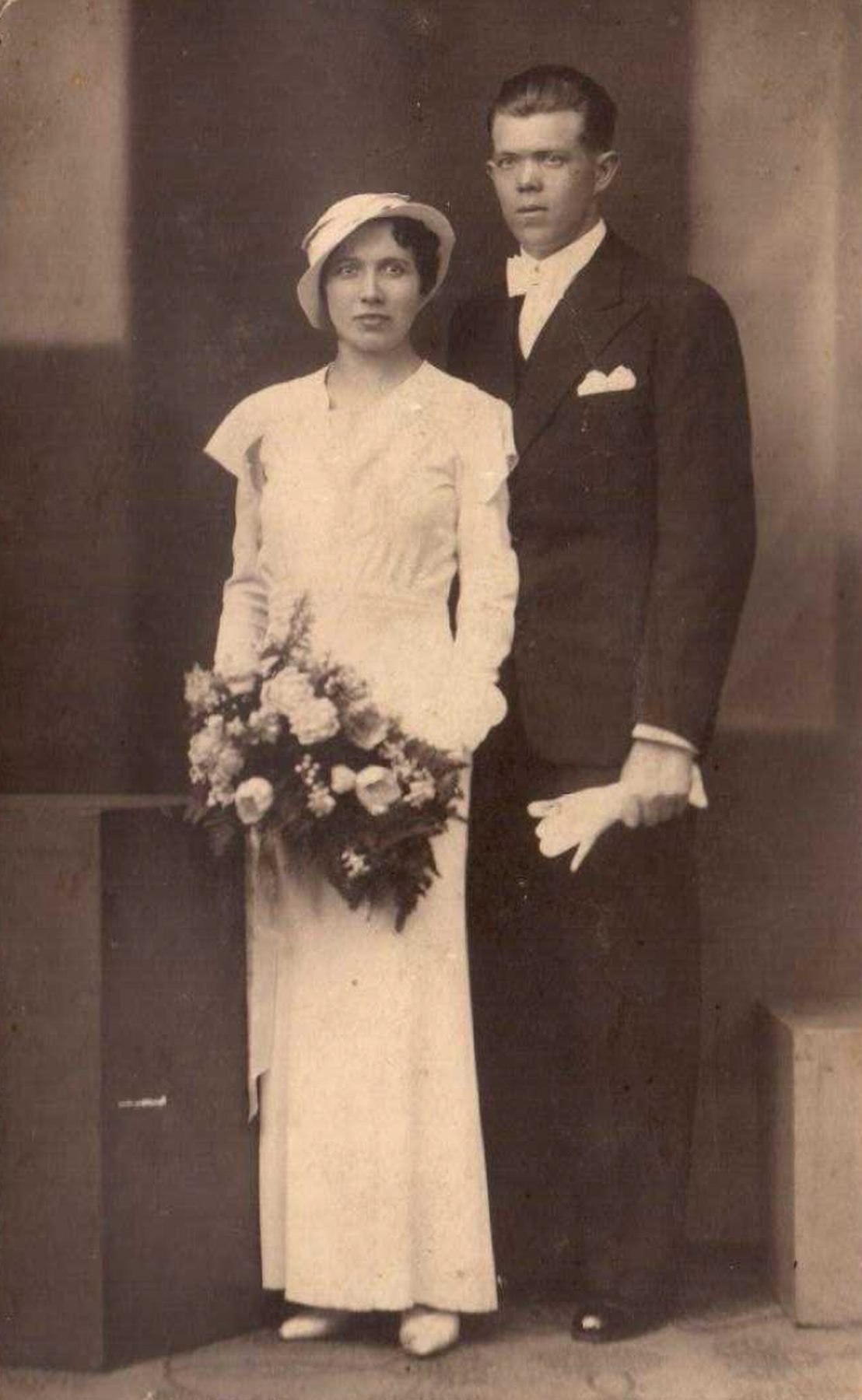
They were a young married couple with two children. He — the caretaker of the most modern residential building of pre-war Warsaw, a man who knew the edifice from the boiler room to the roof and answered for everything in it simply working, for several dozen demanding families. She — kept the home in the staff apartment in which their daughter was born. They lived at this address through the whole occupation and the Warsaw Uprising — including the weeks when their house became the last seat of the command of fighting Warsaw. After the capitulation their roads parted for long months — to meet again after the war on Złota, in the house that survived.
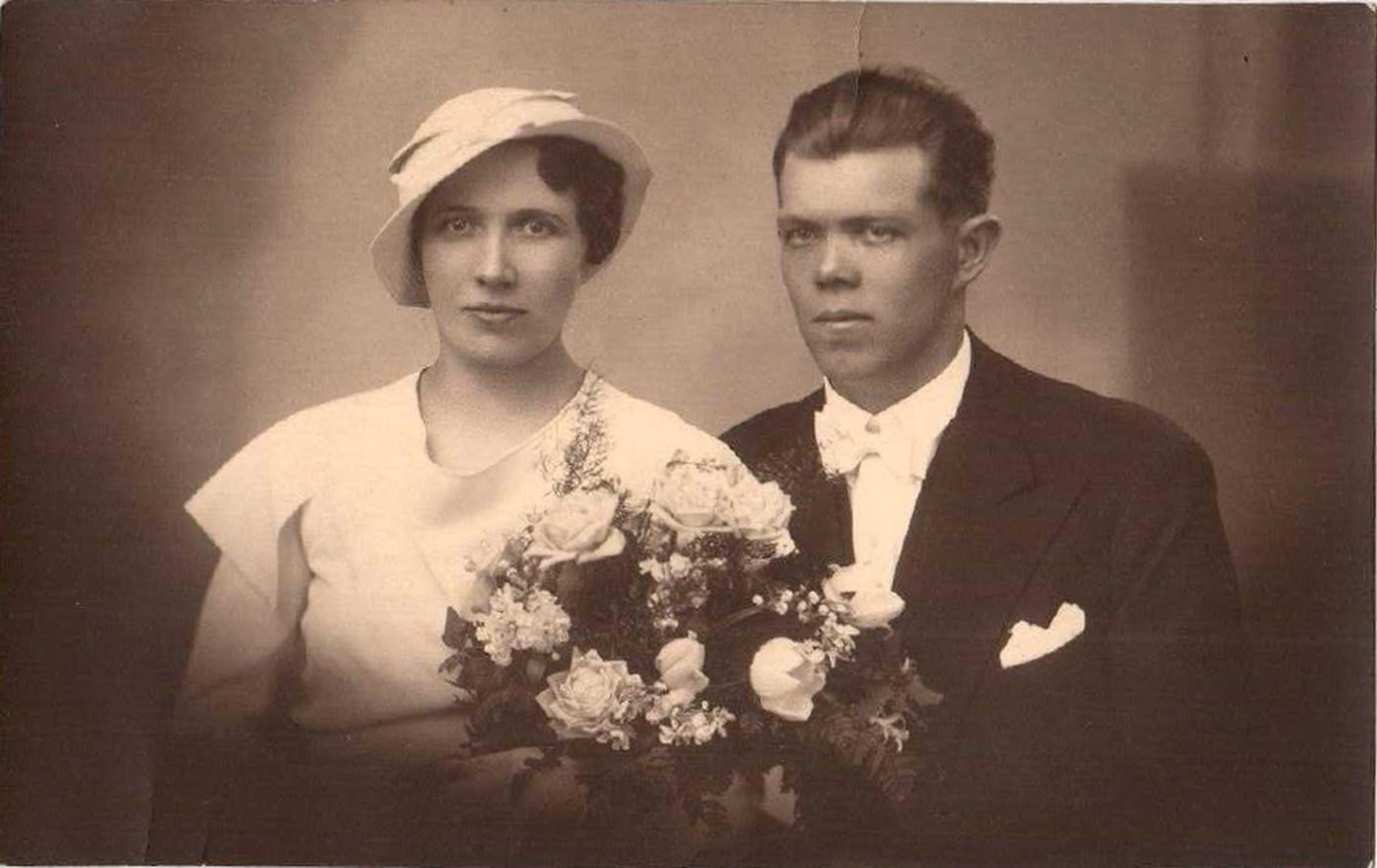
This account gathers what is known about them. The facts come from sources: from the cards of the house's residence registers, from the press of the period, from the building documentation. Where the sources are silent — and the wartime chapter of this history remains in large measure silence — the account does not fill that silence with conjecture.
I. From Pańska to Złota
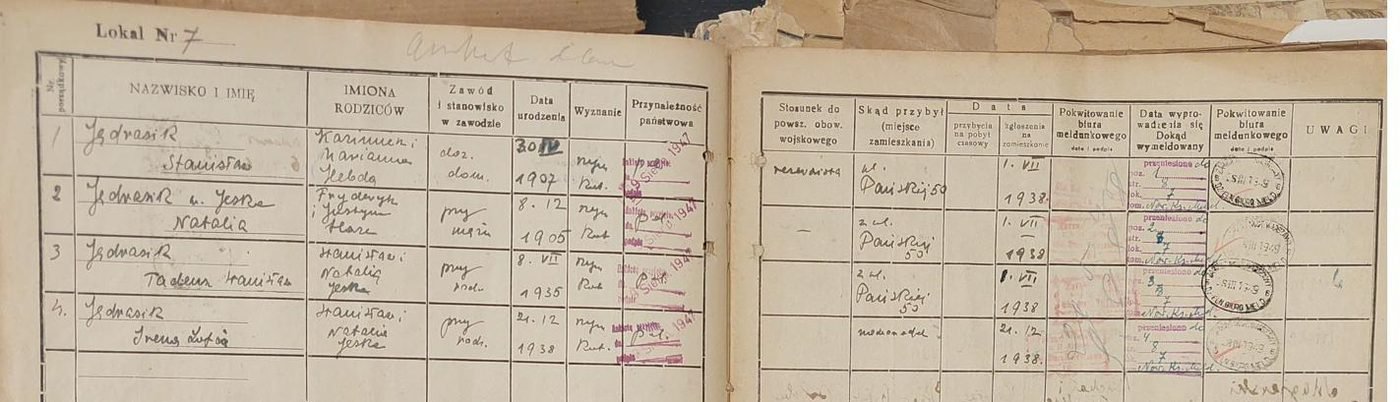
Stanisław Jędrasik was born on 30 April 1907; he was the son of Kazimierz and Marianna. Natalia née Jeske, daughter of Fryderyk and Justyna, was a year and a half his senior — she came into the world on 8 December 1905.
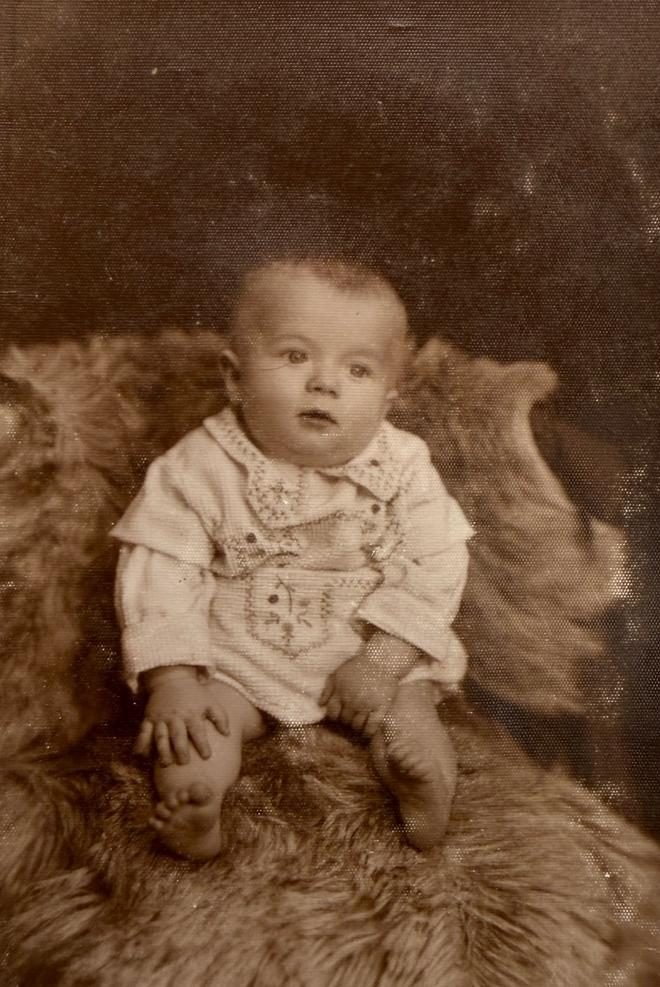
On 8 July 1935 their son, Tadeusz Stanisław, was born.
They lived then at 50 Pańska Street — a few hundred metres from the square on which the Italian insurance company Assicurazioni Generali was just raising its Warsaw edifice.
In the summer of 1938, when the first part of the construction was already finished and occupied, the Jędrasiks moved to Złota. As of 1 July 1938 they were registered in apartment no. 7 — the caretaker's staff apartment in the residential part of the building, entered from 7 Złota Street. Here, on 21 December 1938, their daughter Irena Zofia was born — a child who came into the world already at this address.
II. The house that Generali built
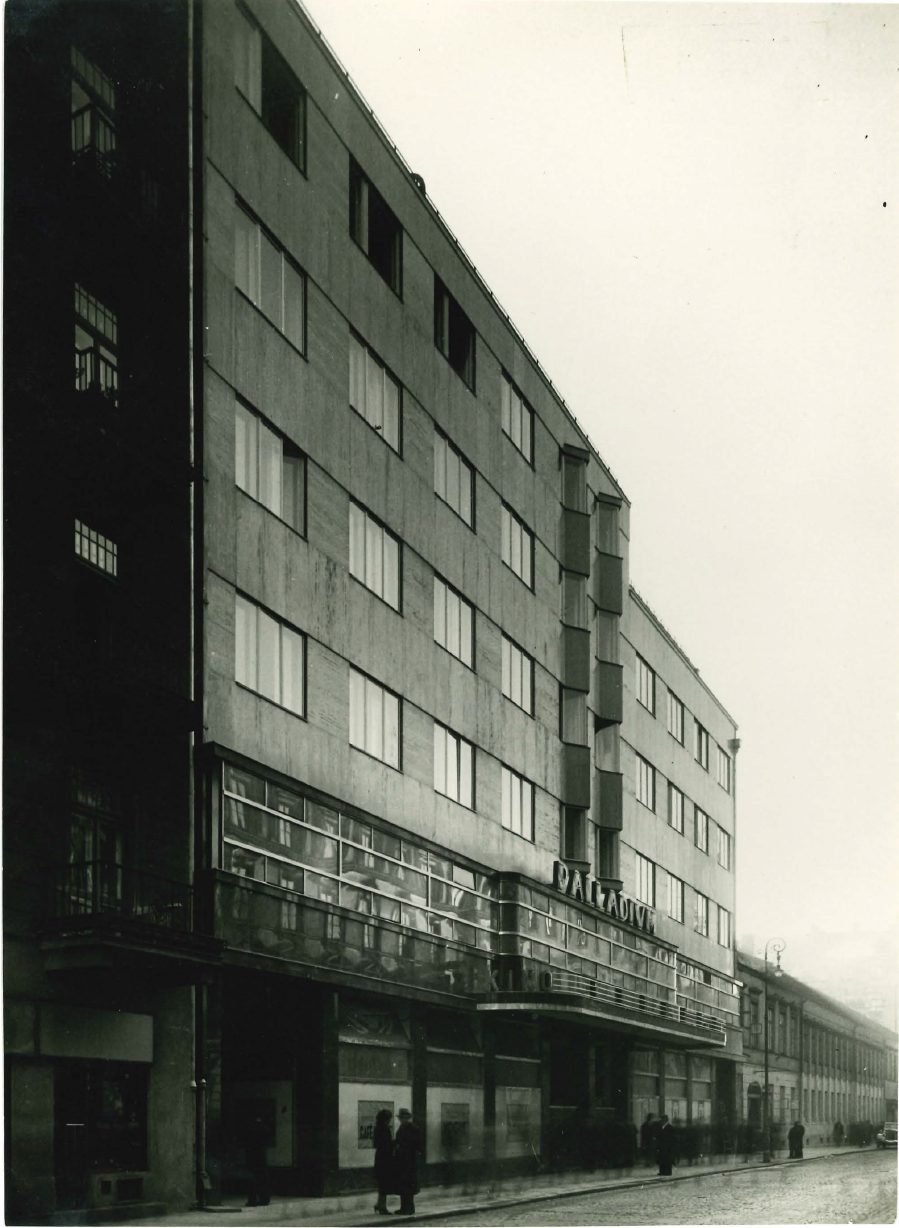
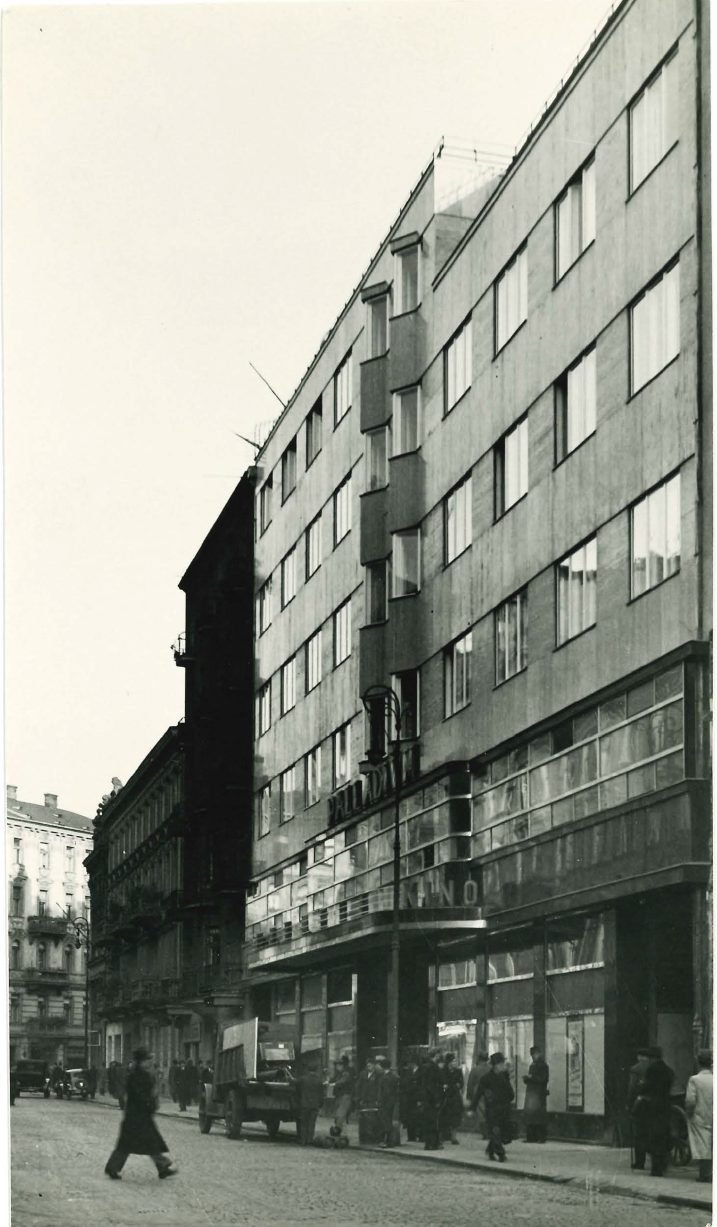
The building at Złota 7/9, designed by the architect Edward Eber and completed in its first stage in 1937, was among the most modern residential houses of Warsaw — and it was entirely a house for rent: no apartment was the tenant's property, all belonged to Generali. The press wrote of it with disbelief: the only house in the capital faced entirely in marble on the outside, with a gateway and halls finished in stone of poetic names, with door and window fittings made to the architect's own drawings from „Anticorodal" — a modern, corrosion-resistant aluminium alloy.
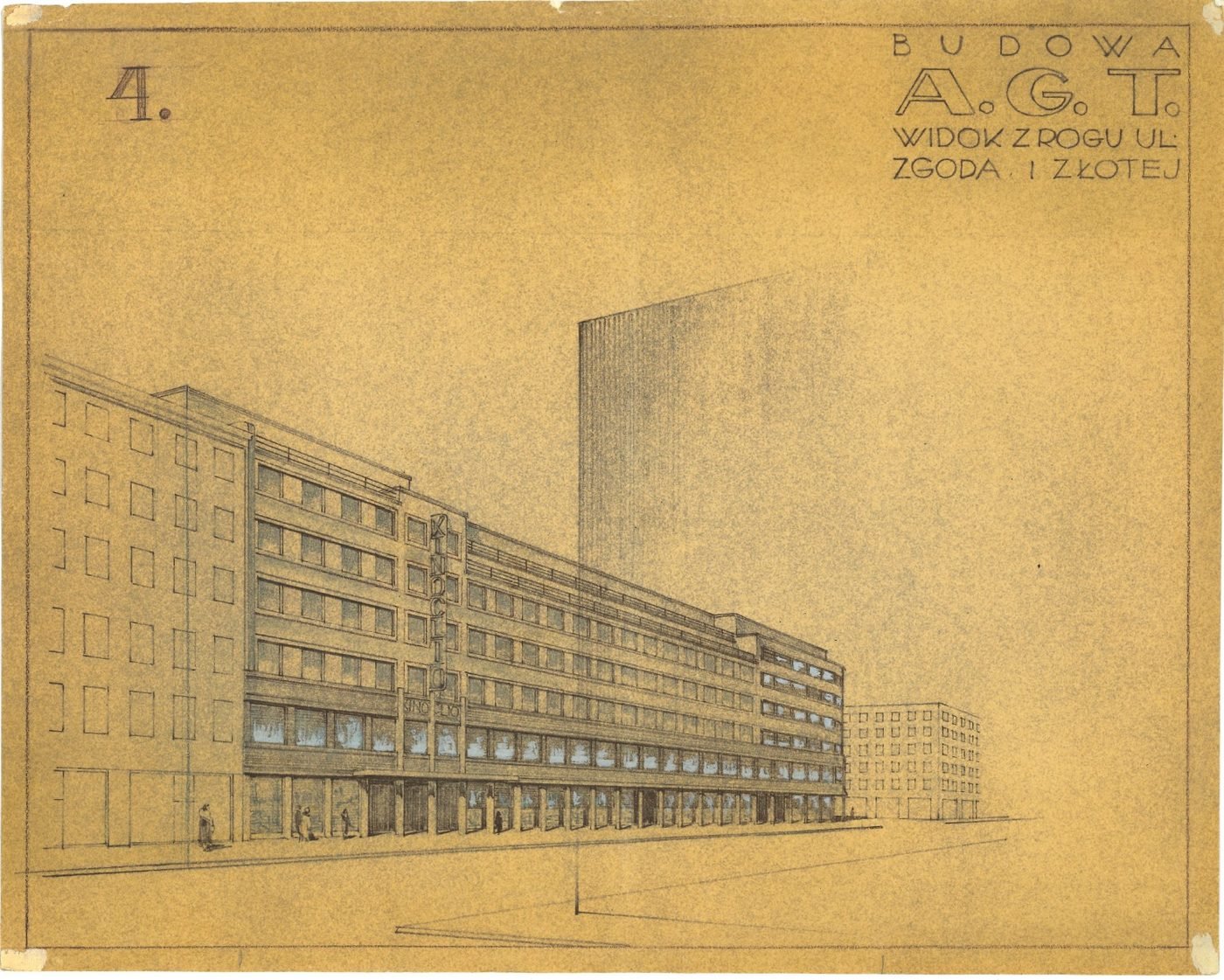
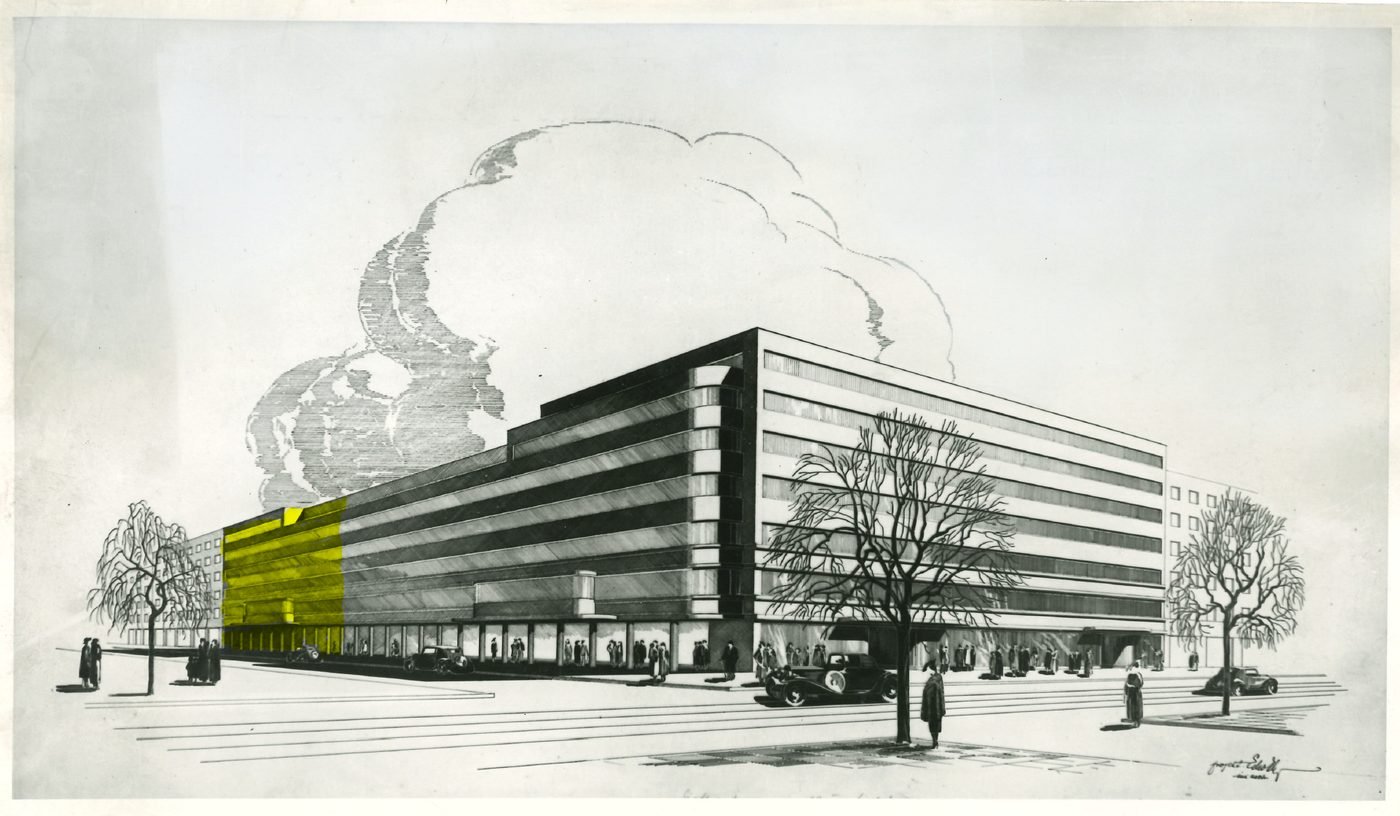
The building itself was conceived as the first part of a much larger scheme that was to reach all the way to Marszałkowska — the press wrote that only about a third of the design had been completed. The outbreak of the war meant that the great plan stayed on the drawing boards, and the wing at Złota 7/9 remained the only realised part of Generali's vision.
A second perspective from Eber's studio has also survived — a view of the whole scheme from the opposite corner, under a cloud worthy of the sweep of that vision.
III. The caretaker of the house
Stanisław Jędrasik became the caretaker of the residential part with the staircase at 7 Złota — employed by the owner itself and in practice the administrator of half the building. The residents of the house belonged to the Warsaw elite: physicians and lawyers, well-known artists, industrialists and jewellers. They were very demanding tenants — they paid a high rent to live in the most modern building of the capital and expected everything to work without fault.
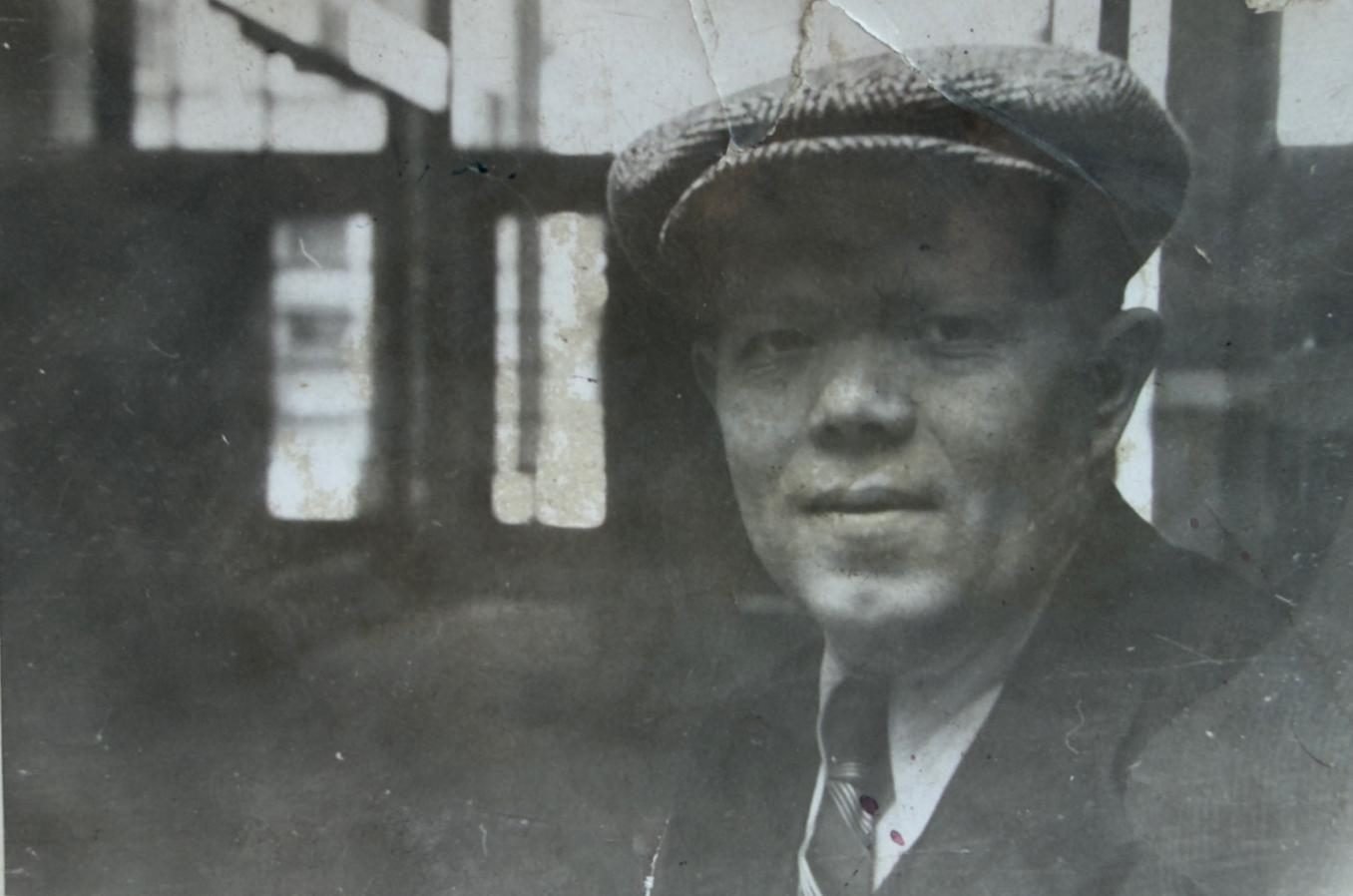
Generali therefore needed the best man for this post: someone who could cope both with the technical challenges of a modern building and with the daily relations with the tenants, with whom he remained in constant contact — someone who knew how to build trust and solve problems before they grew.
It is worth explaining what this post meant before the war — because it meant something different from today. The division of roles in a tenement house was clear: financial administration — rents, leases, the property's accounts — lay outside the caretaker's hands, with the owner's office. All the rest belonged to him. It was he who answered for the daily life of the house: for the running of the boiler room and the lifts, the laundry and the mangle room, for cleanliness and order, for locking the gate at night and the residents' safety, for the staff — stokers and helpers — and for contact with the service firms. The law also laid on him duties that were almost official: keeping the residence registers of the apartments, seeing to registrations and deregistrations, observing the regulations on order, sanitation and fire safety. For the tenants he was the owner's only representative on the spot — the first address for every matter, request and fault. In a house inhabited by demanding people this side of the work was as important as the technical one: the caretaker had to join tact with substance, know his tenants and their habits, know how to settle a matter so that everyone felt taken seriously — and so that the problem did not return.
At this address lived permanently not only the tenants' families but also their staff: the maids and governesses who kept the households and looked after the children — almost every apartment had a maid's room, placed just off the kitchen. For the caretaker this meant that the community he cared for and recorded in the residence registers was considerably larger than the list of tenants alone.
IV. A machine for living
Behind the imposing facade lay a complicated technical organism — and it was this that was the caretaker's daily field of work. In the cellars worked a boiler room with Dunham vacuum central heating — an American solution from the top shelf of the heating technology of the day, quiet and precisely regulated — and with self-acting, economical Palos furnaces that dosed their own fuel. There too hot water was prepared centrally in the C.T.C. system: the apartments had no bathroom heaters, because hot water ran from the taps throughout the building — a solution still a luxury in pre-war Warsaw. The whole of the sanitary installations — water supply and drainage, gas piping, ventilation, the mechanical laundries and the fire-fighting equipment — was executed by the Drzewiecki i Jeziorański S.A. Society for the Construction of Machines and Sanitary Equipment, the oldest and most renowned Polish installation firm. The caretaker of such a house had to understand how this system worked: know the principle of the boilers and the self-acting furnaces, be able to judge the pressure and temperature in the installation, recognise the first signs of a fault before the tenants felt it, plan fuel deliveries for the whole season and supervise the stokers.
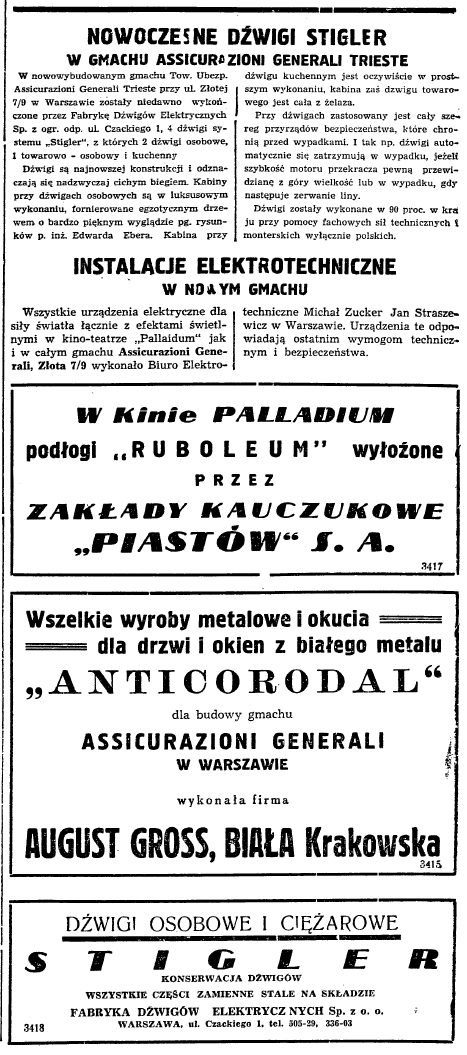
The residential part of the building had two staircases — at 7 and at 9 Złota — and in them altogether four lifts of the „Stigler" system from the Warsaw Electric Lift Factory: two passenger lifts, one goods-and-passenger and one kitchen lift. The cabins of the passenger lifts, to drawings by the architect Eber himself, were luxuriously finished and veneered in exotic wood; lifts of the newest construction, they were distinguished by an exceptionally quiet run. The cabin of the goods lift was all of iron, and the simpler kitchen lift carried deliveries straight to the kitchens. In the staircase at 7 Złota worked two lifts: a passenger lift — for the tenants — and the goods lift used by the staff: it was in this that they rode with the linen to the laundry and the mangle, with errands and deliveries. The technical press described the safeguards of these machines with admiration: the lift stopped of its own accord when the motor's speed exceeded the intended limit or if the rope should break — and they were made in ninety per cent at home, exclusively by Polish technical and fitting forces.
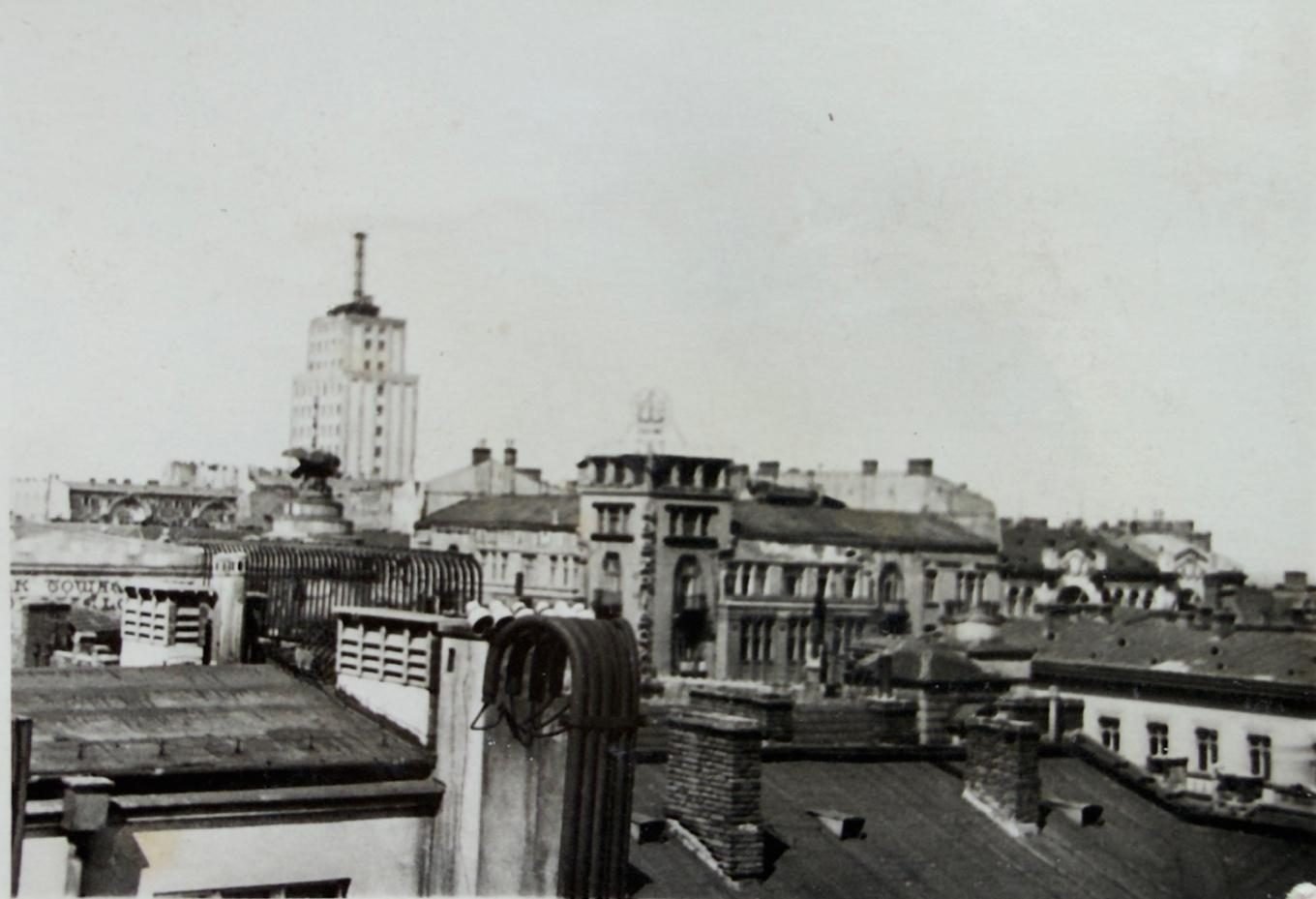
In the building worked mechanical laundries fitted with equipment of a high class, and on the sixth floor — where there were also apartments — right by the lift was the mangle room, one per staircase. The utility rooms — laundry and mangle — were used not by the tenants themselves but by their staff: it was they who washed, mangled and carried the linen between floors. Carpets were beaten on the roof, from which a beautiful view of the city stretched out, and a row of shapely aerial masts replaced the forest of makeshift antennas disfiguring other Warsaw roofs. The apartments on the top, sixth floor had their own terraces — protected against water by the specialist insulations of the „WUKO" Industrial Works; every leak threatened to flood the apartments below, so their condition too remained under the caretaker's eye.
The electrical network was laid by the renowned Electrotechnical Bureau of Michał Zucker and Jan Straszewicz, and the lighting was based on the modern Philinea bulb system of the Polish Philips Works. The bathroom fittings came from the „Świt" Mechanical Works, and the complete bathroom equipment was supplied by the firm of Ignacy Koniński and Franciszek Żugajewicz. The ceilings were insulated with Durolith boards and „Marunit" linen boards, excellent at damping sound between apartments, and the putty-free skylights with ceiling panels were made by the „Wema" firm. In the apartments — of three and four rooms, bright and larger than in typical new houses — full built-in furnishing was installed: wardrobes, linen cupboards, shelves and closets, larders with lime-wood tops serving as pastry boards, automatic „Richmonds" gas cookers of the newest, most economical type, and even appliances for washing and drying dishes. Over the cooker hung a hood with a fan — thanks to which, as the press enthused, the smell of cooking did not wander through the rooms.
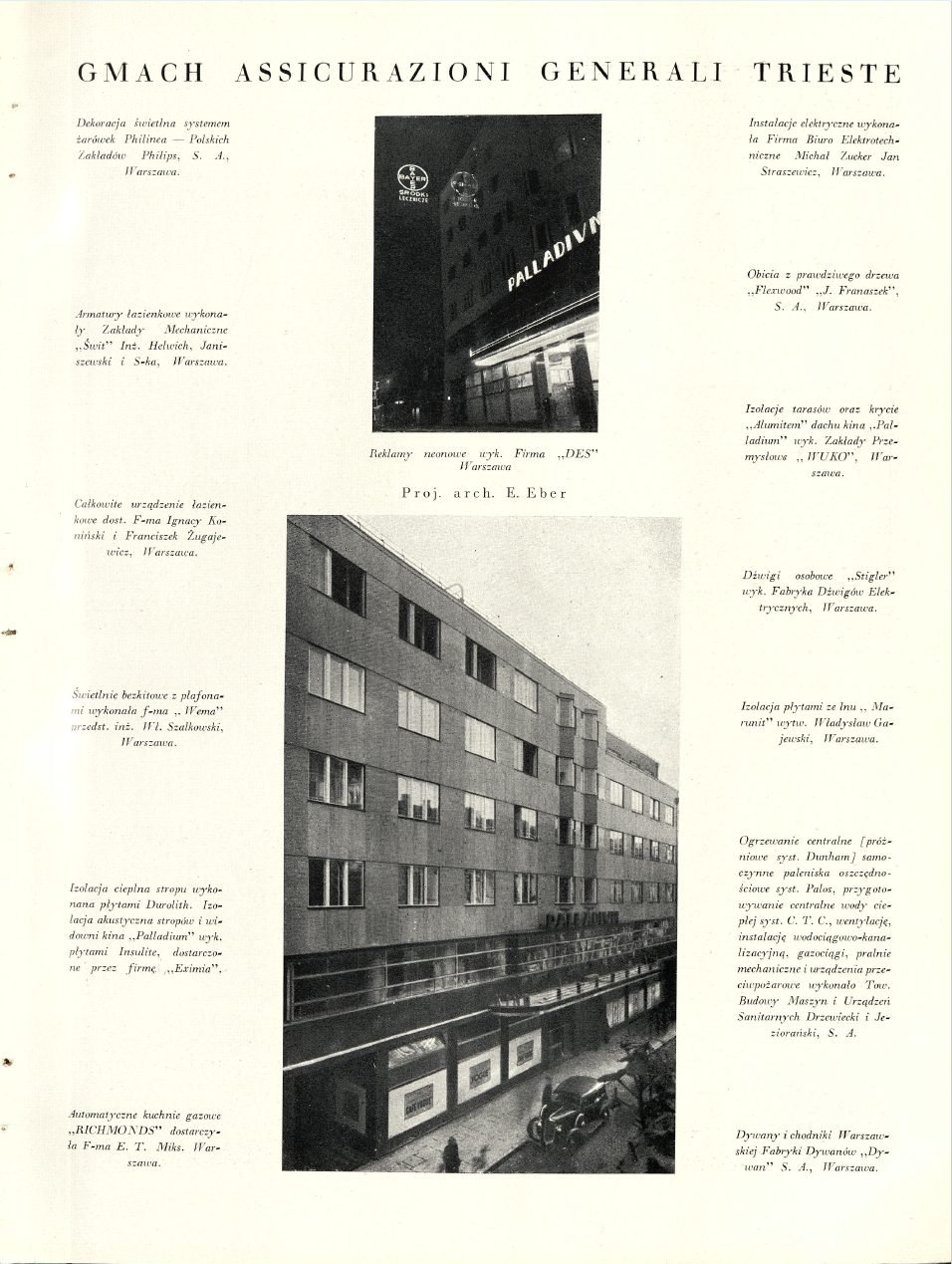
Significantly, all this equipment belonged to the owner and was part of the lease: Generali handed over the apartments completely furnished and ready to live in — the tenant moved in and from the first day everything was to work. The guarantor of that efficiency on the spot was the caretaker: to him came every fault in the equipment the tenant had received from the owner. In a house that contemporaries compared to a smoothly running machine, the caretaker was the one who knew that machine from the cellars to the roof — and thanks to whom the residents could simply fail to notice its efficiency.
V. War. A cinema, a headquarters and a shelter under one roof
The Jędrasiks lived in this house through the whole occupation — with a cinema that the Germans reserved exclusively for their own public and which for five years was closed to Poles.
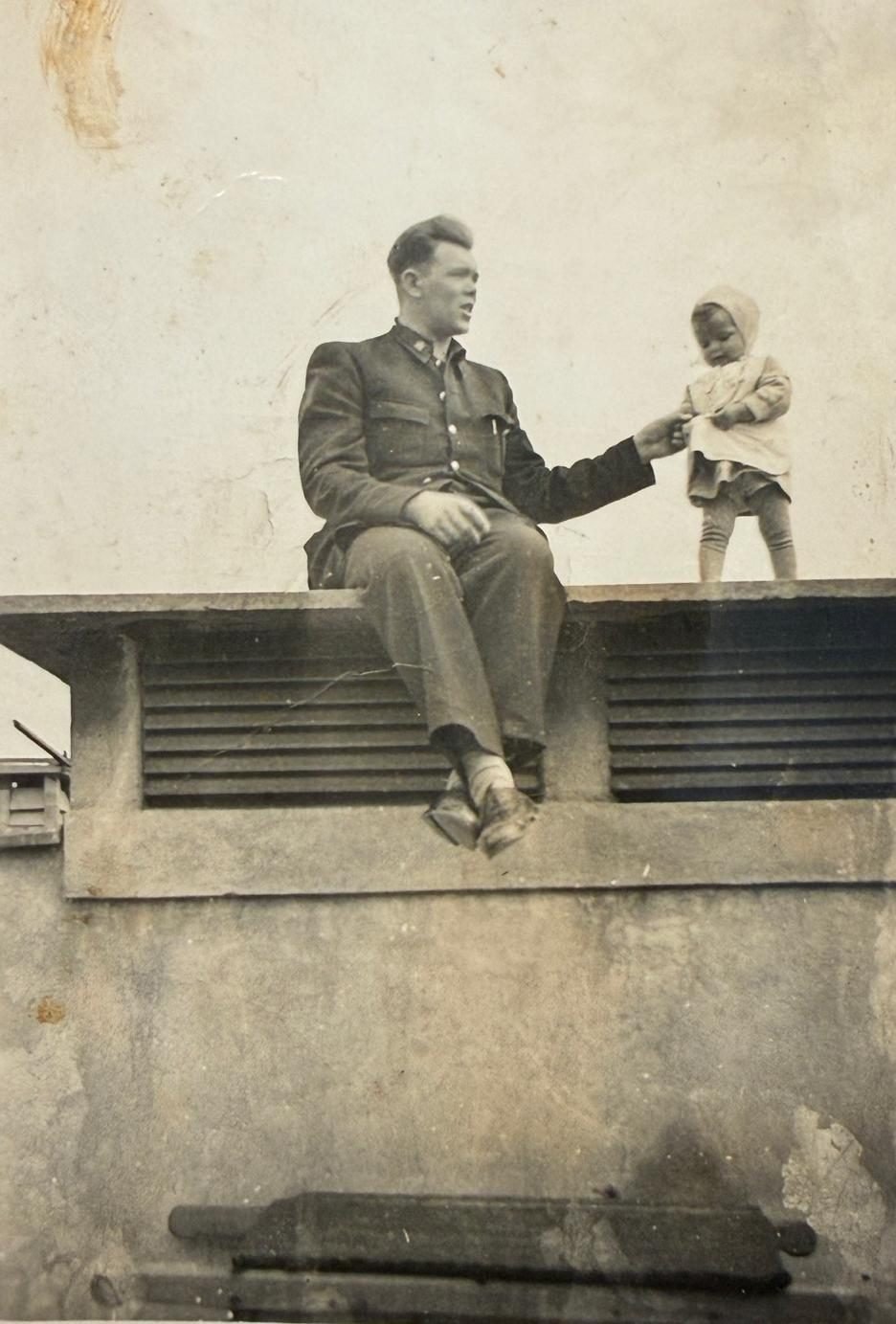
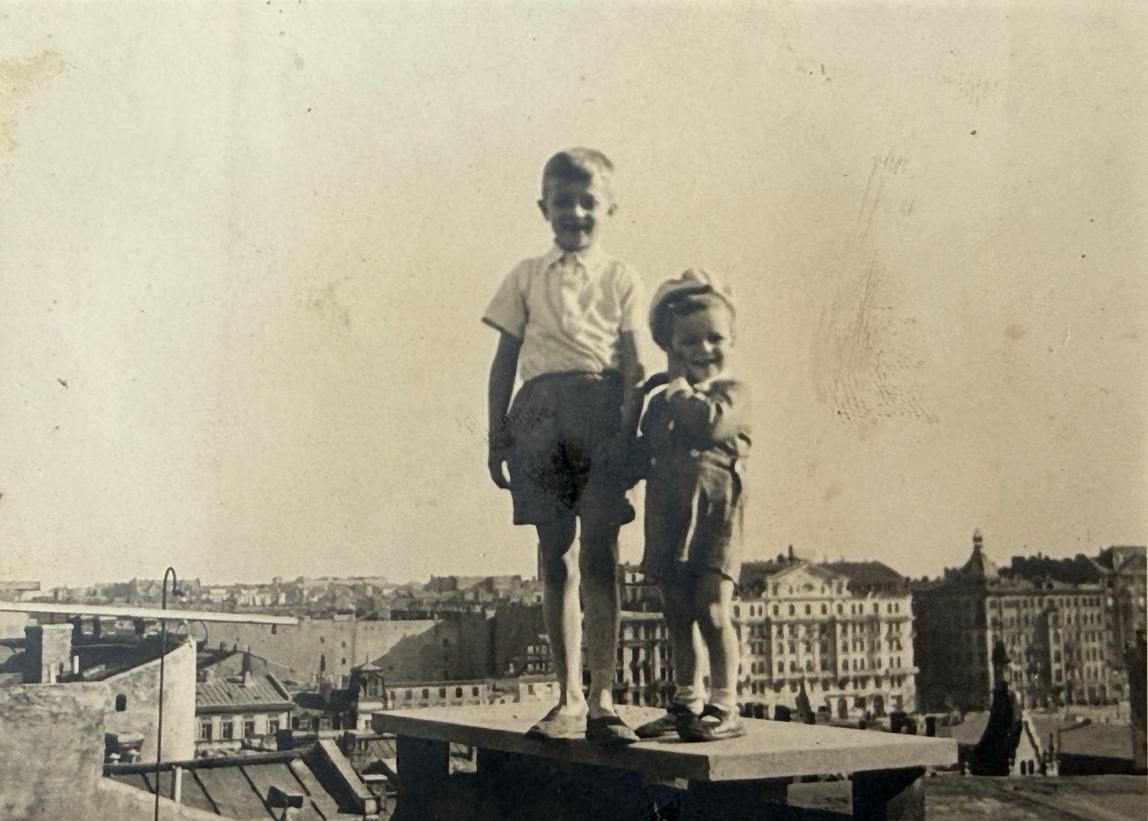
The roof of the house lived its own life under the occupation: the children of the building played there among the chimneys in a whole flock.
Beans climbed on stretched strings — one of the wartime crops that Varsovians then planted on roofs and balconies to supplement, if only a little, the starvation rations.
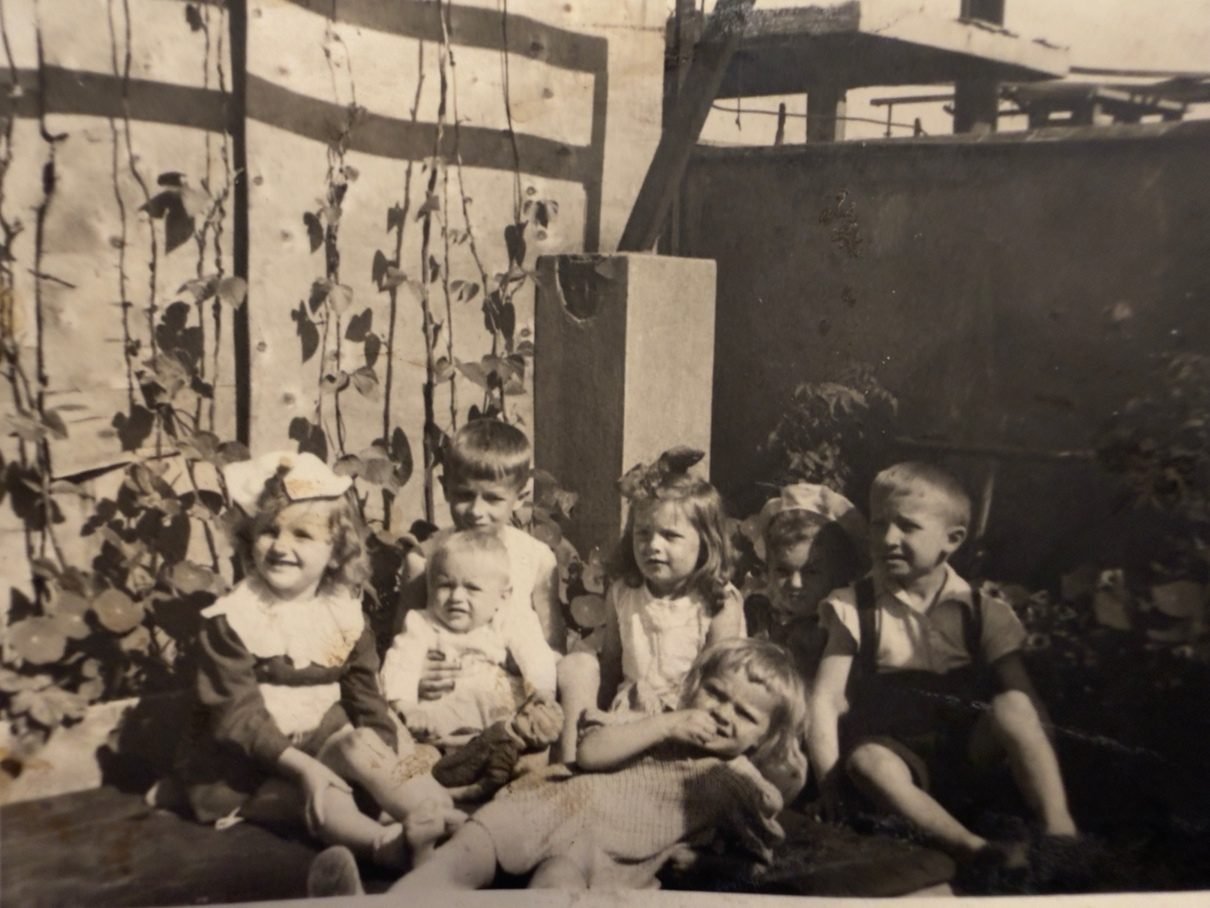
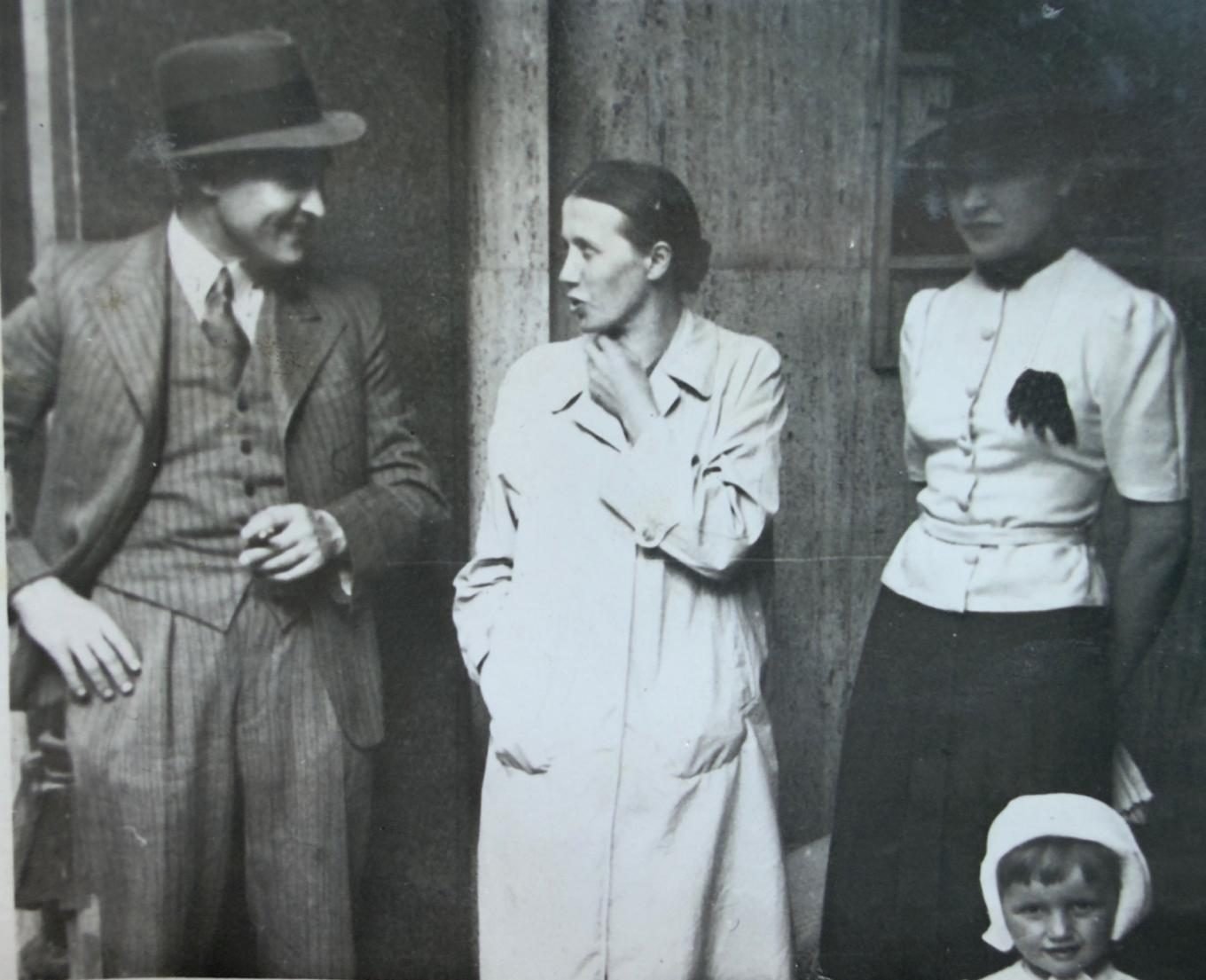
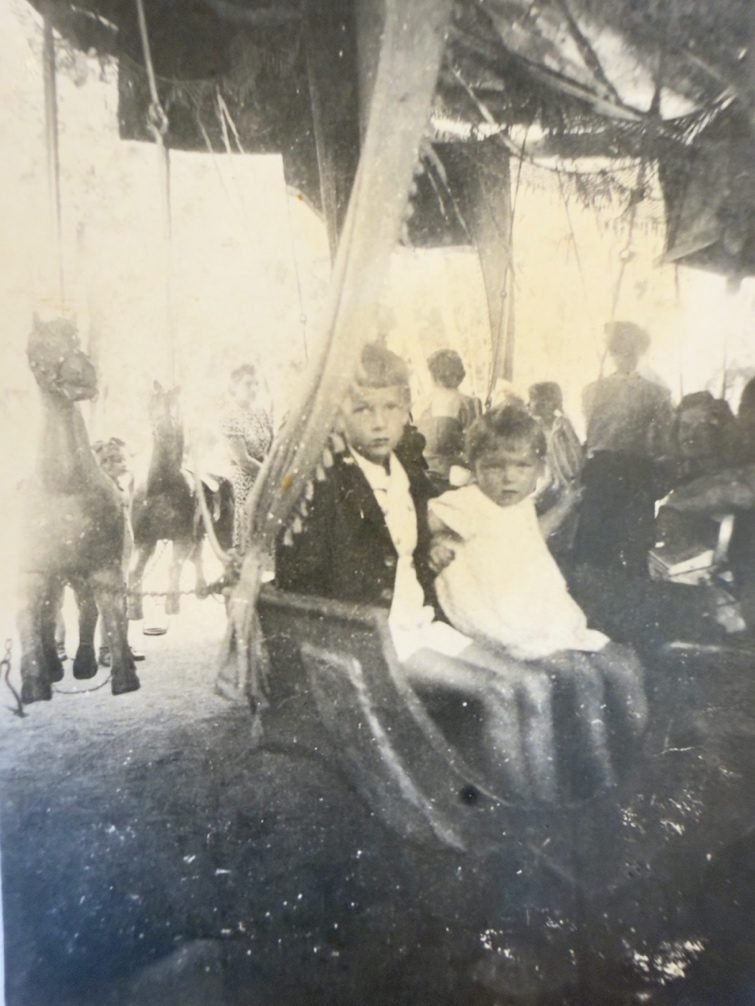
The family camera accompanied these moments, recording rare instants of ordinariness in extraordinary times — even an outing to the carousel.
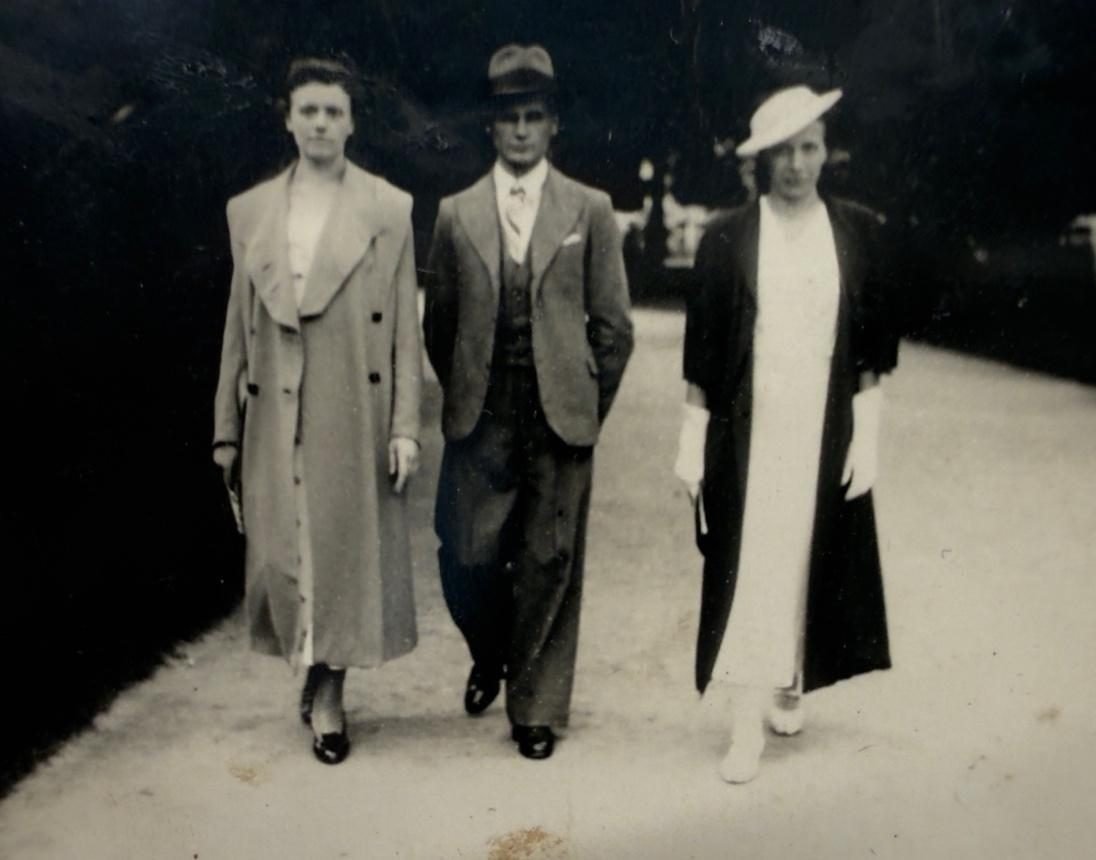
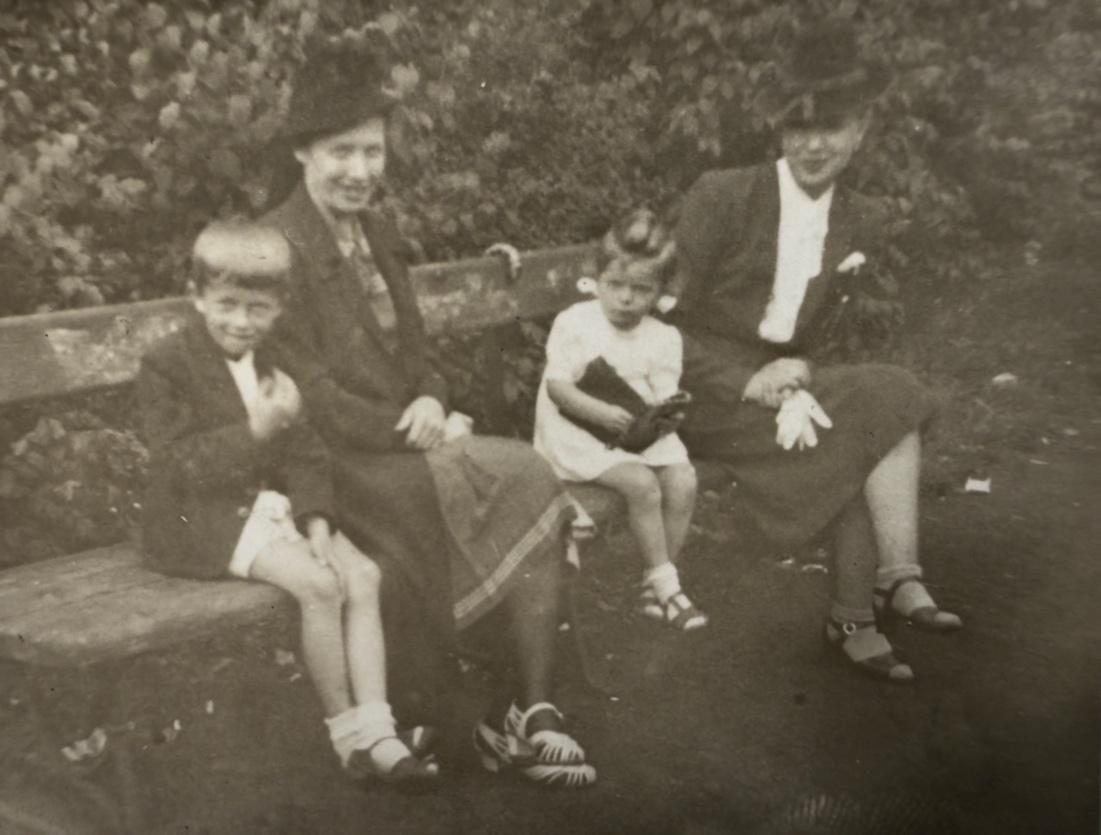
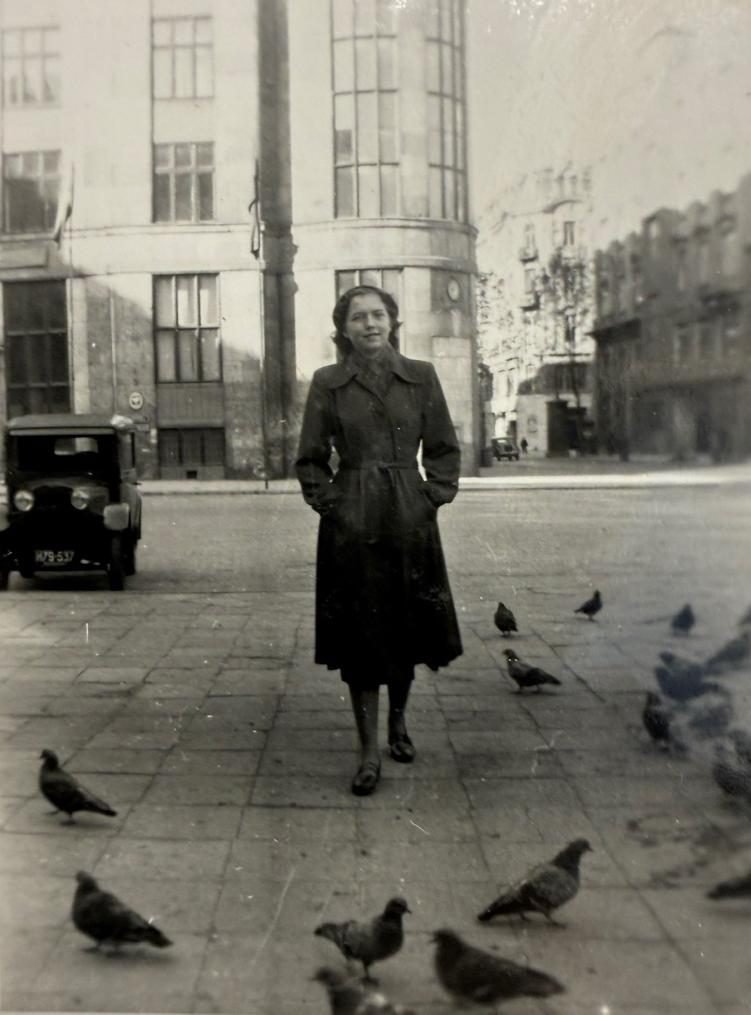
They also went out into the city — for walks, to the park, in defiance of the occupation's everyday.
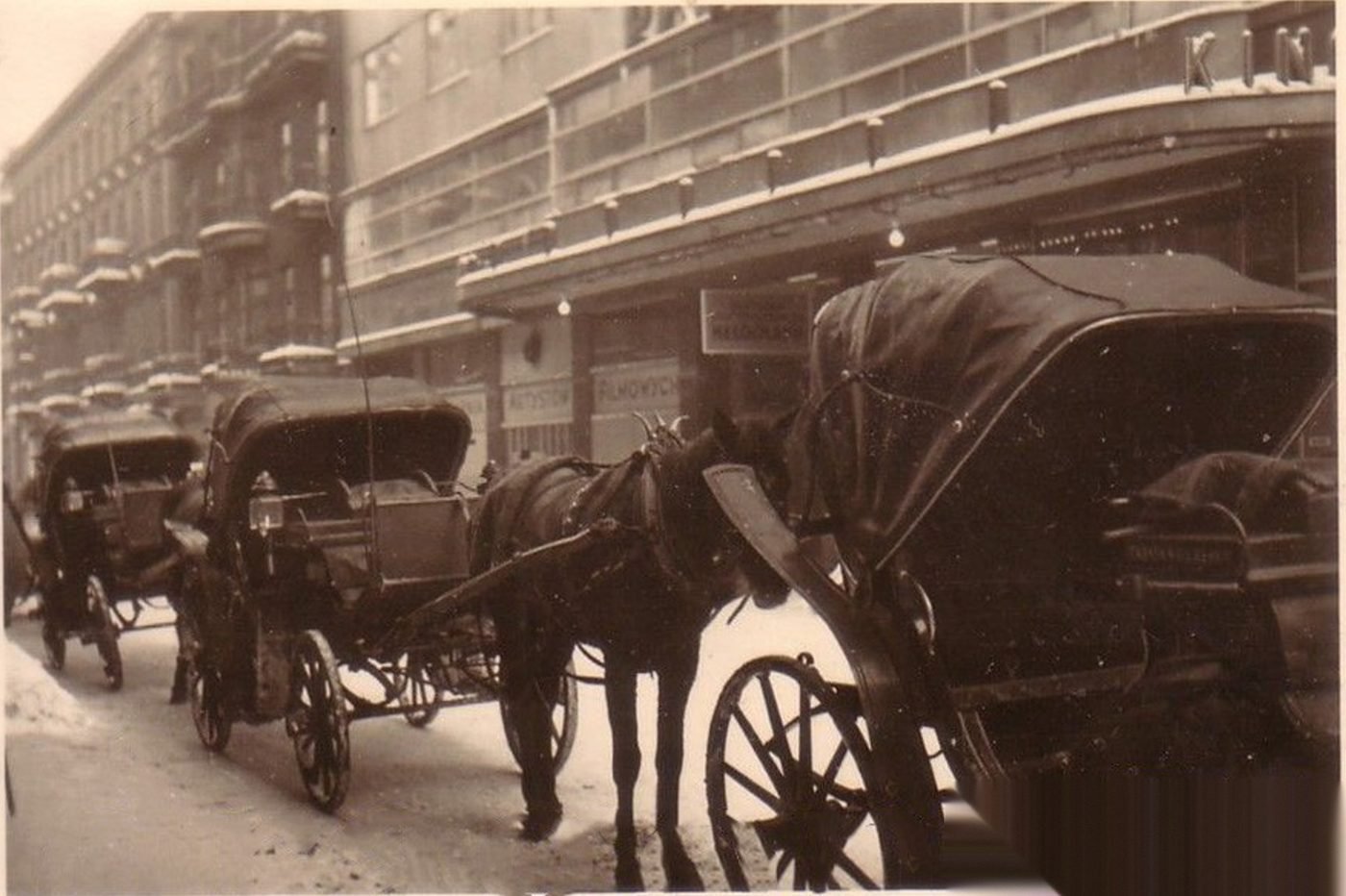
The street before the building lived its occupation life too. On the ground floor at 7 Złota operated during the war the „Antresola" café, run by the film director Jerzy Gabryelski — he employed in it theatre and film actors who were boycotting the occupier's licensed stages, and the place was at the same time a contact point of the underground organisations. Before the cinema, taken away from the Varsovians, cabs waited — the cars had been requisitioned, the neon signs went dark for years.
They stayed in the house when the Warsaw Uprising broke out on 1 August 1944. Their address then wrote itself into the history of the fighting city in an exceptional way — and twice over.
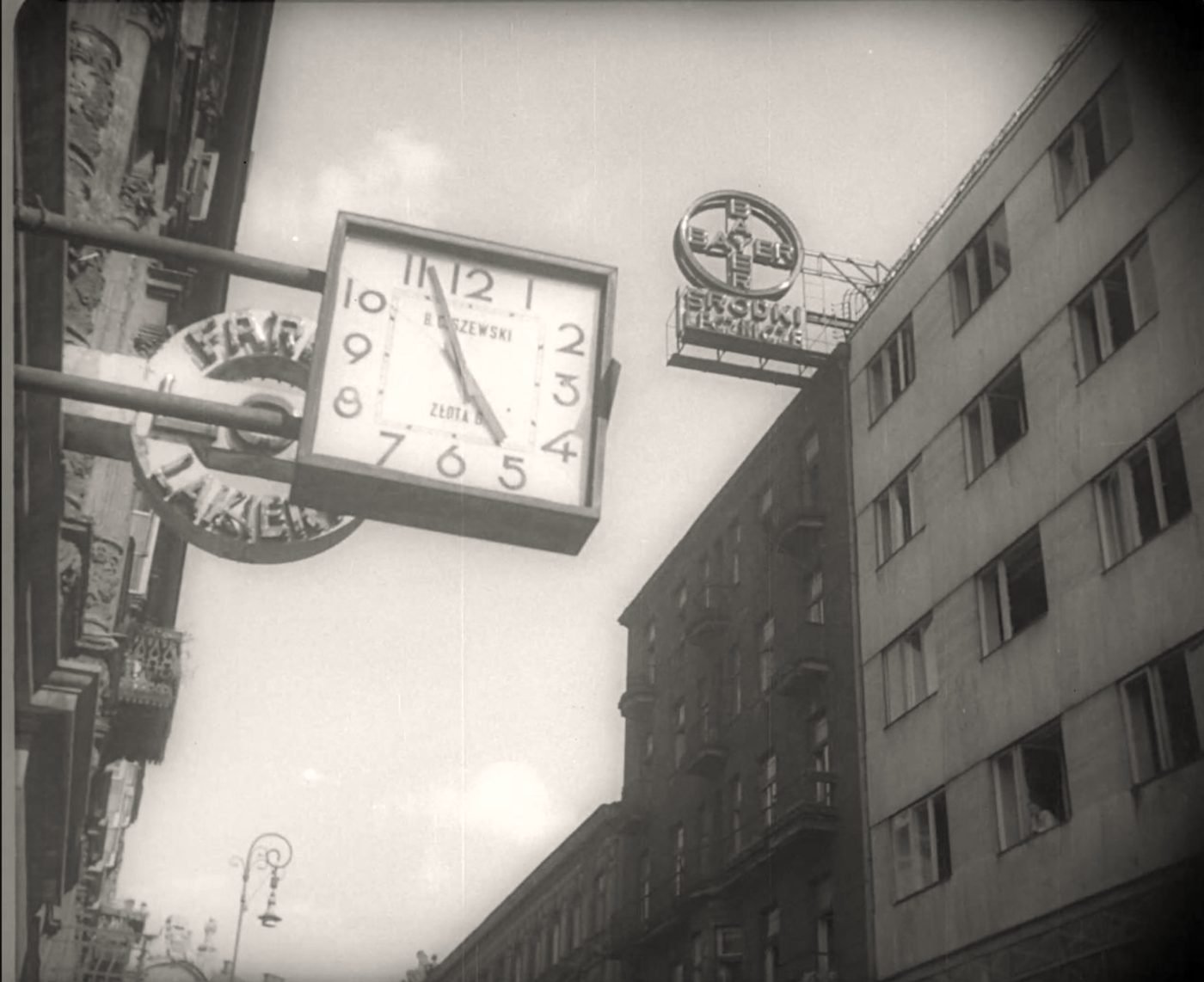
First — through the cinema. The Palladium housed in the building — the luxury cinema of pre-war Warsaw with nearly a thousand seats — proved to be the only cinema of the city centre that could be started up in the fighting city. It was here, on 13 August 1944, that the first insurgent newsreel „Warszawa walczy!" (Warsaw Fights!) was shown to representatives of the press, and on 15, 21 and 28 August its public premieres took place. The hall was filled to the brim every time; the screenings were held in the evenings to protect the audience from air raids. At the start of one of the projections the orchestra struck up the „Warszawianka" — and the whole hall rose, taking up the song. The cinema was not merely a projection hall: on its stage performed actors and singers, and in the audience, beside the soldiers, sat also those who had come through the sewers from the Old Town — to tear themselves, if only for a moment, from the reality of war. When on 25 August shelling destroyed the insurgent film laboratory on Leszczyńska Street, the rescued reels and editing equipment were moved precisely here, to the Palladium. The fourth showing never took place — the cinema was damaged.
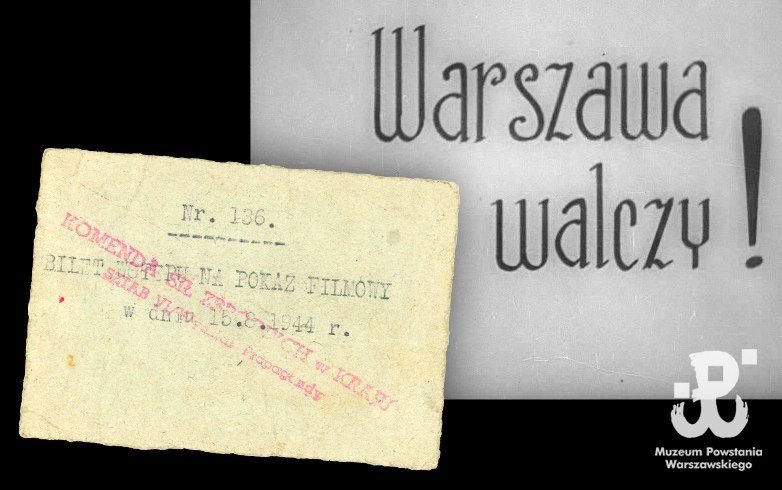
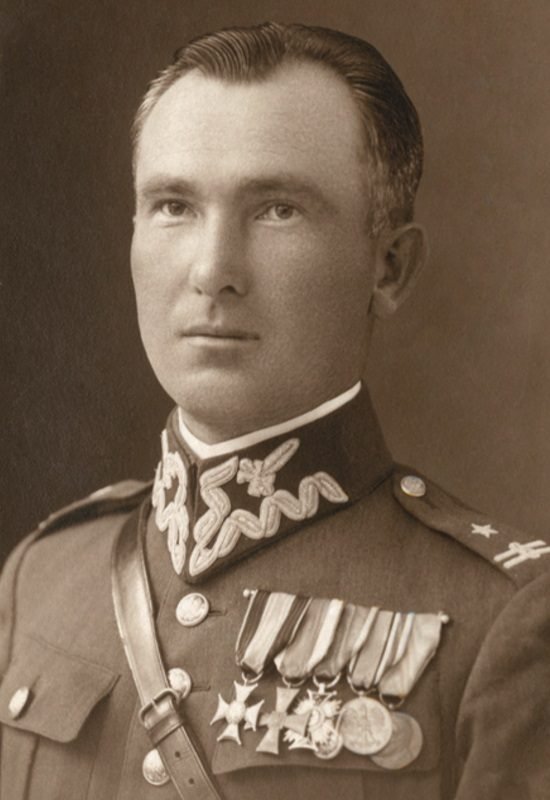
Then — through the headquarters. Colonel Antoni Chruściel, „Monter" — the commander of the Uprising, from 14 September a brigadier general — was quartered first in the „Victoria" hotel on Jasna Street, and after its bombing — in the PKO building. At the beginning of September 1944, when that building too fell in ruins, the staff of the Uprising's commander was moved to the building at Złota 7/9, and insurgents on guard duty were quartered in its interiors. Until the capitulation the Jędrasiks' house was the last seat of the authorities of insurgent Warsaw; the general returned here from his daily inspections of the barricades late in the evening and received reports into the night. The residents' life moved in those weeks to the cellars — as throughout the fighting Śródmieście, the shelters beneath the building became home for the tenants and their families.
Of the general who commanded the Uprising from under their roof, Aleksander Kamiński wrote: „Every day he visited the barricades, inspected the front, issued orders on the spot".
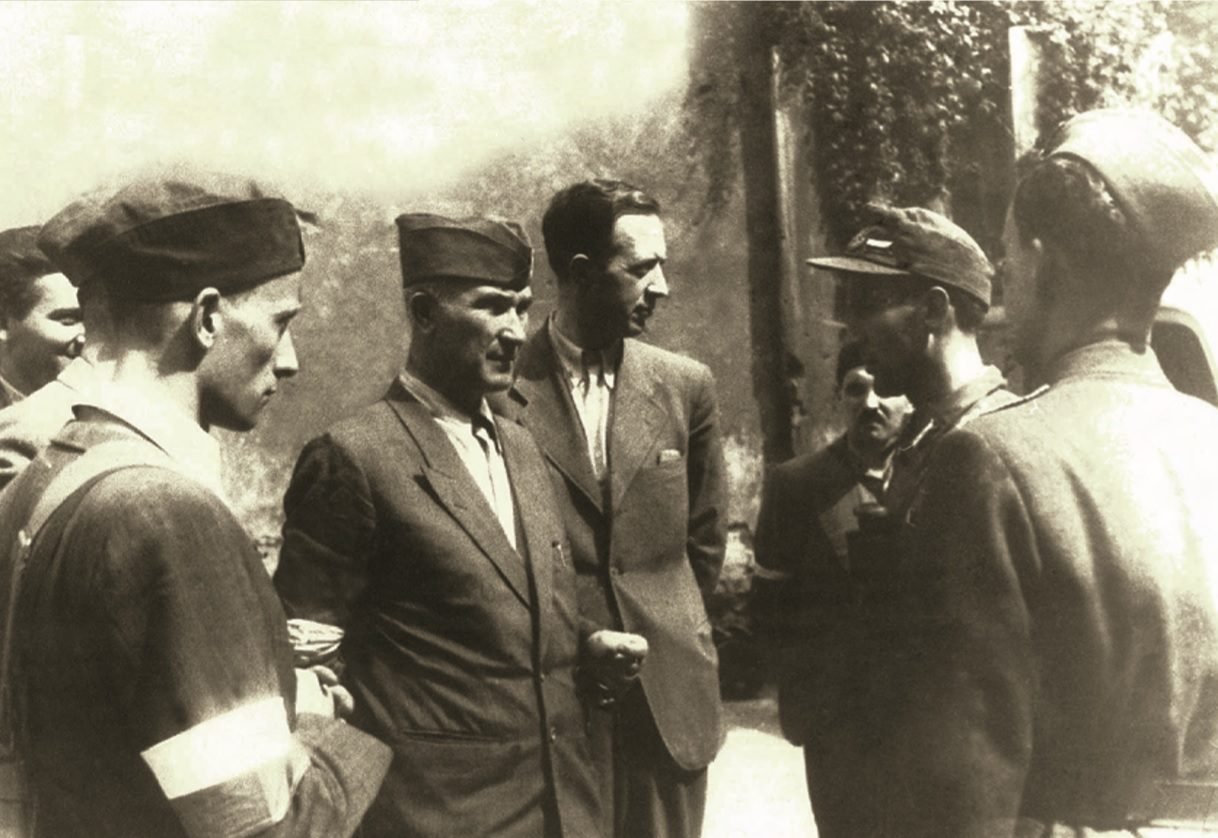
The building's basements concealed, moreover, a secret of which even the insurgents quartered in them knew nothing. Around the middle of September 1944, after a bomb exploded in the immediate neighbourhood, one of the walls in the Palladium cellars gave way — and there appeared before the soldiers' eyes a group of Jews hidden behind it: a dozen or more people, mostly men, a few adolescents, among them a rabbi in white stockings — all emaciated, unshaven, at the end of their strength. „Someone had evidently walled them in" — a witness of the scene, a staff liaison girl, wrote down years later — and someone must have brought them food all that time, since even in the seventh week of the Uprising a stock of tinned food was found with them. Through the years of the occupation, into the sixth year of the war, someone was thus hiding and feeding a dozen or more lives in these cellars — who, we do not know to this day. Those found were fed; their further fates remain unknown.
Through all of August and September this one address was thus at once a cinema full of people and a concert stage, the quarters of the command and its guard, and a shelter for the residents. In such a house someone had to know everything: which way the passages led, where the valves and risers were, how to get from the cellars to the roof, which doors led where. No one knew this building better than its caretaker — the man who for six years had answered for its every corner — and that knowledge was then beyond price.
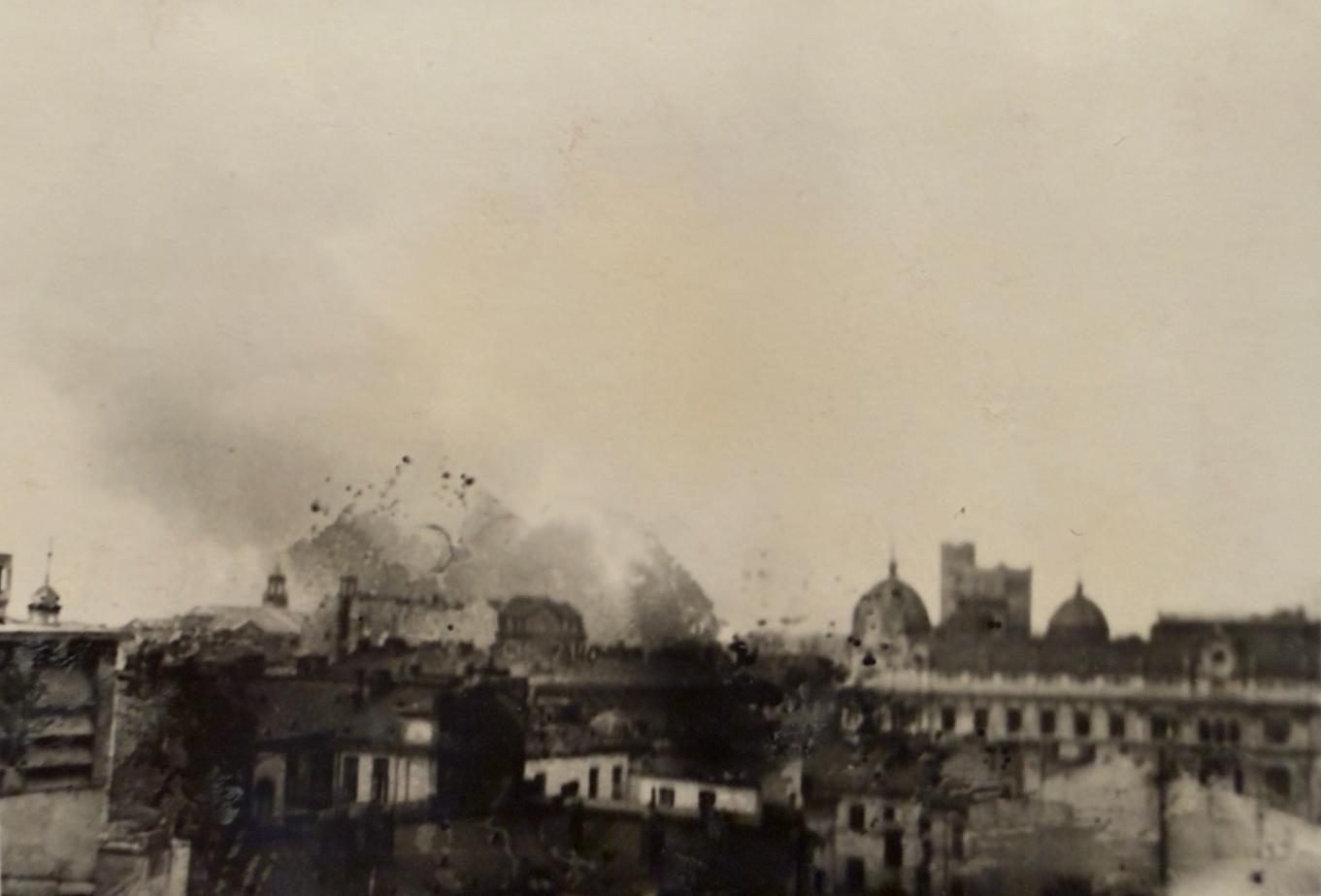
Stanisław Jędrasik was not merely a witness to all this. In the Insurgent Biographies database of the Warsaw Rising Museum he figures as a soldier of the Warsaw District of the Home Army — VI Bureau, that is the Bureau of Information and Propaganda, in the Northern Śródmieście district. The BIP answered for the information bloodstream of the fighting city: the insurgent press, bulletins, megaphones, the radio station — and also for the film section, whose newsreels were screened precisely in the Palladium, under his roof. The caretaker of the building in which the BIP held its premieres and in which the staff of the Uprising's commander was installed thus served in the same structure that documented the fight. His pseudonym and his assigned function we do not yet know — but the service is attested.
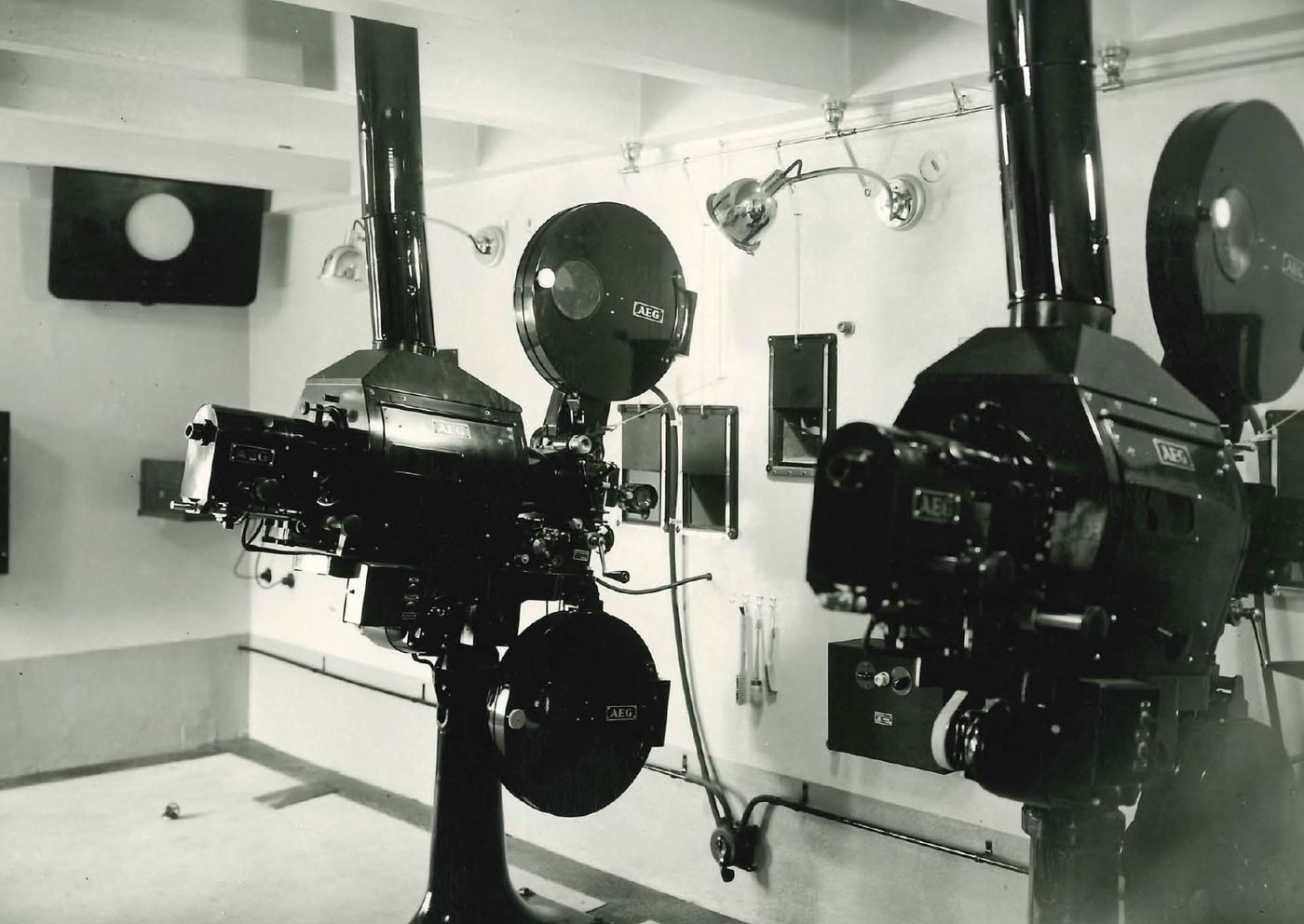
Did he help with the cinema itself? The documents are silent about his specific task. It is hard, however, to imagine that the starting up, in his building, of the only cinema of fighting Warsaw — and showings before nearly a thousand viewers — could have done without the caretaker: someone had to prepare the hall, know the approaches and the emergency exits, see to the back rooms and the safety of the crowd, serve the BIP crew — the structure to which he himself belonged — with help on the spot. It is the most natural field of his insurgent service, though until documents are found it remains a hypothesis.
VI. Disappearance and return
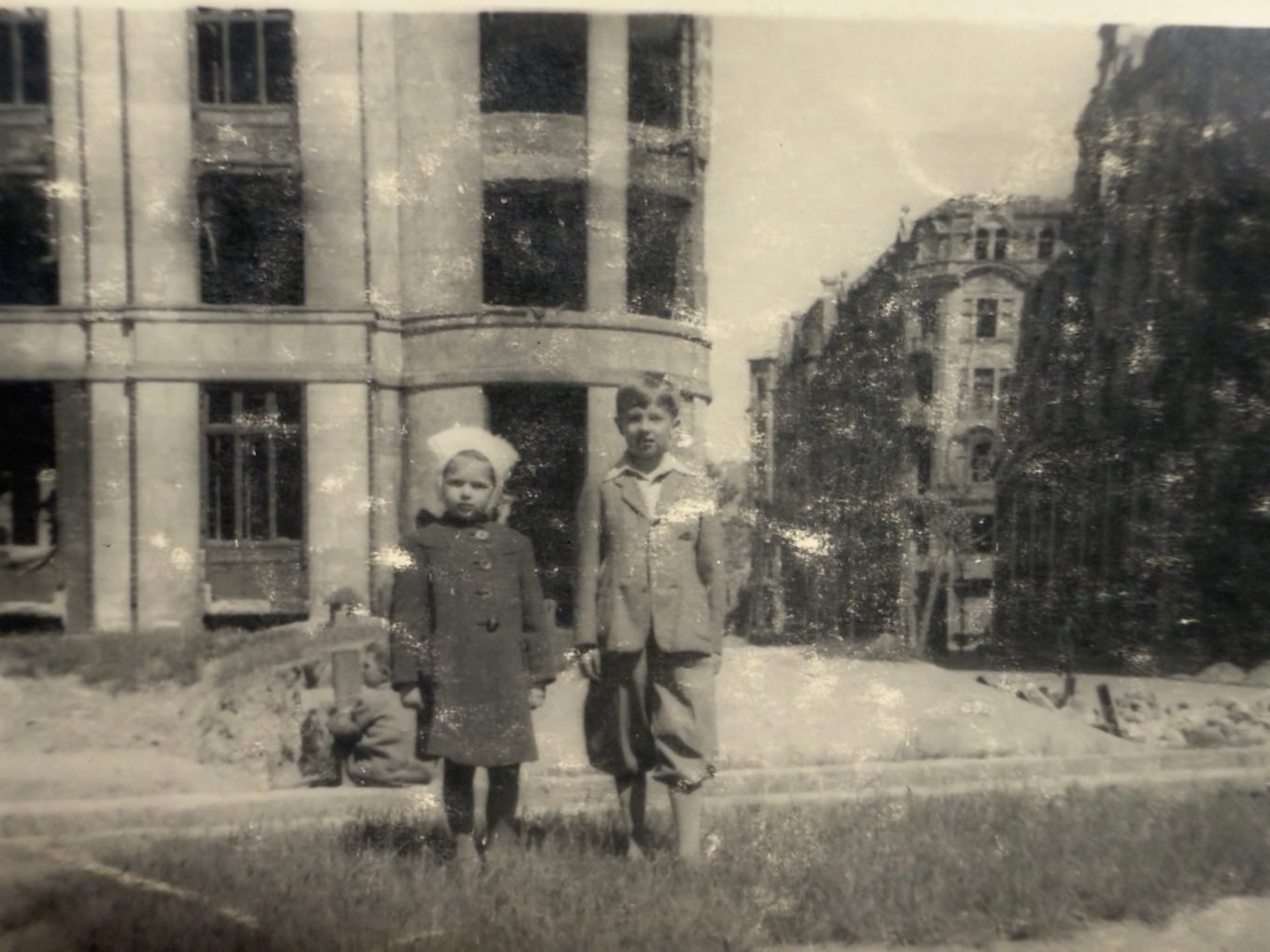
After the capitulation of the Uprising his trace breaks off for long months. Natalia and the children had to leave Warsaw as hundreds of thousands of the expelled were leaving it then — on foot, with what they could carry, in the columns of civilians driven out of the dying city. Alone, without her husband, with small children. Stanisław appeared only after many months. Where he was and what he went through is unknown to this day; it was never spoken of at home. Perhaps, like many soldiers of the Uprising, he had to hide. That silence is part of his history — just as the service is.
That silence had, moreover, its context in the epoch: the new power did not forget the soldiers of the Uprising their service. General „Monter" himself, who had commanded the fight from under the Jędrasiks' roof, was in 1946 stripped of his Polish citizenship by the communist-dominated government and was never allowed to return — though to the end of his life he longed for the country and asked for permission to come back, receiving not even a refusal. He died in exile in Washington in 1960; his ashes returned to Poland only on the sixtieth anniversary of the Uprising. In such times the hiding of a former insurgent required no explanation.
When the war ended, the family returned to Złota: to the house that Stanisław knew from the cellars to the roof and which — like few buildings in this part of the city — had survived.
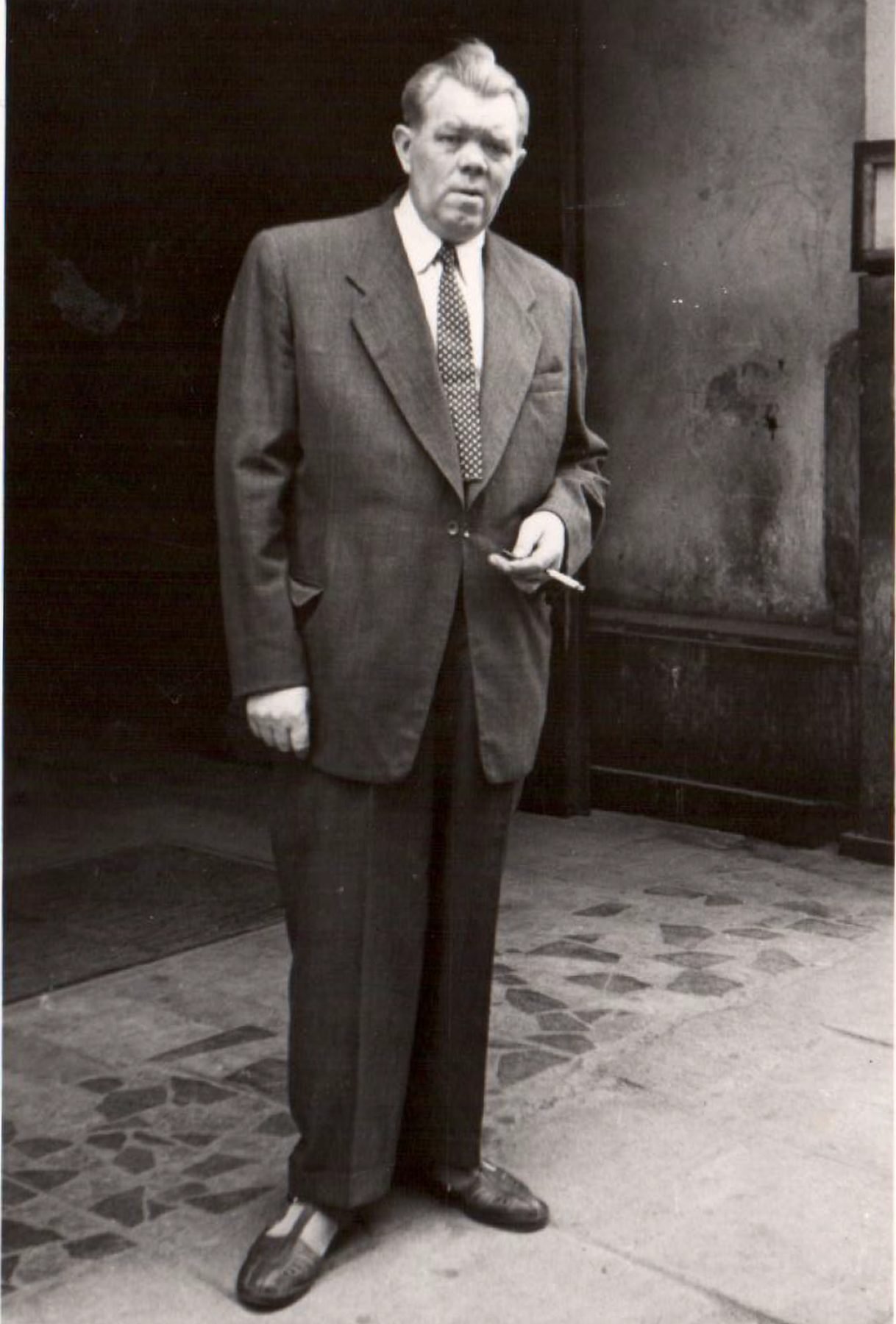
And Stanisław returned to his post — to the gateway and the hall he knew from before the war.
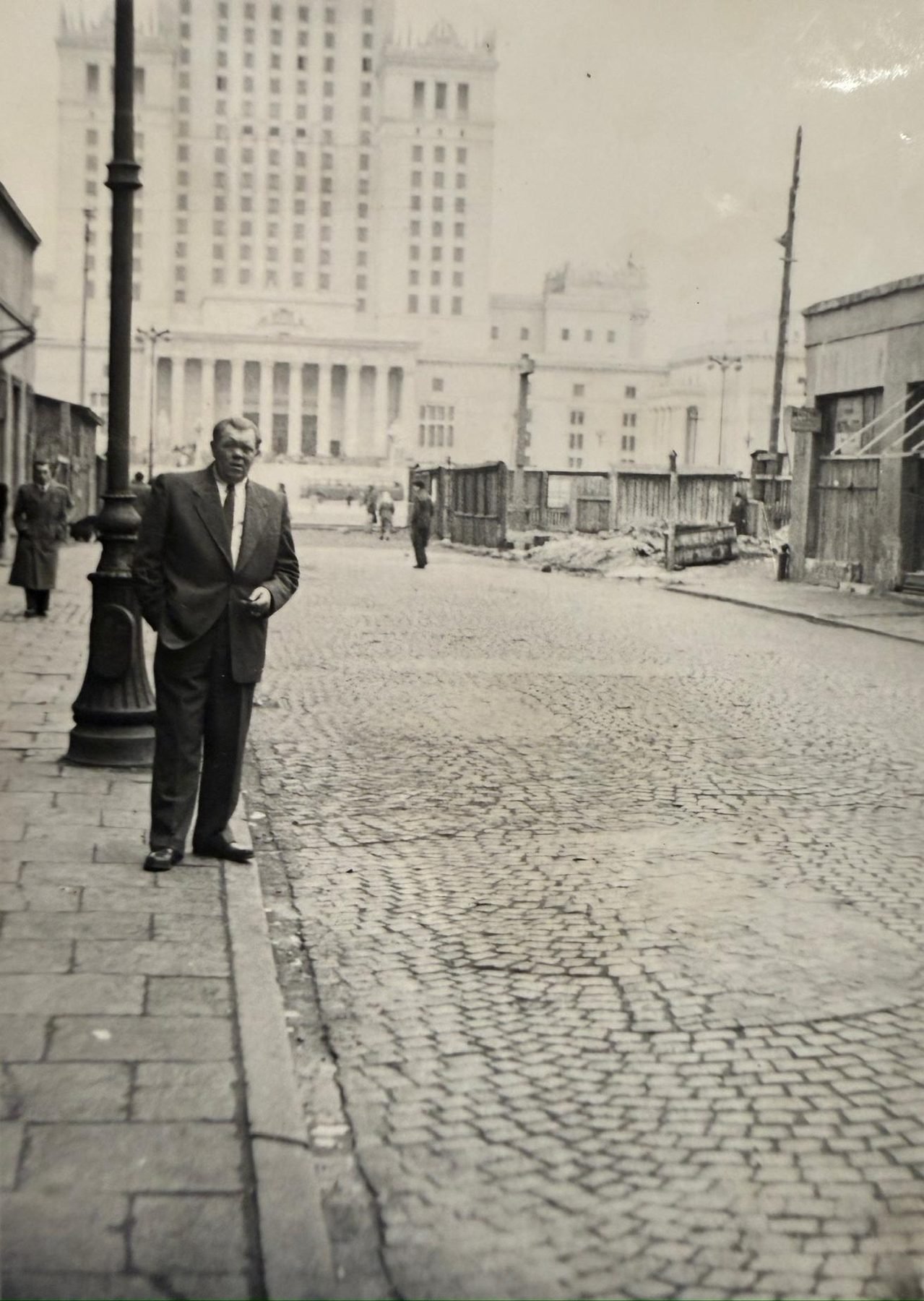
Warsaw around him was changing before his eyes — above the sea of ruins rose the Palace of Culture.
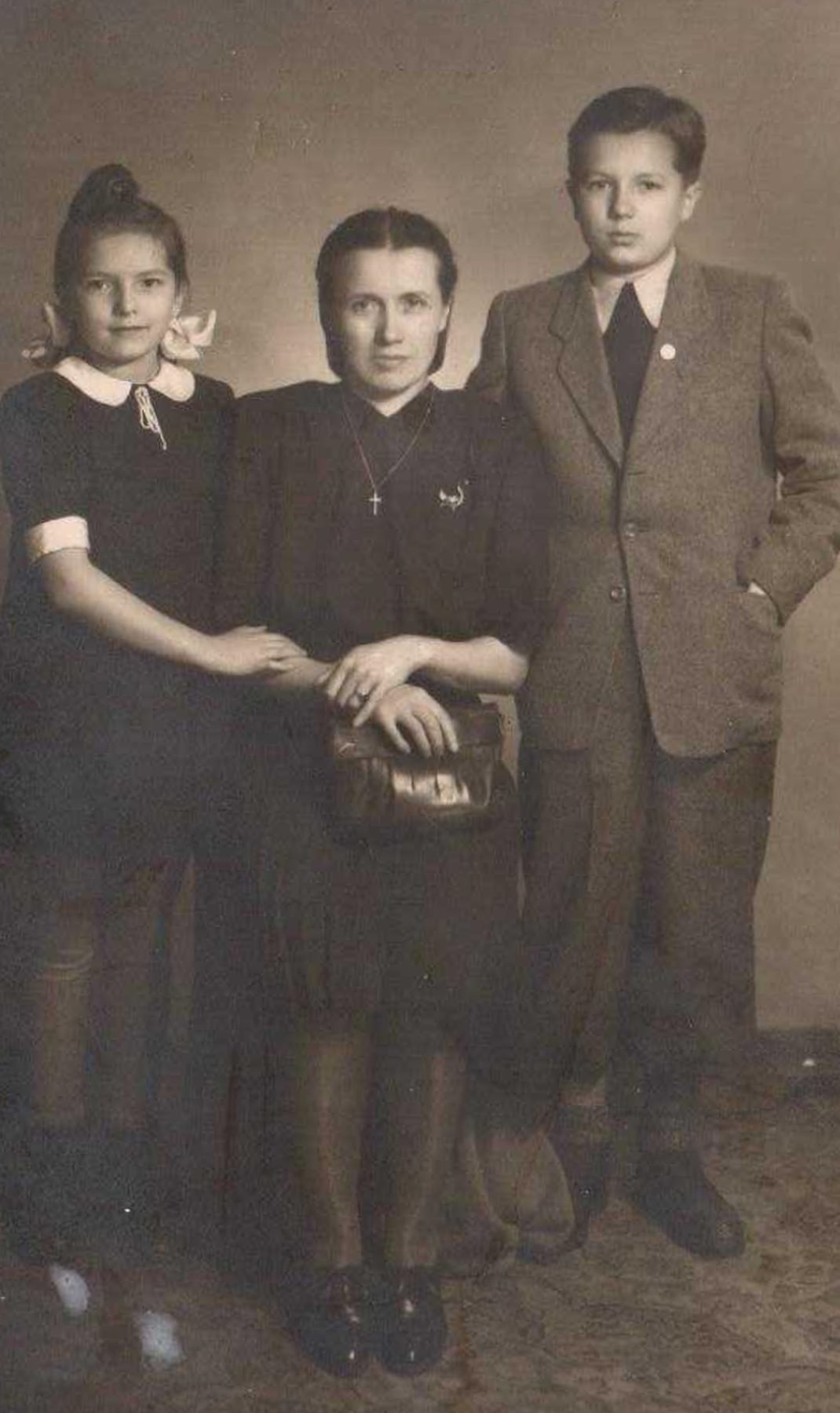
Most important, however: they were together again.
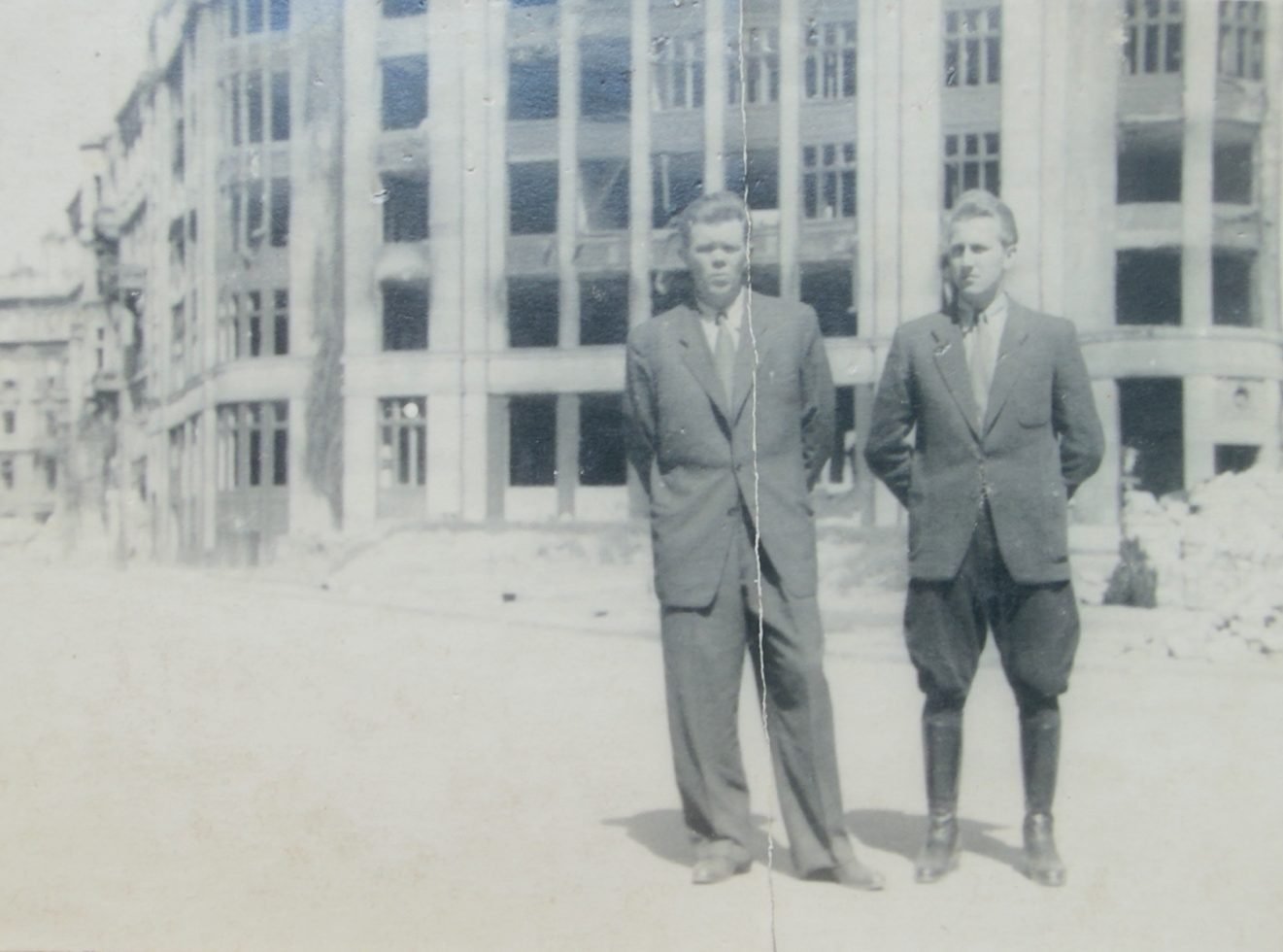
The city raised itself from the rubble for years — burnt-out buildings still stood in the city centre deep into the 1950s. In one of the post-war photographs Stanisław poses against the ruins of the House Under the Eagles.
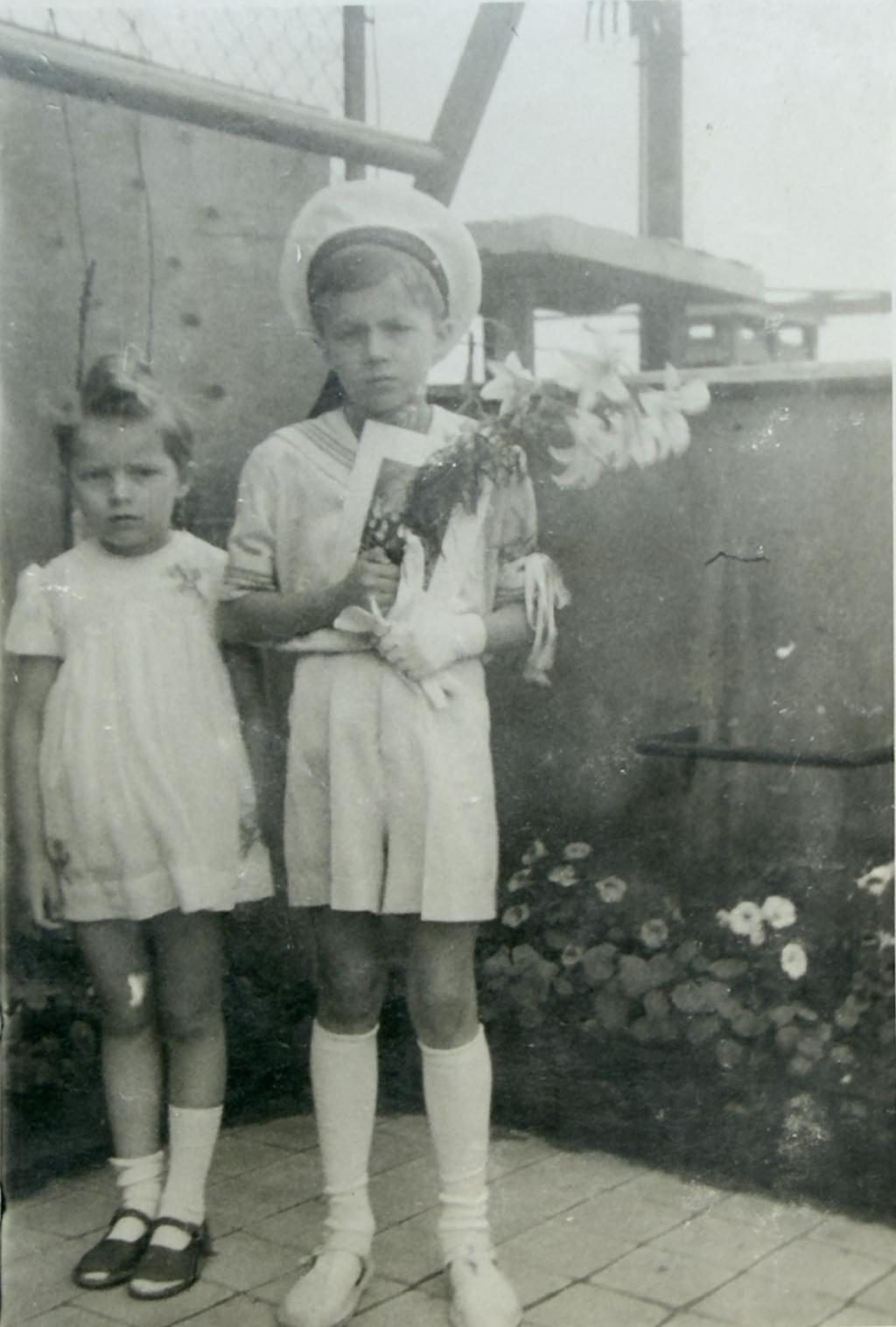
In the same city rising from its rubble the Jędrasik children grew up.
Timeline
| Date | Event |
|---|---|
| 8 Dec 1905 | Natalia née Jeske is born, daughter of Fryderyk and Justyna. |
| 30 Apr 1907 | Stanisław Jędrasik is born to Kazimierz and Marianna. |
| 8 Jul 1935 | Their son, Tadeusz Stanisław, comes into the world. The family lives at 50 Pańska Street. |
| 1937 | Completion of the first stage of the Assicurazioni Generali building at Złota 7/9. |
| 1 Jul 1938 | The Jędrasiks are registered in apartment no. 7; Stanisław takes up the duties of caretaker of the house. |
| 21 Dec 1938 | A daughter, Irena Zofia, is born on Złota. |
| 1 Aug 1944 | Outbreak of the Warsaw Uprising. The family stays in the house; life moves to the cellars. |
| Aug–Sep 1944 | Stanisław serves in the ranks of the Warsaw District of the Home Army — VI Bureau (Bureau of Information and Propaganda), Northern Śródmieście. |
| 13–28 Aug 1944 | The Palladium — the only working cinema of fighting Warsaw: a press showing and three public premieres of the newsreel „Warszawa walczy!" before halls filled to the brim. |
| early Sep 1944 | After the bombing of the PKO building, the staff of General „Monter" moves into the building — the house becomes the last seat of the Uprising's command. |
| Oct 1944 | Capitulation. Natalia and the children leave the city with the expelled population of Warsaw. Stanisław's trace breaks off. |
| after 1945 | Stanisław returns after many months; the circumstances remain unknown. The family lives again on Złota — in the house that survived. |
A Note on Sources
This account rests on sources: the cards of the residence registers of the house at 7 Złota Street (the register of apartment no. 7, reconstructed after the war — hence the family's dates and personal details); a press report from the period of the building's completion (1937) and a technical press article on the building's lifts and installations (1937; clippings in the project collection); the spreads of „Arkady" (vol. 3, 1937, nos. 11–12 and vol. 4, 1938, no. 4) with the list of installation contractors; „Architektura i Budownictwo" (1936); the design board from the studio of the architect Edward Eber (project collection); studies on the command of the Warsaw Uprising in September 1944 (Institute of National Remembrance — przystanekhistoria.pl; Warsaw Rising Museum — 1944.pl); the Insurgent Biographies database of the Warsaw Rising Museum (the entry of Stanisław Jędrasik, born 1907 — assignment: Warsaw District of the Home Army, VI Bureau BIP, Northern Śródmieście); the album by M. T. Wójciuk „Filmowcy Powstania Warszawskiego" (Filmmakers of the Warsaw Uprising; Polish Filmmakers Association, Warsaw 2016) — on the insurgent newsreel showings in the Palladium cinema; the account of Alina Grelewska née Zipper, staff liaison girl (Yad Vashem Archive, ref. O3/1617, recorded 1960; transcription in the project collection) — on the Jews hidden in the building's basements — and accounts passed on within the project. The fate of Stanisław Jędrasik after the capitulation of the Uprising remains the subject of research.
Opracowanie w ramach projektu upamiętnienia mieszkańców kamienicy przy ul. Złotej 7 i 9 w Warszawie · www.zlota7-9.com